




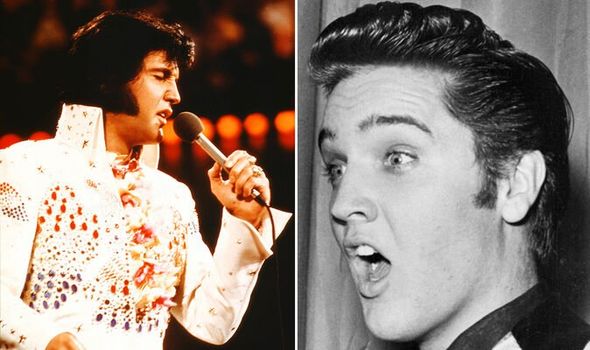
1. Elvis’s Inappropriate Relationship with Priscilla
Elvis Presley met Priscilla Beaulieu in 1959 when she was just 14 years old, and he was 24. This age gap raised eyebrows, but it didn’t stop Elvis from pursuing a relationship with the young teenager.
He was reportedly drawn to her youth, seeing it as an opportunity to mold her into his ideal partner. Elvis once told a friend that Priscilla was “young enough that I can train her any way I want.”
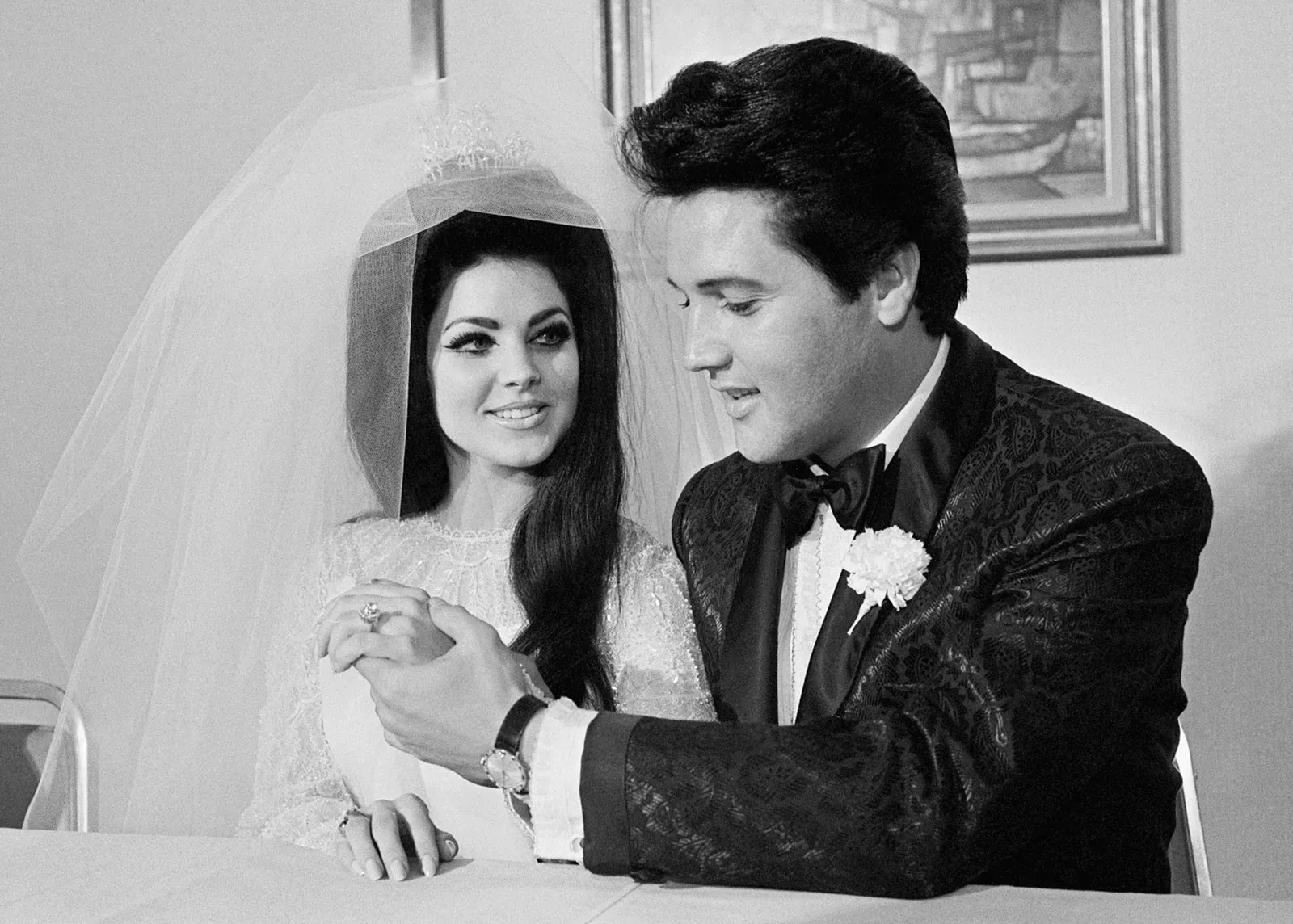
This disturbing statement reveals the troubling power dynamic in their relationship from the very beginning. Their courtship lasted for years, with Elvis gradually shaping Priscilla’s appearance and personality to suit his preferences.
He dictated her clothing choices, hairstyle, and even her makeup, effectively turning her into a living doll. Priscilla later described herself as “Elvis’s living doll, to fashion as he pleased.”
The couple eventually married in 1967 when Priscilla was 21, but the foundation of their relationship was built on this problematic beginning.
2. Elvis’s Unhealthy Relationship with His Mother
Elvis had an extraordinarily close relationship with his mother, Gladys Presley, which many considered unhealthy.
Their bond went beyond typical mother-son affection, bordering on emotional dependency.
Elvis and Gladys used “baby talk” with each other well into his teenage years, a practice that raised eyebrows among friends and family.
Perhaps most unconventional was the fact that Elvis shared a bed with his mother until he was in his teens.
This closeness continued to impact Elvis’s relationships throughout his life, as he often sought women who reminded him of Gladys or could provide the same level of nurturing and attention.
When Gladys passed away in 1958, Elvis was devastated.
He reportedly lay in her coffin, hugging her body and begging her to wake up.
This loss profoundly affected Elvis, and many believe it contributed to his later struggles with relationships and substance abuse.
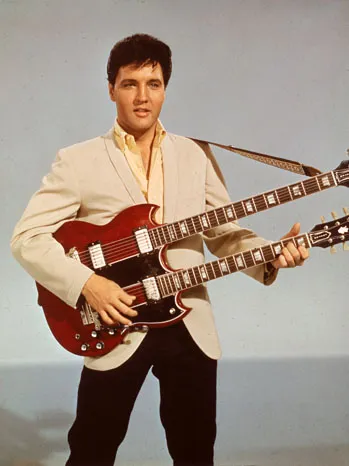
3. Elvis’s Battle with Drug Addiction
Elvis Presley’s struggle with drug addiction was a dark undercurrent throughout much of his adult life.
His descent into substance abuse began during his time in the military when he was introduced to amphetamines.
These drugs helped him stay awake during long shifts and also assisted with weight management, a constant concern for the image-conscious star.
As his career progressed, Elvis’s drug use escalated.
He began mixing amphetamines with barbiturates, creating a dangerous cocktail that allowed him to cycle between energy highs and sleep.
His personal physician, Dr. George Nichopoulos (often called “Dr. Nick”), prescribed an astounding amount of medications to Elvis over the years.
Elvis’s addiction led to erratic behavior, mood swings, and health problems.
He experienced several near-fatal overdoses, including two in 1973 that left him in a coma.
Despite attempts at intervention by friends and family, Elvis never fully overcame his addiction.
It contributed significantly to his declining health and was a factor in his untimely death at the age of 42 in 1977. 4. Elvis’s Violent Temper
While Elvis was known for his charm and charisma, he also had a darker side that manifested in violent outbursts.
One particularly disturbing incident involved Elvis dragging a woman by her hair when she threw a drink in his face during a party.
This aggressive behavior wasn’t limited to strangers; even those close to him weren’t immune to his temper.
In a shocking revelation, Priscilla Presley wrote in her memoir that Elvis once forced himself on her after learning of her affair.
She described him saying, “This is how a real man makes love to his woman.”
Although she later backtracked on this statement, claiming she had exaggerated, the incident paints a troubling picture of Elvis’s capacity for violence and control.
Elvis’s last girlfriend, Ginger Alden, also experienced his violent tendencies.
She recalled incidents where Elvis fired guns in their bedroom, shooting at a television set and the headboard above their bed.
These episodes were often fueled by drug use and mood swings, showcasing the volatile nature of the King of Rock and Roll.
5. Elvis’s Stillborn Twin
On January 8, 1935, in Tupelo, Mississippi, Elvis Aaron Presley entered the world.
However, what many don’t know is that he was born a twin.
His identical brother, Jesse Garon Presley, was delivered stillborn approximately 35 minutes before Elvis.
This tragic beginning to Elvis’s life had a profound impact on him throughout his years.
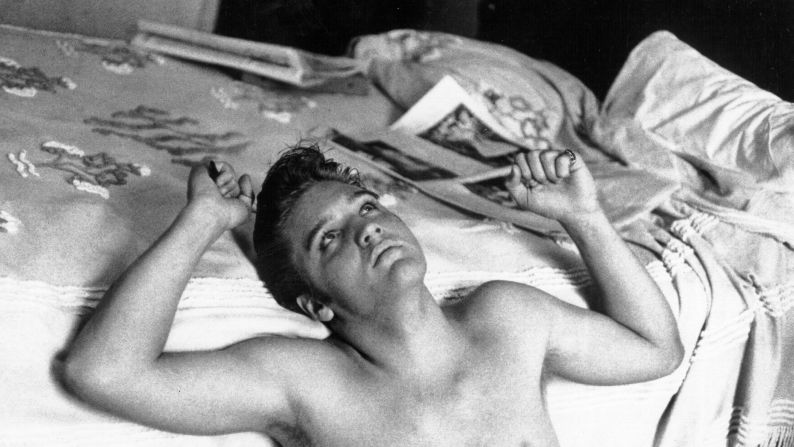
Elvis often spoke about his twin, feeling a deep sense of loss and wondering about the life they might have shared.
Some speculate that this loss contributed to Elvis’s intense drive for success, as if he were living for two.
The ghost of Jesse Garon seemed to haunt Elvis, influencing his relationships and perhaps contributing to his sometimes reckless behavior.
The Presley family was too poor to afford a marker for Jesse’s grave, and he was buried in an unmarked plot in Priceville Cemetery.
This early brush with mortality and loss shaped Elvis’s worldview and remained a poignant part of his personal history.
6. Elvis’s Natural Hair Color
Contrary to his iconic image of jet-black hair, Elvis Presley was actually a natural blonde.
Born with light hair, Elvis began dyeing it black in his teens, inspired by the looks of his musical heroes and the desire to stand out.
This transformation was part of crafting his rebellious, edgy image that would help propel him to stardom.
In the early days of his career, when money was tight, Elvis would use shoe polish to darken his hair.
As he gained fame and fortune, he switched to professional hair dye, but the ritual of coloring his hair remained throughout his life.
His personal hairdresser would touch up his roots every two to three weeks to maintain the perfect shade of black.
This little-known fact about Elvis’s natural hair color adds an interesting layer to his carefully constructed image, showing how even the King of Rock and Roll relied on a bit of artifice to create his legendary look.
7. Elvis Never Performed Outside North America
Despite his global fame and influence, Elvis Presley never performed a concert outside of North America.
His live performances were limited to the United States and Canada, with his only international shows being five concerts in Canada in 1957. This fact is particularly surprising given Elvis’s worldwide popularity and the potential for massive international tours.
The reason behind this limitation is widely believed to be linked to his manager, Colonel Tom Parker.
Parker, as we’ll discuss later, was an illegal immigrant from the Netherlands.

It’s thought that he feared if he left the United States, he might not be allowed to return.
As Elvis’s career was inextricably linked with Parker’s management, this meant that Elvis, too, was confined to North American shores.
This restriction undoubtedly impacted Elvis’s career and denied fans around the world the chance to see him perform live.
It remains one of the great “what ifs” of music history – imagining the global tours Elvis might have undertaken if circumstances had been different.
8. Elvis’s Constipation Issues
In a rather unglamorous revelation, Elvis Presley suffered from severe constipation issues throughout his life.
This health problem was exacerbated by his poor diet and drug use.
At the time of his death, Elvis’s colon was found to be twice the length and width of a normal colon, packed with unprocessed food and waste.
Dr. George Nichopoulos, Elvis’s personal physician, even cited chronic constipation as a possible contributing factor to Elvis’s death.
He stated that the autopsy revealed stool in Elvis’s colon that had been there for four or five months due to poor bowel motility.
This health issue not only caused Elvis discomfort but also contributed to his weight gain and overall declining health in his later years.
It’s a stark reminder that even global superstars can suffer from mundane and uncomfortable health problems.
9. Elvis Burned in Effigy
Elvis’s provocative performances in the 1950s scandalzed conservative America.
His hip-swiveling moves and suggestive stage presence were seen by many as a threat to the morality of the nation’s youth.
This controversy came to a head after his appearances on national television, particularly on “The Ed Sullivan Show.”
Following these performances, outraged crowds in cities like Nashville and St. Louis took drastic action.
They burned and hanged Elvis in effigy, symbolically expressing their disgust and fear of his influence.
These demonstrations show just how divisive Elvis’s performances were, splitting America between those who saw him as an exciting new voice in music and those who viewed him as a dangerous corruptor of traditional values.
This backlash only served to fuel Elvis’s popularity among young people, cementing his status as a rebellious icon.
The controversy surrounding his performances played a significant role in the cultural shift of the 1950s, challenging conservative norms and paving the way for the more liberated attitudes of the 1960s.
10. Elvis Bought Graceland at 22
In 1957, at the young age of 22, Elvis Presley purchased Graceland, the Memphis mansion that would become synonymous with his name.
He paid $102,500 for the property, which included the house and 13.8 acres of land. This purchase, made just two years into his skyrocketing career, was a clear sign of Elvis’s meteoric rise to fame and fortune.
Graceland, built in 1939, was named by its original owner after his daughter, Grace. Elvis kept the name, and over the years, he made numerous modifications to the property.
He added the famous musical notes gate, created a “jungle room” with an indoor waterfall, and built a racquetball court.
After Elvis’s death in 1977, Graceland became a museum dedicated to his life and career.
It opened to the public in 1982 and quickly became one of the most-visited private homes in America, second only to the White House.
Today, Graceland stands as a testament to Elvis’s enduring legacy, attracting hundreds of thousands of visitors each year.
11. Elvis’s Karate Skills
Elvis Presley wasn’t just the King of Rock and Roll; he was also an accomplished martial artist.
He began studying karate while stationed in Germany during his military service in 1958. Over the following years, he dedicated himself to the discipline, eventually earning a 7th-degree black belt.
Elvis’s love for karate went beyond mere hobby status.
He incorporated karate moves into his stage performances, adding a unique flair to his already dynamic shows.
In the 1970s, he even opened his own karate studio in Memphis, called the Tennessee Karate Institute.
Elvis saw karate not just as a form of self-defense, but as a spiritual practice.
It provided him with a sense of discipline and focus that he found beneficial in other areas of his life.
His dedication to the martial art was such that he continued practicing and promoting it until the end of his life.
12. Elvis’s Personal Utensils
In a quirky habit that stemmed from his childhood, Elvis Presley often carried his own utensils with him to restaurants.
This practice began when he was young and would bring his own silverware to relatives’ homes for meals.
As an adult, even when dining at high-end establishments, Elvis would often produce his personal set of utensils.
This habit was likely rooted in Elvis’s humble beginnings and the poverty he experienced as a child.
Growing up, his family often relied on welfare and the kindness of neighbors for food.
This early experience of scarcity may have instilled in Elvis a need for control over his eating implements.
Interestingly, this wasn’t Elvis’s only unusual eating habit.
He was also known to be compulsive about brushing his teeth after every meal, carrying a toothbrush with him wherever he went.
13. Elvis Couldn’t Read Music
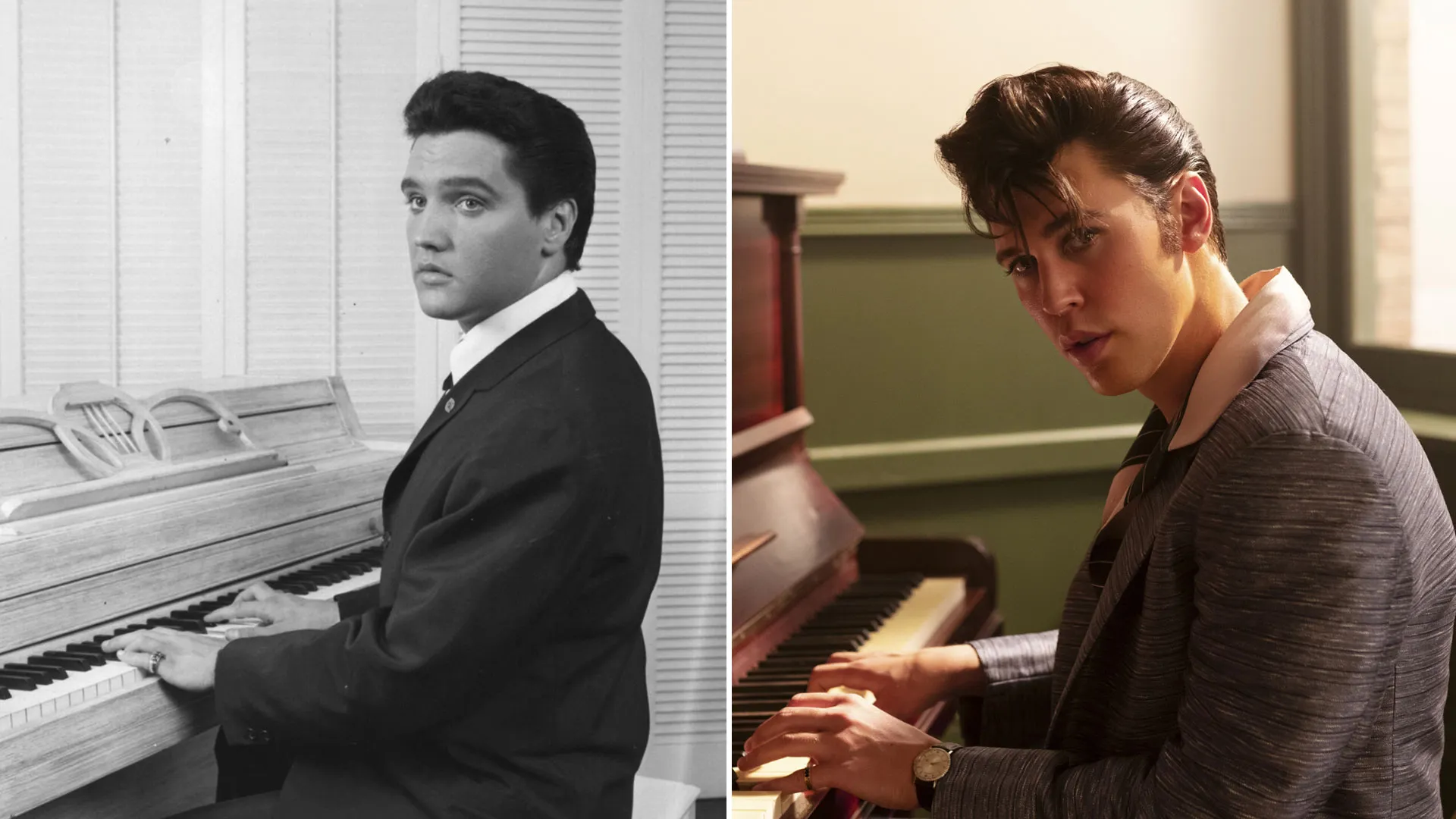
Despite his incredible musical talent and the hundreds of songs he recorded, Elvis Presley could not read music.
He played entirely by ear, relying on his innate sense of rhythm and melody to guide him.
This inability to read sheet music didn’t hinder his career; in fact, it may have contributed to his unique style and interpretation of songs.
Elvis’s method of learning new material involved listening to demo tapes over and over until he had memorized the melody and lyrics.
He would then put his own spin on the song, often improvising and changing elements to suit his style.
This approach led to some of his most iconic performances and recordings.
It’s worth noting that Elvis wasn’t alone in this – many famous musicians throughout history have been unable to read music, relying instead on their natural talent and instincts.
In Elvis’s case, his inability to read music perhaps allowed him to approach songs with a fresh perspective, unencumbered by the strictures of written notation.
14. Elvis’s Military Service
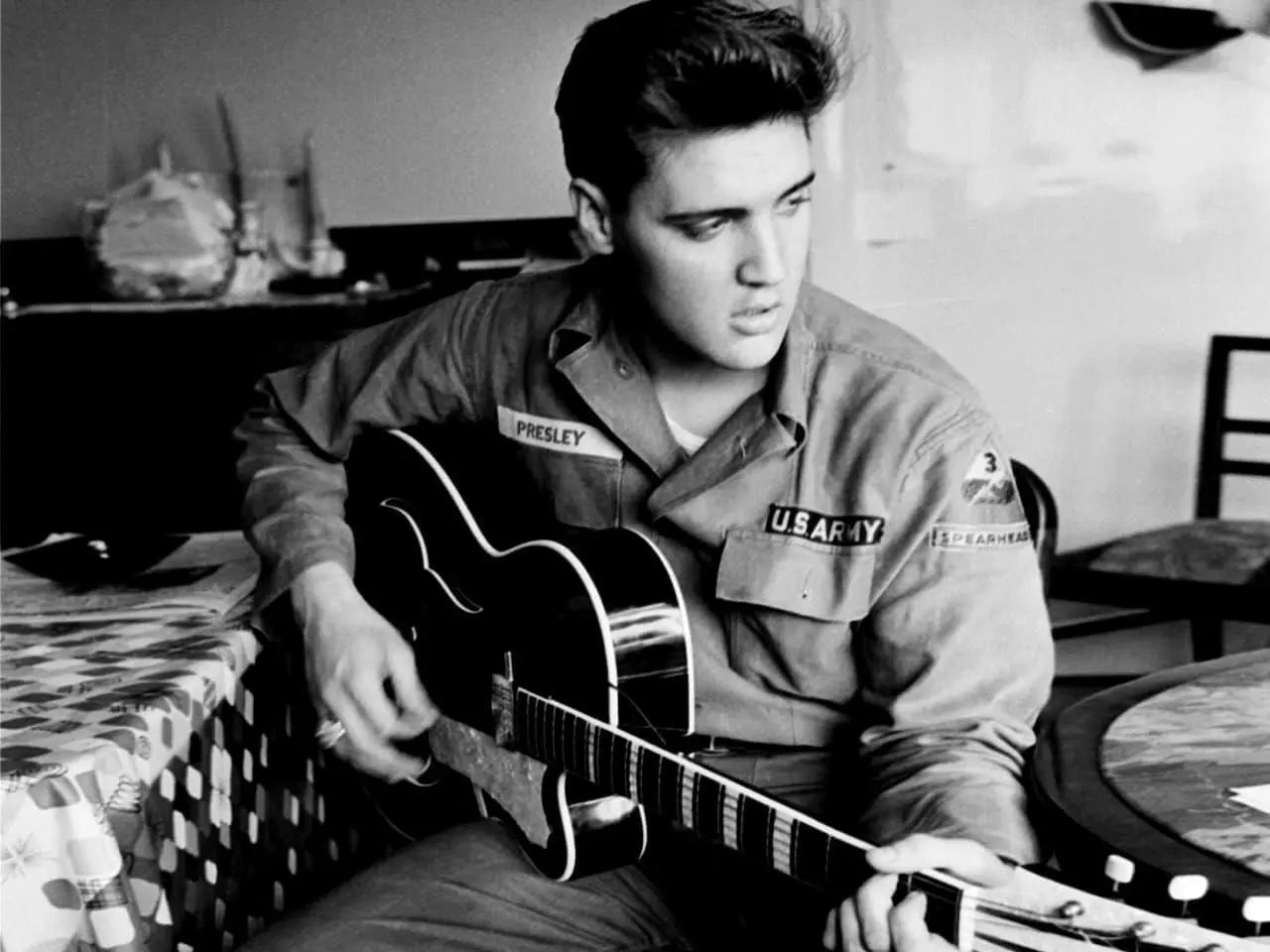
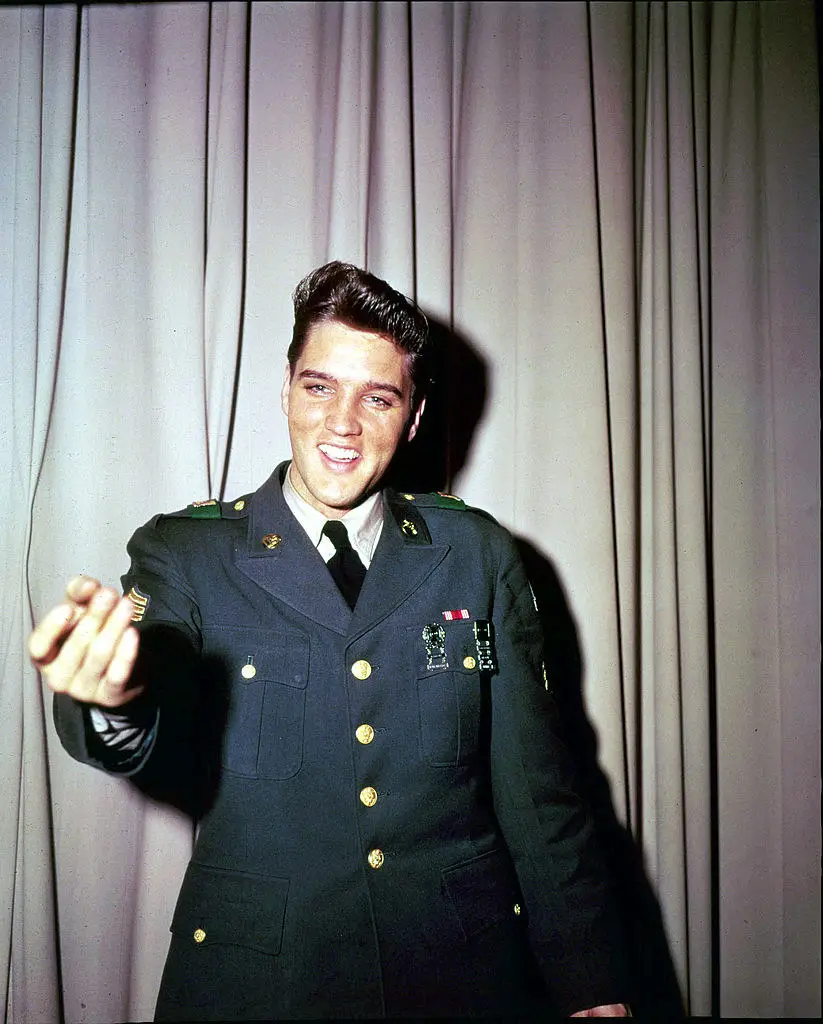
At the height of his fame in 1957, Elvis Presley was drafted into the United States Army.
Despite his celebrity status, Elvis served as a regular soldier, refusing any special treatment.
He was inducted as a private on March 24, 1958, and completed basic training at Fort Hood, Texas.
Elvis was then stationed in Friedberg, Germany, where he served as a jeep driver in the 3rd Armored Division.
During his time in the Army, Elvis’s popularity didn’t wane.
If anything, his willingness to serve his country like any other young man endeared him even more to the American public.
It was during his military service that Elvis was introduced to amphetamines, which would later play a significant role in his drug addiction.
On a more positive note, it was also in Germany that Elvis met Priscilla Beaulieu, who would later become his wife.
Elvis was honorably discharged from active duty on March 5, 1960, having achieved the rank of sergeant.
His military service marked a significant chapter in his life and career, influencing both his personal life and his public image.
15. Elvis’s Unusual Diet
Elvis Presley was known for his unusual and often unhealthy eating habits.
Perhaps the most famous of these was his love for the “Fool’s Gold Loaf,” a sandwich that consisted of a hollowed-out loaf of bread filled with an entire jar of peanut butter, one jar of jelly, and a pound of bacon.
This calorie-bomb of a sandwich is said to have contained around 8,000 calories.
Another favorite of Elvis’s was the peanut butter, banana, and bacon sandwich.
This combination became so closely associated with the King that it’s often referred to as the “Elvis sandwich.”
These sandwiches were often prepared by frying them in butter, adding to their already high calorie count.
Elvis’s dietary habits were a reflection of his humble beginnings in Mississippi, where rich, calorie-dense foods were a luxury.
As he gained fame and fortune, he indulged in these comfort foods to excess.
His poor diet, combined with his drug use, contributed significantly to his health problems in later life.
16. Elvis’s Sleepwalking and Insomnia
Throughout his life, Elvis Presley struggled with sleep issues, including both insomnia and sleepwalking.
These problems began in his childhood and persisted into his adult years.
As a child, Elvis’s sleepwalking was so severe that his mother, Gladys, would remove the doorknob from his bedroom at night to prevent him from wandering and potentially hurting himself.
Elvis’s insomnia became more pronounced as he got older and was exacerbated by his use of prescription medications.
He often stayed awake for days at a time, leading to erratic behavior and mood swings.
This chronic lack of sleep likely contributed to his health problems and may have played a role in his dependency on drugs.
The combination of sleepwalking and insomnia paints a picture of a man who was never truly at rest, even in sleep.
These issues undoubtedly had a significant impact on Elvis’s daily life and may have influenced his creative process as well.
17. Elvis’s Superstitions
Elvis Presley was deeply superstitious, a trait that influenced many aspects of his daily life.
He was particularly wary of the number 8, considering it unlucky.
This fear was so strong that he would often stay on the 14th floor of hotels (really the 13th floor) to avoid a room number with an 8 in it.
One of Elvis’s most notable superstitions involved black cats.
If a black cat crossed his path while he was driving, he would insist on taking a different route, even if it meant going miles out of his way.
This belief was so ingrained that his entourage learned to be on constant lookout for black cats to avoid delays. Elvis also had a specific routine when it came to dressing.
He always put on his right sock and shoe before his left, believing this order brought good luck.
These superstitions weren’t just quirks; they were an integral part of how Elvis navigated the world, reflecting his belief in forces beyond his control.
18. Elvis’s Pet Chimpanzee
In the early 1960s, Elvis purchased a chimpanzee named Scatter from a Memphis entertainer.
Scatter quickly became a fixture at Graceland, known for his mischievous behavior and Elvis’s fondness for him.
The chimp was often dressed in human clothes and was a regular presence at Elvis’s parties.
Scatter was notorious for his antics, which included lifting up women’s skirts and drinking alcoholic beverages when he could get his hands on them.
While Elvis found these behaviors amusing, not everyone shared his enthusiasm.
Many of Elvis’s friends and visitors found Scatter’s presence unsettling or annoying.
Despite the chimp’s troublemaking ways, Elvis doted on Scatter, even changing his diapers personally.
The presence of such an unusual pet at Graceland was yet another example of the extravagant and sometimes eccentric lifestyle Elvis led at the height of his fame.
19. Elvis Impersonating a Police Officer
In one of his more unusual hobbies, Elvis Presley would occasionally impersonate a police officer.
He would attach a police siren to his car and pull over speeding motorists on the highways around Memphis.
Instead of issuing tickets, Elvis would lecture the drivers about the dangers of speeding and then present them with an autograph before sending them on their way.
This activity was more than just a prank for Elvis; it reflected his deep fascination with law enforcement.
He collected police badges from various departments across the country and even met with President Richard Nixon to offer his services as an undercover agent in the war on drugs.
While Elvis’s intentions may have been good, impersonating a police officer is illegal.
However, his celebrity status and connections with local law enforcement meant that he was never charged for these escapades.
20. Elvis Bought FDR’s Presidential Yacht
In 1964, Elvis purchased the Potomac, a 165-foot vessel that had served as President Franklin D. Roosevelt’s “floating White House” from 1936 to 1945. Elvis paid $55,000 for the yacht, showcasing his interest in historical artifacts and his penchant for extravagant purchases.
However, Elvis’s ownership of the Potomac was short-lived.
Soon after buying it, he donated the yacht to St. Jude Children’s Research Hospital in Memphis.
The hospital then sold the vessel to raise funds for its charitable work.
This purchase and subsequent donation exemplify Elvis’s complex character.
On one hand, he indulged in expensive and sometimes impulsive buys.
On the other, he was known for his generosity and support of various charities throughout his career.
21. Elvis’s Look Inspired by Comic Book Character
Elvis Presley’s iconic look, particularly his famous hairstyle, was reportedly inspired by the comic book superhero Captain Marvel Jr. Elvis was a huge fan of the character and collected Captain Marvel Jr. comics throughout his life.
The influence is evident in Elvis’s signature pompadour and sideburns, which bear a striking resemblance to the superhero’s hairstyle.
The inspiration didn’t stop at just the hair.
In his later years, Elvis’s jumpsuits, complete with high collars and capes, also seemed to draw inspiration from superhero costumes.
Elvis even adopted Captain Marvel Jr.’s lightning bolt symbol, using it as part of his “Taking Care of Business (TCB)” logo.
This connection between Elvis and his childhood hero shows how pop culture influences can shape a person’s image, even when they become cultural icons themselves.
22. Elvis Turned Down “West Side Story” Role
In a decision that might have dramatically altered his career trajectory, Elvis Presley was offered the role of Tony in the film adaptation of the Broadway musical “West Side Story.”
However, his manager, Colonel Tom Parker, advised against taking the part.
Parker believed that the role, which would have required Elvis to play a romantic lead in a tragic story, didn’t fit with the image they were cultivating for him.
Additionally, Parker was wary of Elvis appearing in a film where he wouldn’t be the sole star.
The role ultimately went to Richard Beymer, and “West Side Story” became a classic of American cinema.
While we can only speculate on how Elvis might have performed in the role, this decision represents one of the major “what ifs” in his career.
23. Elvis’s Album of Stage Banter
In 1974, Elvis released one of the most unusual albums of his career: “Having Fun with Elvis on Stage.”
This album consisted entirely of Elvis’s between-song banter from various live performances, with no music included.
The album was created to fulfill a contractual obligation with RCA Records, Elvis’s label at the time.
By releasing an album of just talking, Colonel Parker found a loophole that allowed them to release a new Elvis album without giving RCA any new musical material.
“Having Fun with Elvis on Stage” was poorly received by critics and fans alike, who found it confusing and pointless without any songs.
Today, it’s considered a curious artifact of Elvis’s career, showcasing both his charm as a live performer and the sometimes questionable decisions made by his management.
24. Elvis’s Heavy Jumpsuits
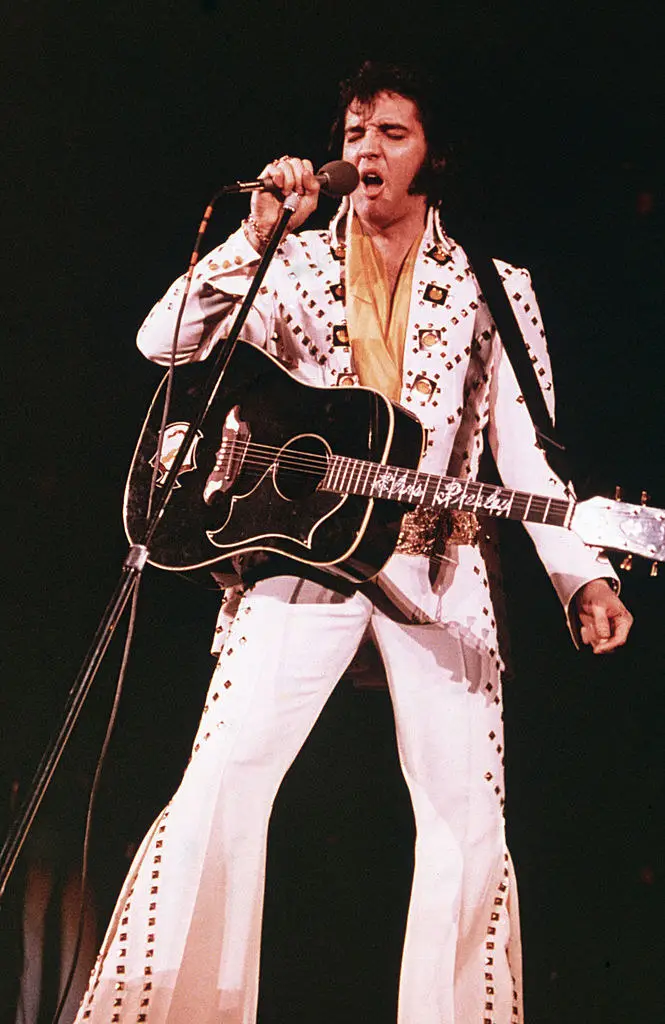
In the later years of his career, Elvis became known for his elaborate, bejeweled jumpsuits.
These costumes, while visually stunning, were also incredibly heavy.
Some of his jumpsuits weighed up to 75 pounds, loaded down with rhinestones, metal studs, and heavy embroidery.
The weight of these costumes, combined with Elvis’s declining health and weight gain, made his performances increasingly difficult.
Wearing these heavy outfits under hot stage lights contributed to Elvis’s profuse sweating during shows, which became a trademark of his later performances.
Elvis’s most famous jumpsuit, the “American Eagle” or “Aloha” suit, was also one of his heaviest and most expensive.
Created for his 1973 “Aloha from Hawaii” concert, this white jumpsuit with a bald eagle design reportedly cost $65,000 to make at the time – equivalent to over $400,000 in today’s currency.
25. Elvis in Multiple Halls of Fame
Elvis Presley’s impact on music was so significant that he has been inducted into multiple Halls of Fame, spanning various genres.
He was one of the first inductees into the Rock and Roll Hall of Fame in 1986, recognized as a pioneering figure in the genre.
But Elvis’s influence wasn’t limited to rock and roll.
He was also inducted into the Country Music Hall of Fame in 1998, acknowledging his roots in country music and his continued influence on the genre.
Additionally, he’s a member of the Gospel Music Hall of Fame, the Rockabilly Hall of Fame, and the R&B Music Hall of Fame.
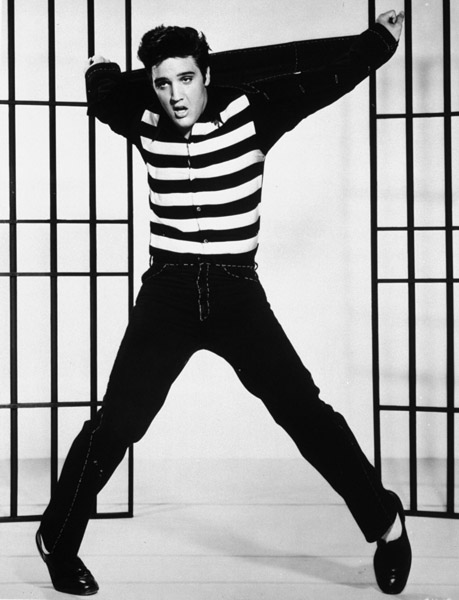
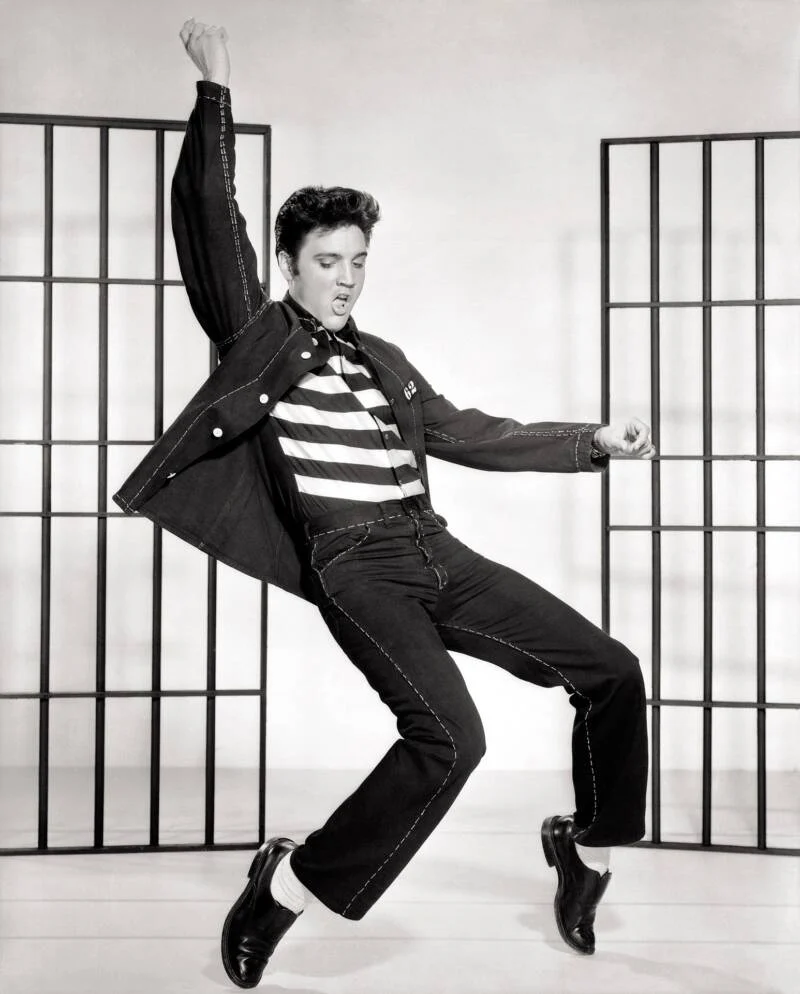
A publicity photo from the 1957 film, “Jailhouse Rock”, in which Elvis Presley plays a convict who becomes a rock star. (AP Photo)
These multiple inductions reflect Elvis’s unique ability to blend various musical styles and his wide-ranging impact on American popular music.
He remains one of the few artists to be recognized at the highest level across such diverse musical genres.
26. Elvis’s Collection of Police Badges
Elvis Presley had a lifelong fascination with law enforcement, which manifested in his extensive collection of police badges.
He was known to approach police officers and ask to trade his personal items (like jewelry or even cars) for their badges.
This hobby wasn’t just about collecting; Elvis often used these badges to play at being a law enforcement officer.
He would sometimes carry badges and even a police light that he could affix to his car roof.
His interest in law enforcement went beyond collecting badges.
Elvis was made an honorary captain of the Memphis Police Department in 1971, and he was known to have close relationships with several police departments across the country.
This fascination with police work was part of Elvis’s complex personality, blending his love for authority figures with his rebellious public image.
27. Elvis’s Cross-Country Flight for a Sandwich
In one of the more extravagant examples of Elvis’s indulgences, he once flew across the country just to satisfy a craving for a specific sandwich.
The sandwich in question was the “Fool’s Gold Loaf,” a calorie-packed creation from the Colorado Mine Company restaurant in Denver.
Late one night in 1976, Elvis and his entourage were at Graceland discussing the sandwich.
On a whim, Elvis decided he wanted one right then.
He and his group boarded his private jet, flew to Denver, and were met at the airport by the restaurant owner with a basket of fresh Fool’s Gold Loaves.
The group reportedly ate the sandwiches with Perrier and champagne in the airport’s executive terminal for about three hours before flying back to Memphis.
This incident illustrates both Elvis’s immense wealth and his often impulsive behavior, especially when it came to food.
28. Elvis’s Hair Insurance
Elvis Presley’s hair was such an integral part of his image that he reportedly had it insured for $1,000,000. This may seem extravagant, but for Elvis, his hair was a crucial part of his brand and stage presence.
Elvis’s hairstyle, with its signature pompadour and sideburns, was meticulously maintained.
He visited his hairdresser regularly for touch-ups and used a combination of hair dye and, in his earlier years, shoe polish to achieve his iconic jet-black color.
The idea of insuring a specific body part or feature isn’t uncommon among celebrities, but the high value placed on Elvis’s hair underscores just how important his appearance was to his career and public image.
29. Elvis’s “Blue” Songs
Elvis recorded an impressive 15 songs with the word “blue” in the title throughout his career.
This curious fact speaks to both the popularity of the word in song titles during his era and perhaps Elvis’s personal affinity for the color or the mood it evokes.
Some of his most famous “blue” songs include “Blue Suede Shoes,” “Blue Christmas,” and “Blue Hawaii.”
Other lesser-known titles include “Blue River,” “Blue Eyes Crying in the Rain,” and “Blue Moon of Kentucky.”
This recurring theme in Elvis’s discography adds an interesting dimension to his musical legacy, showcasing the range of emotions and styles he could convey even within songs sharing a common word in their titles.
30. Elvis’s Pink Cadillac Was Originally Blue
One of Elvis’s most iconic possessions was his pink 1955 Cadillac Fleetwood.
However, what many people don’t know is that this famous car was originally blue when Elvis purchased it.
Elvis bought the car in 1955 as a gift for his mother, Gladys.
Initially, it was blue with a black roof, but Elvis had it repainted pink.
The color choice was influenced by Elvis’s love for flamboyant, eye-catching things, as well as the popularity of pink in 1950s American culture.
The pink Cadillac became so closely associated with Elvis that it inspired the 1955 song “Pink Cadillac” by Shorty Long, later covered by Bruce Springsteen.
Today, the car is on display at the Graceland museum, serving as a testament to Elvis’s unique style and his love for his mother.
31. Elvis’s Lipstick Craze
Elvis Presley’s influence extended beyond music and into the world of fashion and beauty.
In the 1950s, he sparked a lipstick craze with a line of Elvis-inspired shades.
These lipsticks came with Elvis’s autograph on the tube and were marketed with catchy names like “hound-dog orange” and “tutti-frutti red.”
The idea behind these lipsticks was clever marketing.
Elvis’s female fans often left lipstick marks on his car or wrote messages on buildings where he performed.
The official Elvis lipsticks allowed fans to feel a closer connection to their idol while leaving their mark.
This lipstick line demonstrates Elvis’s immense marketability and the extent of his influence on popular culture.
It also shows how his management team, particularly Colonel Tom Parker, was always looking for new ways to capitalize on Elvis’s fame.
32. Elvis’s First Record as a Gift for His Mother
Elvis’s first ever recording was made as a gift for his mother, Gladys.
In August 1953, an 18-year-old Elvis walked into Sun Records in Memphis and paid $3.98 to record two songs: “My Happiness” and “That’s When Your Heartaches Begin.”
When asked why he was making the record, Elvis claimed it was a birthday present for his mother.
However, Gladys’s birthday was in April, leading some to speculate that Elvis was really hoping to catch the attention of Sun Records owner Sam Phillips.
Regardless of his true motivation, this first recording was the start of Elvis’s journey in the music industry.
The acetate disc from this session still exists and was sold at auction in 2015 for $300,000. 33. Elvis’s Billboard Chart Record
Elvis Presley holds the record for the most songs to chart in Billboard’s top 40. Over the course of his career, he had 114 Top 40 hits, including 40 Top 10 hits and 18 number one hits.
This incredible achievement spans multiple decades, from his first hit in 1956 with “Heartbreak Hotel” to his last Top 40 hit in 1977 with “Way Down.”
Elvis’s chart success continued even after his death, with “Guitar Man” reaching the Top 40 in 1981. This record is a testament to Elvis’s enduring popularity and the quality and appeal of his music across different eras.
It’s a benchmark that few artists have come close to matching, cementing Elvis’s status as one of the most successful recording artists of all time.
34. Elvis’s Hated Nickname
While Elvis had many nicknames throughout his career, including “The King” and “Elvis the Pelvis,” there was one moniker he particularly despised: “Elvis the Pelvis.”
This nickname was coined by the press in response to Elvis’s provocative hip movements during his performances.
Elvis found the nickname childish and demeaning.
He once said, “I don’t like being called Elvis the Pelvis.
It’s one of the most childish expressions I ever heard, comin’ from an adult.”
Despite his dislike for the nickname, it stuck in the public consciousness and was often used by the media, much to Elvis’s chagrin.
This nickname controversy highlights the tension between Elvis’s groundbreaking performances and the more conservative elements of 1950s American society.
35. Elvis’s Meeting with President Nixon
On December 21, 1970, Elvis Presley had a now-famous meeting with President Richard Nixon at the White House.
Elvis had written to Nixon requesting a meeting and expressing his desire to be made a “Federal Agent-at-Large” in the Bureau of Narcotics and Dangerous Drugs.
During the meeting, Elvis expressed his concern about drug use in America and his belief that he could use his fame to help combat the problem.
He also showed Nixon his collection of police badges and asked for a badge from the Bureau of Narcotics and Dangerous Drugs.
Nixon agreed to give Elvis the badge, although it was purely honorary and carried no actual authority.
The irony of this meeting is not lost on historians, given Elvis’s own struggles with prescription drug abuse.
The photograph of Elvis and Nixon shaking hands has become one of the most requested images from the National Archives.
36. Elvis’s Religious Jewelry
Elvis Presley was known for wearing an eclectic mix of religious symbols, including a cross, the Hebrew letter chai, and a star of David.
When asked about this, Elvis reportedly said, “I don’t want to miss out on heaven due to a technicality.”
This mix of religious symbols reflected Elvis’s diverse spiritual interests.
Raised in a Pentecostal Christian household, Elvis maintained a lifelong interest in religion and spirituality.
He explored various faiths and philosophies throughout his life, including studying Paramahansa Yogananda’s “Autobiography of a Yogi.”
Elvis’s willingness to wear symbols from different faiths simultaneously speaks to his open-minded approach to spirituality and his desire to cover all his bases when it came to the afterlife.
37. Claims of Elvis’s Sexual Disinterest
Despite his image as a sex symbol, some of Elvis’s former girlfriends have claimed that he was uninterested in or even averse to sexual intercourse.
Actress Peggy Lipton, who dated Elvis briefly, described him as “virtually impotent” in her memoir.
Other women who were involved with Elvis, including Cassandra Peterson (better known as Elvira, Mistress of the Dark) and actress Rita Moreno, have made similar claims about Elvis’s lack of sexual interest or prowess.
These accounts contrast sharply with Elvis’s public image and the testimony of other women in his life, including his wife Priscilla.
The truth may lie somewhere in between, possibly influenced by Elvis’s complex personality, his drug use, and the different stages of his life and career.
38. Colonel Tom Parker’s True Identity
Elvis’s longtime manager, Colonel Tom Parker, was one of the most influential figures in the singer’s career.
However, Parker harbored a significant secret: he wasn’t actually American, nor was he really named Tom Parker.
Born Andreas Cornelis van Kuijk in the Netherlands in 1909, Parker immigrated to the United States illegally as a young man.
He reinvented himself as Tom Parker, claiming to be from West Virginia, and eventually acquired the honorary title of “Colonel” from a Louisiana governor.
Parker’s true identity wasn’t publicly known until the 1980s, years after Elvis’s death.
His status as an illegal immigrant is believed to be the reason why he never allowed Elvis to tour internationally, fearing he wouldn’t be able to re-enter the United States.
39. Elvis Failed Music in School
In a ironic twist of fate, Elvis Presley, who would go on to become one of the most successful and influential musicians of all time, actually failed his music class in high school.
This occurred at Humes High School in Memphis, where Elvis was a student in the early 1950s.
His music teacher at the time, Mrs. Marmann, gave him a C in music and explained to him that he “had no aptitude for music.”
This grade was particularly disappointing for Elvis, who had brought his guitar to school and sung for his class.
This early setback didn’t deter Elvis from pursuing his passion for music.
If anything, it may have fueled his determination to succeed in the field.
It serves as a reminder that early judgments and grades don’t always predict future success, especially in creative fields.
40. Elvis’s Record-Breaking Album Success
Elvis Presley was the first artist to have five albums reach number one on the Billboard charts simultaneously.
This unprecedented achievement occurred in 1956, at the height of Elvis’s early fame.
The five albums were “Elvis Presley,” “Elvis,” “Something for Everybody,” “G.I.
Blues,” and “Blue Hawaii.”
This feat showcased not only Elvis’s immense popularity but also his ability to appeal to a wide range of audiences with different styles of music.
This record stood for decades and was a testament to Elvis’s dominance of the music industry in the 1950s and early 1960s.
It wasn’t until the rise of digital streaming and changes in how album sales are calculated that other artists began to challenge this record.
41. Elvis’s Prolific Studio Album Output
Throughout his career, Elvis Presley released a total of 24 studio albums between 1956 and 1977. This impressive output doesn’t include his numerous live albums, compilations, or soundtrack albums from his films.
His studio albums span a wide range of genres, from rock and roll to gospel, country to blues.
Some of his most famous studio albums include his self-titled debut “Elvis Presley” (1956), “Elvis Is Back!”
(1960), and “From Elvis in Memphis” (1969).
This consistent release of new material over two decades helped Elvis maintain his relevance in the music industry even as musical tastes changed.
It also allowed him to explore different styles and keep his sound fresh throughout his career.
42. Elvis’s Extensive Film Career
Elvis Presley appeared in 31 feature films between 1956 and 1969, plus two concert documentaries.
His film career began with “Love Me Tender” in 1956 and ended with “Change of Habit” in 1969. While many of Elvis’s films were commercial successes, they were often panned by critics.
Most were musical comedies that followed a similar formula, with Elvis singing several songs and usually playing a charismatic young man who wins the girl in the end.
Despite the mixed reception of his films, they played a significant role in maintaining Elvis’s popularity, especially during his time in the army when he couldn’t perform live.
Some of his most popular films include “Jailhouse Rock” (1957), “Blue Hawaii” (1961), and “Viva Las Vegas” (1964).
43. Elvis’s Charitable USS Arizona Memorial Concert
In March 1961, Elvis Presley performed a benefit concert in Hawaii that raised over $50,000 for the USS Arizona Memorial at Pearl Harbor.
The concert was held at Bloch Arena at Pearl Harbor and was Elvis’s first live performance since his return from military service.
The idea for the concert came when Elvis and his manager, Colonel Parker, learned that the memorial project was short of its fundraising goal.
Elvis agreed to do the show for free, with all proceeds going to the memorial fund.
This concert not only showcased Elvis’s charitable side but also helped complete an important national monument.
The USS Arizona Memorial was dedicated the following year, in 1962, and remains a significant site of remembrance for the attack on Pearl Harbor.
44. Elvis’s Presidential Lineage
Interestingly, Elvis Presley was a distant relative of two former U.S. presidents: Abraham Lincoln and Jimmy Carter.
Genealogists have traced Elvis’s family tree and found connections to both these notable American leaders.
Elvis was reportedly Carter’s sixth cousin once removed, sharing a common ancestor in Elijah Preslar.
His connection to Lincoln is more distant, supposedly tracing back to Lincoln’s great-great grandfather, Isaiah Harrison.
While these connections are quite remote and had no practical impact on Elvis’s life or career, they add an intriguing footnote to his biography.
They also serve as a reminder of the unexpected ways in which historical figures can be connected.
45. Elvis’s Most Expensive Jumpsuit
Elvis’s most expensive and arguably most iconic jumpsuit was the “American Eagle” or “Aloha” suit, worn during his groundbreaking “Aloha from Hawaii” concert in 1973. This white jumpsuit, adorned with a bald eagle design made of red, gold, and blue studs, cost $65,000 to make at the time.
Designed by Bill Belew, who created many of Elvis’s jumpsuits, the American Eagle suit was heavily embellished and weighed several pounds due to the studding and embroidery.
The suit was paired with a matching cape, adding to its dramatic effect.
The high cost and elaborate design of this jumpsuit exemplify the extravagance of Elvis’s later-career stage wear.
Today, adjusted for inflation, the suit would cost over $400,000 to create, making it one of the most valuable pieces of Elvis memorabilia.
46. Elvis Death Conspiracy Theories
Since Elvis Presley’s death in 1977, numerous conspiracy theories have emerged suggesting that he faked his own death.
These theories, while not supported by evidence, have persisted for decades and become a part of pop culture lore.
Believers in these theories point to alleged discrepancies in Elvis’s death certificate, reports of Elvis sightings after his supposed death, and claims that there was a wax dummy in his coffin during the funeral.
Some even argue that Elvis can be seen in the background of a scene in the 1990 film “Home Alone.”
While these theories have been thoroughly debunked, they speak to Elvis’s enduring cultural impact and the difficulty some fans have had in accepting his untimely death.
The idea that Elvis might still be alive somewhere has inspired books, movies, and even an episode of the TV show “Quantum Leap.”
47. Elvis’s First Guitar
Elvis’s first guitar was a far cry from the elaborate instruments he would later play on stage.
As a young boy, unable to afford a real guitar, Elvis fashioned his first instrument out of a cigar box, a piece of wood for the neck, and a crude bridge to hold a string in place.
This homemade guitar was Elvis’s first attempt at making music, long before he could afford to buy a real instrument.
It showcases his early passion for music and his resourcefulness in pursuing that passion despite his family’s poverty.
Elvis received his first real guitar as a birthday present when he was 11 years old.
His mother Gladys bought it for him from the Tupelo Hardware Store for $7.75, even though Elvis had initially wanted a bicycle or a rifle.
48. Elvis’s Nose Job
While Elvis’s looks were largely natural, he did have one small cosmetic procedure done.
Early in his career, Elvis had a minor adjustment made to the bridge of his nose.
This subtle change was barely noticeable but was intended to refine his profile for the camera.
The nose job was performed by Dr. John Pennington in Los Angeles, likely around 1957. It was a minor procedure that didn’t significantly alter Elvis’s appearance but rather enhanced his already handsome features.
This little-known fact about Elvis reveals his attention to his image and his understanding of the importance of his looks in his career.
It also shows that even natural beauties sometimes seek a little help from cosmetic procedures.
49. Elvis’s Karate Nickname
Elvis was deeply passionate about karate, earning a 7th-degree black belt in the martial art.
He was so dedicated to karate that he preferred to be called by his karate name, “Tiger.”
This nickname was given to him by his karate instructor, Kang Rhee, who was impressed by Elvis’s quick reflexes and powerful movements.
Elvis took great pride in this name and often used it among his close friends and fellow martial artists.
Elvis’s love for karate extended beyond just practicing the art.
He incorporated karate moves into his stage performances and even opened his own karate studio in Memphis called the Tennessee Karate Institute.
50. Elvis’s Around-the-Clock Kitchen Staff
At Graceland, Elvis’s cooks were on call 24 hours a day, ready to prepare whatever the King desired at any time.
This arrangement catered to Elvis’s irregular sleep schedule and his frequent midnight cravings.
Elvis’s favorite foods were often high-calorie Southern comfort foods.
His personal chef, Mary Jenkins Langston, would prepare dishes like fried peanut butter and banana sandwiches, bacon-wrapped meatballs, and chicken fried steak at all hours of the day and night.
This constant availability of food contributed to Elvis’s unhealthy eating habits and weight gain in his later years.
However, it also speaks to the level of luxury and indulgence that Elvis was accustomed to at the height of his fame.
51. Elvis’s Enlarged Colon
At the time of his death, Elvis’s colon was found to be twice the length and diameter of a normal colon.
It was approximately 8 to 9 feet long, compared to the average 4 to 5 feet.
This condition, known as megacolon, was likely the result of Elvis’s poor diet, lack of exercise, and long-term use of opioids, which can cause severe constipation.
Dr. George Nichopoulos, Elvis’s personal physician, stated that the autopsy revealed impacted stool that had been in Elvis’s colon for four to five months.
This health issue contributed to Elvis’s discomfort and weight gain in his later years.
It’s a stark reminder of the toll that his lifestyle and substance abuse took on his body.
52. Tragedy at Elvis’s Funeral
On the day of Elvis’s funeral, August 18, 1977, a tragic incident occurred outside Graceland.
As thousands of fans lined the streets to pay their respects, a car plowed into a group of mourners, killing two women and injuring a third.
The victims were Juanita Joanne Johnson and Tammy Baiter.
The driver, 18-year-old Frederick Pinkston, was charged with two counts of second-degree murder.
This incident added another layer of tragedy to what was already a somber day for Elvis fans worldwide.
The accident highlighted the immense crowds that Elvis could draw, even in death, and the chaos that sometimes resulted from such large gatherings of grieving fans.
53. Elvis’s Cousin Sold His Coffin Photo
In a controversial move, Elvis’s cousin, Billy Mann, took a covert photograph of Elvis in his coffin and sold it to the National Enquirer for $18,000. The photo appeared on the cover of the tabloid’s September 6, 1977 issue.
This act was seen as a betrayal by many of Elvis’s family and fans.
It sparked outrage and added to the pain of those mourning Elvis’s death.
The incident also fueled conspiracy theories that Elvis had faked his death, with some claiming the photo showed a wax dummy rather than Elvis’s actual body.
The sale of this photo demonstrates the intense public interest in Elvis, even after his death, and the lengths some would go to capitalize on his fame.
It also highlights the complex dynamics within Elvis’s extended family and inner circle, where loyalty sometimes conflicted with the opportunity for financial gain.
54. Elvis’s Extensive Firearms Collection
At the time of his death, Elvis Presley owned an impressive collection of 37 firearms and one machine gun.
This collection included a variety of handguns, rifles, and shotguns, many of which were customized or engraved.
Elvis’s fascination with firearms began early in his life and grew as he became more famous.
He often carried a gun for personal protection, especially after receiving death threats.
Elvis was known to shoot at televisions and other objects when angry or frustrated, a habit that alarmed those around him.
His collection included some notable pieces, such as a gold-plated Colt 45 and a chrome-plated Magnum.
Elvis was generous with his firearms, often giving them as gifts to friends, family, and even some law enforcement officers.
This extensive collection reflects Elvis’s interest in Americana, his concern for personal safety, and his tendency towards extravagant purchases.
It also aligns with his admiration for law enforcement and his desire to project a tough, masculine image.
55. Elvis’s Menagerie at Graceland
Graceland, Elvis’s famous mansion, was home not just to the King of Rock and Roll, but also to a variety of animals over the years.
Elvis kept an impressive menagerie that included horses, donkeys, peacocks, chickens, dogs, and more exotic pets.
One of the most famous animals at Graceland was a chimpanzee named Scatter, known for his mischievous behavior.
Elvis also had a pet turkey named Bowtie, who was allowed to wander freely around the grounds.
Elvis’s love for horses was well-known, and he kept several at Graceland, including his favorite, a golden palomino named Rising Sun.
He often rode horses on the property and even had a small barn built to house them.
The presence of these animals at Graceland added to the estate’s unique character and reflected Elvis’s love for nature and animals.
Today, some descendants of Elvis’s original animals still live on the Graceland property, continuing this aspect of Elvis’s legacy.
This concludes the detailed exploration of the 55 facts about Elvis Presley.
Each of these facts provides a unique glimpse into the life, career, and personality of one of the most iconic figures in music history.
From his humble beginnings to his unprecedented fame, from his personal quirks to his professional achievements, these facts paint a comprehensive picture of Elvis Presley, the King of Rock and Roll.