










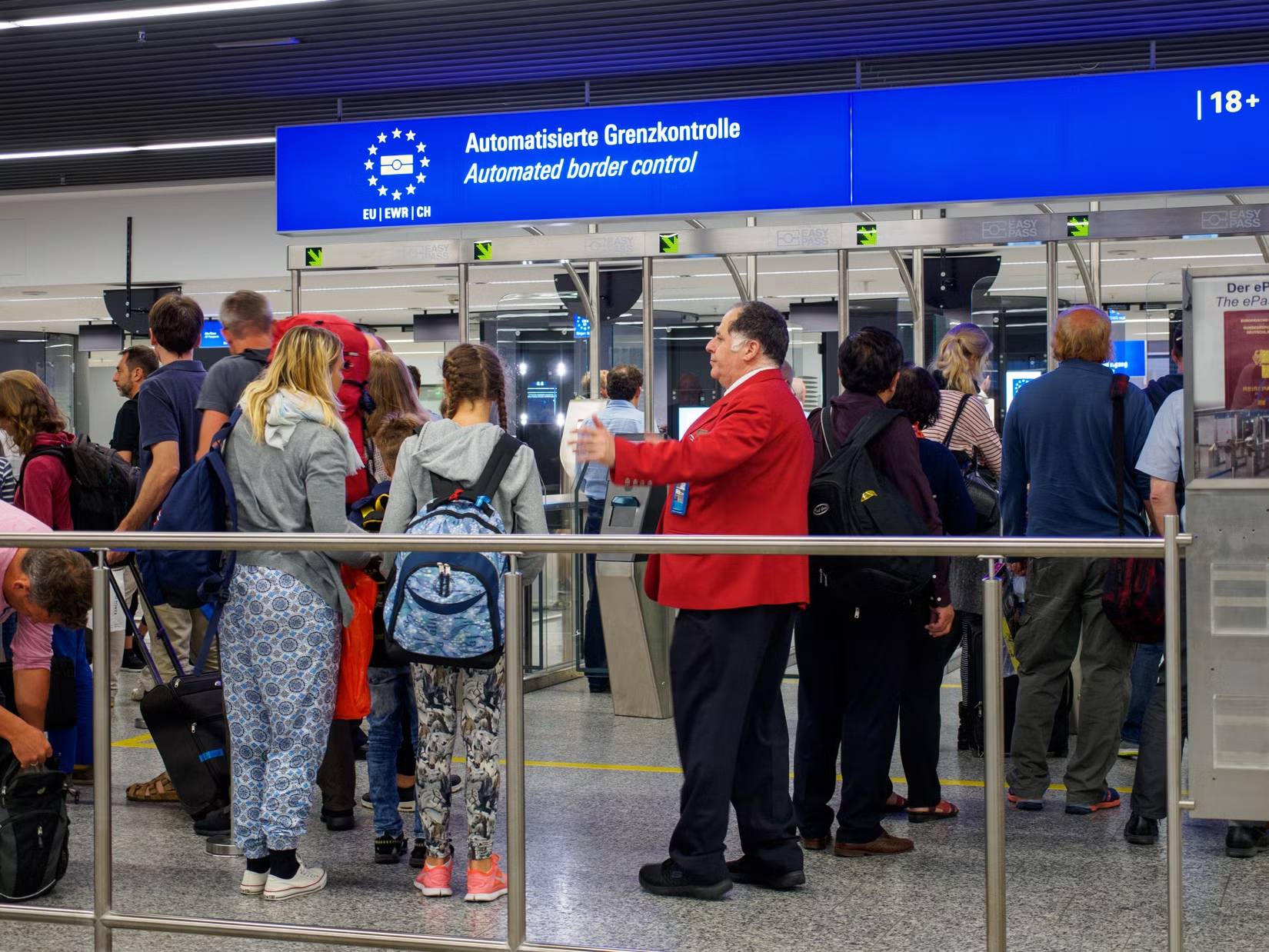
Traveling to Europe is about to get trickier and more expensive for visitors hailing from the United States and Canada.
As summer draws to a close, the European Union (EU) is preparing to implement a new set of requirements that will alter the way North Americans approach trips to European destinations.
This shift comes in tandem with the U.S. government’s decision to double its ESTA fees for travelers from allied nations, marking a significant change in cross-border travel dynamics.
For the past few years, the EU has been busy crafting a new entry-exit system (EES), aimed at tightening regulations on travelers from non-EU countries, which notably includes citizens of the U.S. and Canada.
Influencing this new procedure will be the European Travel Information and Authorization System (ETIAS), colloquially referred to as the “Euro-visa.”
Much like the ESTA system in the United States and Canada’s eTA, ETIAS serves as a pre-travel clearance method, necessitating that visitors from outside the EU apply for authorization before they embark on their journey into the Schengen Area.
The EES is more than just a bureaucratic hurdle; it will incorporate comprehensive new security measures, including the collection of biometric data, such as facial recognition scans and fingerprints, from travelers upon their arrival in EU territories.
This is a significant shift, as previously, U.S. and Canadian nationals enjoyed the freedom of entry without having to navigate cumbersome visa processes or pay entry fees.
Initially, the new EES and ETIAS were slated to go live in 2024. However, recent confirmations have pushed back the rollout date to 12 October 2025, alongside a jaw-dropping increase in the ETIAS fee.
Travelers from the U.S. and Canada will soon need to part with three times the original cost to secure their entry approval.
In practical terms, this means that the ETIAS, which used to cost around €7 (approximately $8 USD or $11 CAD), will now demand €20, translating to about $23 USD or $32 CAD per person.
While that might not sound exorbitant at first glance, consider a family of four heading to an EU country; suddenly, that fee balloons to €80 (around $94 USD or $128 CAD).
For those watching their travel budgets closely, that’s a notable bump in expenses.
Who gets a free pass on these charges?
The EU has outlined a few exceptions: travelers under the age of 18, seniors over 70, and family members of EU citizens can skip the fee altogether.
However, these exemptions are limited, leaving many American and Canadian travelers feeling the pinch when planning their European adventures.
Once these new rules are in effect, every non-EU visitor – whether they’re on vacation or business – will need to secure an ETIAS before traveling.
This process will coincide with the implementation of the EES, where heightened scrutiny and biometric checks will become the norm at borders.
The EES rollout will begin soon after summer, but ETIAS will follow a little later down the line.
What’s the timeline for this significant overhaul?
The EU’s EES system will gradually come into place starting in October 2025, marking a phased introduction where not all border crossing points will function under the same system immediately.
This means travelers could experience different levels of scrutiny depending on where they enter the EU during this transitional period, leading to what some experts refer to as “border roulette.”
Taking a closer look at the timeline, the original EES launch was set for November 10, 2024, but has since been pushed.
Officials have confirmed the full system won’t truly be operational until April 10, 2026. As for ETIAS, it might take its sweet time too, with a planned rollout anticipated for late 2026. So, what’s behind this elaborate new system?
The driving forces behind these changes are centered on security and tracking.
The new EES and ETIAS framework aims to create a central database linking all Schengen borders, enabling European authorities to monitor visitors from non-EU nations more effectively.
It’s not just about keeping tabs on tourists either; these systems are designed to identify criminal behavior, document potential terrorists, and combat identity fraud through the collection of biometric information.
These measures are poised to refine how the EU manages entries, ensuring that visitors abide by regulations such as the infamous 90-day rule that limits stays for American and Canadian tourists to three months within a six-month span.
With the EES in play, authorities will electronically monitor arrivals, eliminating the need for traditional passport stamping for most non-EU travelers, thereby enhancing efficiency.
As we look towards the future of travel with these upcoming changes, it’s clear that while the prospect of visiting Europe is becoming more daunting, it’s also an opportunity for officials to enhance security and streamline the process.
The potential revenue of around €300 million annually from the new ETIAS fee suggests this isn’t just a security measure but also a financial strategy for the EU as part of broader budget considerations.
While there’s some time before these costs hit travelers’ wallets, the message is clear: if you’re planning a trip to Europe in the coming years, make sure to account for these new expenses.
That’s right; the travel landscape is shifting, and those who plan ahead will fare best in this new era of European travel.