





I. Early Career and Rise to Stardom (1990s-early 2000s)
A. Breakout roles and initial success
Brendan Fraser’s journey in Hollywood began in the early 1990s, with his breakout role coming in 1992 with the film “School Ties.”
This drama, which also starred Matt Damon and Chris O’Donnell, put Fraser on the map as a promising young actor.
His performance caught the attention of both audiences and industry insiders, setting the stage for what would become a meteoric rise in the film industry.
Following “School Ties,” Fraser’s career quickly gained momentum.
In 1994, he landed a role in “The Scout,” for which he earned a substantial paycheck of $1.4 million – a clear indication that Hollywood was taking notice of the young actor’s potential.
B. Transition to action star with “The Mummy” franchise
Fraser’s transition from dramatic roles to action star began in the late 1990s, culminating in his iconic role as Rick O’Connell in “The Mummy” franchise.
The first film in the series, released in 1999, was a massive box office success, grossing $416 million worldwide.
Fraser’s charismatic performance as the adventurous and witty O’Connell resonated with audiences, cementing his status as a bona fide action star.
The success of “The Mummy” led to two sequels: “The Mummy Returns” (2001) and “The Mummy: Tomb of the Dragon Emperor” (2008).
These films further solidified Fraser’s position as a leading man in Hollywood, capable of carrying big-budget action blockbusters.
C. Peak of career and box office success
The late 1990s and early 2000s marked the peak of Fraser’s career, with a string of successful films that showcased his versatility as an actor.
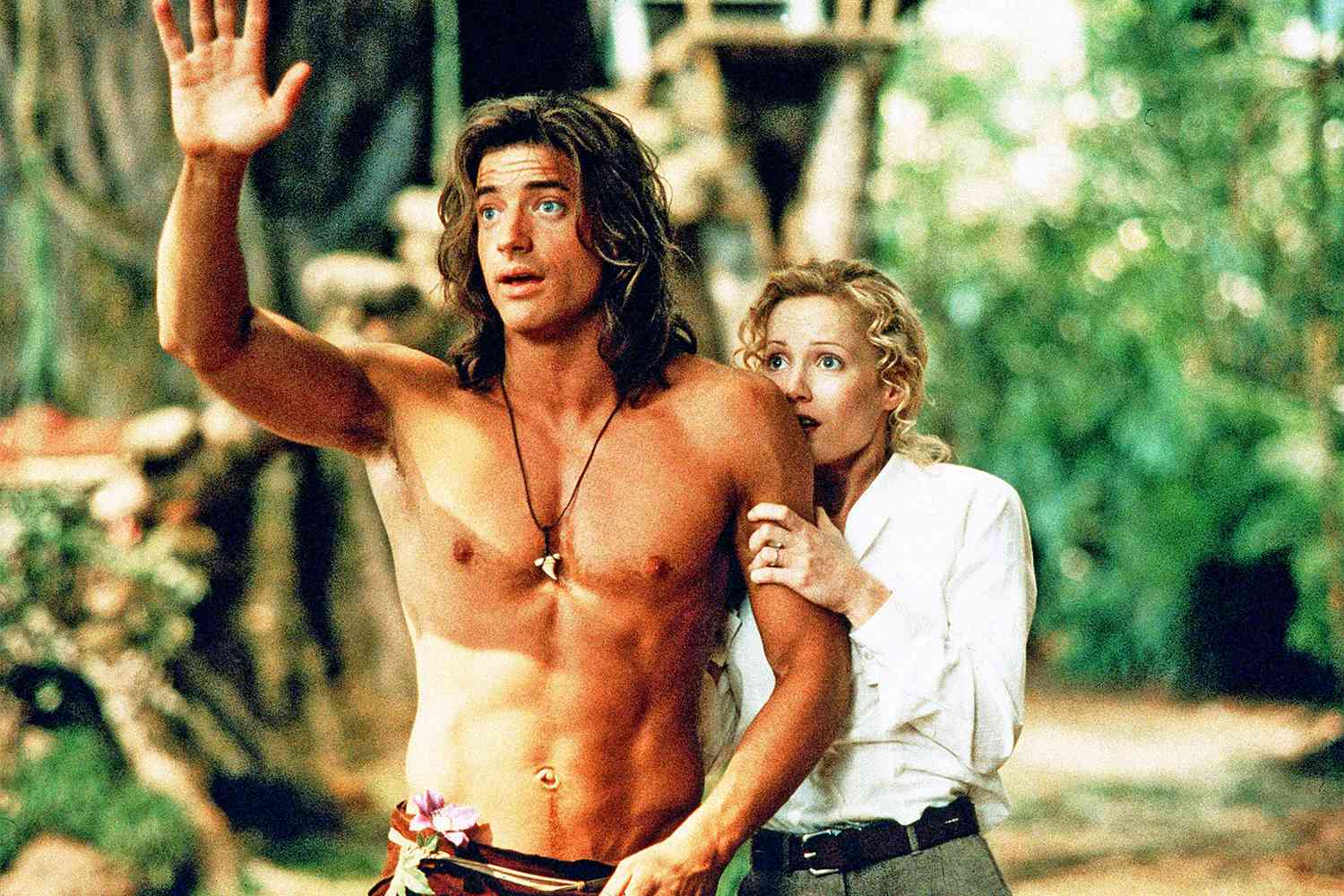
In 1997, he starred in “George of the Jungle,” a comedy based on the cartoon series that grossed $108 million at the box office.
This role required Fraser to undergo a significant physical transformation, which he described to Adam Sandler in a Variety interview: “I was waxed, greased, starved of carbohydrates.”
Fraser’s box office appeal continued to grow, as evidenced by his increasing paychecks.
For the first “Mummy” film, he reportedly earned $4 million.
This figure jumped to $10 million for “The Mummy Returns” and an impressive $14 million for “The Mummy: Tomb of the Dragon Emperor.”
In 2000, he also earned $10 million for his role in “Bedazzled.”
During this period, Fraser was one of Hollywood’s most sought-after actors, consistently delivering performances that resonated with audiences across various genres, from action-adventure to comedy.
II. Physical Toll of Stunt Work
A. Injuries sustained from performing own stunts
Fraser’s commitment to his craft, particularly his insistence on performing many of his own stunts, came at a significant physical cost.
The actor’s dedication to authenticity in action scenes, especially in films like “George of the Jungle” and “The Mummy” franchise, resulted in numerous injuries over the years.
In a 2023 interview with The Telegraph, Fraser revealed the extent of the physical toll his stunt work took on his body.
He described how the high-flying stunts and action sequences led to a series of injuries that would have long-lasting effects on his health and career.
B. Surgeries and medical procedures
The cumulative effect of Fraser’s stunt work necessitated several surgeries and medical procedures.
In his interview with The Telegraph, Fraser disclosed that he underwent a laminectomy, a surgical procedure that relieves pressure on the spine and nerves by removing bone spurs and tissues.
But the surgeries didn’t stop there.
Fraser also required a partial knee replacement and even had his vocal cords repaired at one point.
The extent of his medical interventions was so significant that Fraser spent nearly seven years in and out of hospitals, as he revealed in a 2018 interview with GQ.
C. Impact on Fraser’s health and career
The physical toll of Fraser’s stunt work had a profound impact on both his health and his career.
By the time he was filming “The Mummy: Tomb of the Dragon Emperor” in 2008, Fraser had to resort to extreme measures just to make it through scenes.
He described covering his body with muscle tape and ice packs, creating what he called a “Transformer-like exoskeleton” to manage his pain and continue performing.
These physical challenges inevitably affected Fraser’s ability to take on certain roles and may have contributed to his eventual retreat from the spotlight.
The constant pain and recovery periods from surgeries would have made it difficult to maintain the physically demanding schedule of a Hollywood leading man.
III. Personal Struggles and Career Decline (mid-2000s-2010s)
A. Sexual assault incident with HFPA president
In 2018, Fraser revealed a deeply personal and traumatic incident that had occurred years earlier.
In an interview with GQ, Fraser alleged that he had been sexually assaulted by Philip Berk, the former president of the Hollywood Foreign Press Association (HFPA), in 2003. Fraser’s account of the incident was harrowing.
He described how Berk, under the guise of a friendly gesture, groped him inappropriately.
“His left hand reaches around, grabs my ass cheek, and one of his fingers touches me in the taint.
And he starts moving it around,” Fraser recounted.
The actor described feeling ill and humiliated following the incident, saying, “I felt like a little kid. I felt like there was a ball in my throat. I thought I was going to cry.”
B. Possible blacklisting in Hollywood
Following the incident with Berk, Fraser’s representatives requested a written apology from the HFPA.
However, Berk “admitted no wrongdoing” and dismissed Fraser’s account as a “complete fabrication.”
This response left Fraser feeling unsupported and potentially vulnerable to career repercussions.
Fraser began to suspect that he might have been blacklisted by the HFPA following the incident.
He noted that he was rarely invited back to the Golden Globes after 2003, saying, “I don’t know if this curried disfavor with the group, with the HFPA. But the silence was deafening.”
C. Depression and retreat from the spotlight
The combination of physical pain from his injuries, the emotional trauma from the alleged sexual assault, and the fear of career repercussions took a severe toll on Fraser’s mental health.
He admitted to GQ that the incident made him “retreat” and “feel reclusive.”
Fraser described falling into a depression, which further contributed to his gradual disappearance from Hollywood’s A-list.
This period marked a significant decline in Fraser’s visibility in major film roles.
Once a ubiquitous presence in blockbuster movies, Fraser began to appear less frequently on the big screen, and when he did, it was often in smaller roles or less high-profile projects.
D. Divorce and personal challenges
Adding to his professional struggles, Fraser also faced personal challenges during this period.
His marriage to actress Afton Smith, whom he had married in 1998, ended in divorce in 2007. The divorce proceedings were reportedly contentious, particularly regarding alimony payments.
These personal difficulties, combined with his professional setbacks and health issues, created a perfect storm that contributed to Fraser’s retreat from the public eye.
Once one of Hollywood’s most bankable stars, Fraser found himself facing a career crisis and personal turmoil that would take years to overcome.
IV. The “Brenaissance”: Career Comeback
A. Rediscovery by director Darren Aronofsky
Fraser’s career resurgence, affectionately dubbed the “Brenaissance” by fans and media, began with his casting in Darren Aronofsky’s film “The Whale.”
Interestingly, Fraser wasn’t Aronofsky’s first choice for the role.
The director initially researched actors with obesity to play Charlie, a 600-pound man who is the central character of the film.
Aronofsky told Variety, “There was a chapter in the making of this film where we tried to research actors with obesity.
Outside of not being able to find an actor who could pull off the emotions of the role, it just becomes a crazy chase.
Like, if you can’t find a 600-pound actor, is a 300-pound actor or 400-pound actor enough?”
It was only after seeing Fraser in a trailer for a “low-budget Brazilian movie” that Aronofsky had the idea to meet with him for the role.
Their chemistry was almost instantaneous, with Aronofsky saying, “As soon as he left my office after our first meeting, I felt it.
I knew he could play someone who most people would start off by dismissing, but within five minutes they’d start to feel something for him.
Then, within 20 minutes, they’re starting to fall in love with the character, because there’s just something about Brendan.”
B. Starring role in “The Whale”
“The Whale,” based on the play by Samuel D. Hunter, became the vehicle for Fraser’s triumphant return to Hollywood.
In the film, Fraser portrays Charlie, a reclusive English teacher suffering from severe obesity who attempts to reconnect with his estranged teenage daughter.
The role required Fraser to undergo a significant physical transformation, wearing prosthetics that added up to 300 pounds to his frame.
Despite the challenges, Fraser approached the role with sensitivity and dedication.
At the New York premiere, he explained, “We felt an obligation to ensure that it was cumbersome.
It was accurate, that was what we strived for.”
C. Critical acclaim and awards season buzz
Fraser’s performance in “The Whale” garnered immediate critical acclaim upon the film’s release.
His portrayal of Charlie was praised for its depth, emotional resonance, and the dignity with which he approached the character.
The buzz quickly translated into awards season recognition.
Fraser received numerous nominations and wins from critics’ associations and major awards bodies.
Most notably, he received an Oscar nomination for Best Actor in a Leading Role, marking a pinnacle in his career comeback.
D. Emotional response to recognition (Venice Film Festival standing ovation)
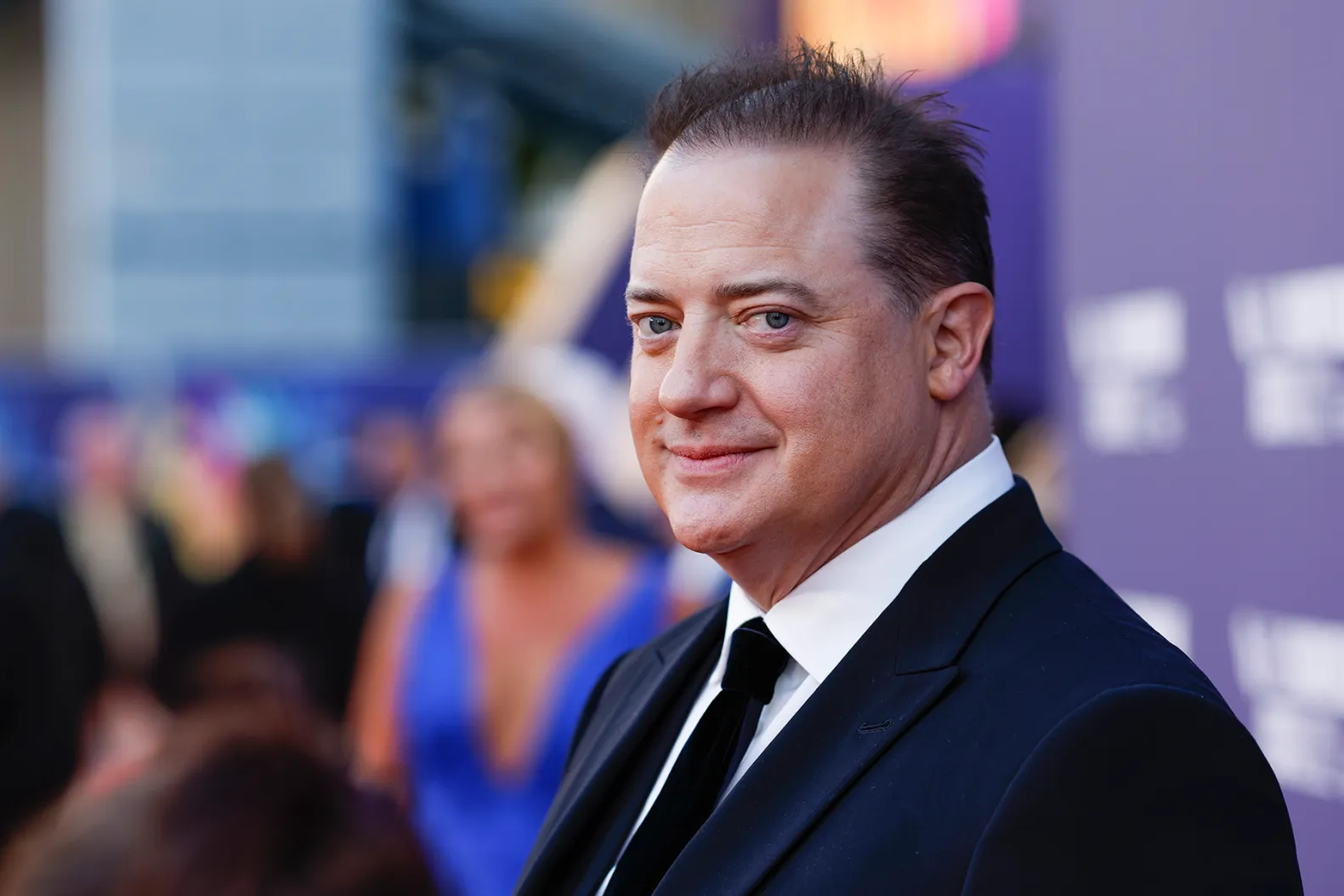
One of the most poignant moments of Fraser’s comeback came at the Venice Film Festival in September 2022. Following the screening of “The Whale,” Fraser received a six-minute standing ovation from the audience.
Footage of the moment showed Fraser visibly emotional, even attempting to leave the theater at one point, only to be encouraged to stay and soak in the applause.
This moment became symbolic of Fraser’s journey, representing not just the appreciation for his performance in “The Whale,” but also a collective acknowledgment of his resilience and triumphant return to form after years of personal and professional struggles.
V. Reflections on Career and Personal Growth
A. Coming to terms with past struggles
As Fraser re-entered the spotlight, he began to open up about the challenges he had faced during his time away from Hollywood.
In various interviews, he reflected on the physical toll of his earlier career, the emotional impact of the alleged sexual assault, and the subsequent depression he experienced.
In his interview with GQ, Fraser spoke candidly about these issues, demonstrating a newfound willingness to confront his past struggles.
This openness not only helped Fraser process his experiences but also contributed to broader conversations about mental health and abuse in the entertainment industry.
B. Newfound comfort in his own skin
Despite the challenges he faced, Fraser emerged from his period of retreat with a new perspective on himself and his career.
In an interview with The Telegraph, he stated, “I’ve made peace with who I am now.
And I’m glad that the work I can do is based in an emotional reality that’s not my own life but is one that I can strongly identify with.”
This sentiment was echoed in his comments to StyleCaster at the New York premiere of “The Whale.”
Fraser said, “I feel a lot more comfortable in my skin than I once was 20 years ago, but I don’t know a single actor alive who isn’t just grateful to have a job, so I hope I never lose sight of that.”
C. Perspective on Hollywood and his place in it
Fraser’s experiences have given him a unique perspective on the film industry and his role within it.
He has expressed gratitude for the opportunity to return to prominent roles while maintaining a grounded outlook on the nature of the business.
In his StyleCaster interview, Fraser added, “I really want to work on projects that I feel I could still learn something from the people that I’m working with.”
This statement reflects a mature approach to his career, prioritizing growth and meaningful work over mere stardom.
D. Ongoing battle with imposter syndrome
Despite his comeback and the widespread acclaim for his recent work, Fraser admits to still struggling with feelings of self-doubt.
In a February 2023 interview with NME, he revealed his ongoing battle with imposter syndrome:
“I’m never gonna get that comfortable,” Fraser said.
“And when I do that, I think it’s time to rethink my approach because I’m always…
I can’t get rid of the feeling that someone’s gonna walk in the room and tell me that I’m a fraud, or that I have impostor syndrome.
They’re gonna hand me a dish-towel and I’ll have to go get back to work.
But I hope I never lose that. In a way. Because I’m still not done proving myself yet.”
This candid admission highlights Fraser’s humility and his continued drive to improve and challenge himself as an actor.
VI. Impact and Legacy
A. Support from fans and industry peers
Throughout his comeback, Fraser has received an outpouring of support from both fans and fellow actors.
The term “Brenaissance” itself, coined by fans, demonstrates the public’s enthusiasm for his return to prominent roles.
In the industry, Fraser’s resilience and talent have earned him respect and admiration.
His co-stars and directors have frequently praised his professionalism, dedication, and the depth he brings to his roles.
B. Influence on discussions about sexual assault in Hollywood
Fraser’s decision to speak out about his alleged sexual assault has contributed to broader conversations about abuse and misconduct in the entertainment industry.
His story, coming in the wake of the #MeToo movement, helped to highlight that sexual assault can affect anyone, regardless of gender or status.
The incident and its aftermath also shed light on the potential career repercussions faced by those who speak out against powerful figures in the industry.
C. Inspiration for career comebacks and second chances
Fraser’s resurgence has become a inspiring story of second chances in Hollywood.
His journey from a top box office draw to relative obscurity and back to critical acclaim serves as a testament to perseverance and the unpredictable nature of show business.
For many in the industry and beyond, Fraser’s comeback represents hope – the possibility of overcoming personal and professional setbacks to find success and fulfillment later in life.
VII. Future Projects and Outlook
A. Upcoming roles (e.g., “Killers of the Flower Moon”)
Following the success of “The Whale,” Fraser’s career continues to gain momentum.
He has secured a role in Martin Scorsese’s upcoming period drama “Killers of the Flower Moon,” starring alongside industry heavyweights Robert De Niro and Leonardo DiCaprio.
This high-profile project further cements Fraser’s return to prominent roles and suggests a bright future ahead in terms of quality projects and collaborations with respected filmmakers.
B. Continued passion for acting and learning
Throughout his comeback, Fraser has consistently expressed his ongoing passion for acting and his desire to continue learning and growing in his craft.
In his StyleCaster interview, he emphasized his interest in working on projects where he can learn from his collaborators, indicating a commitment to ongoing improvement and development as an actor.
C. Hopes for the future of his career
While Fraser has not explicitly outlined his career goals, his recent choices and statements suggest a focus on challenging, meaningful roles rather than a return to the high-octane action films of his earlier career.
His willingness to take on physically transformative and emotionally demanding parts like his role in “The Whale” indicates a desire to push his boundaries as an actor and take on diverse, complex characters.
VIII. Financial Journey
A. Peak earnings during height of career
At the height of his career in the late 1990s and early 2000s, Fraser commanded impressive salaries for his roles.
His earnings grew substantially with the success of “The Mummy” franchise:
– For the first “Mummy” film (1999), Fraser earned $4 million.
– His salary increased to $10 million for “The Mummy Returns” (2001).
– By “The Mummy: Tomb of the Dragon Emperor” (2008), Fraser was earning $14 million.
In addition to “The Mummy” franchise, Fraser also earned $10 million for his role in “Bedazzled” (2000), demonstrating his box office draw and negotiating power at the peak of his career.
B. Financial challenges during career lull
As Fraser’s career waned in the late 2000s and early 2010s, he faced financial challenges.
His divorce from Afton Smith in 2007 resulted in significant alimony payments, which became a point of contention.
In 2013, Fraser petitioned the courts to reduce his annual $900,000 alimony payment, citing diminished earning capacity due to health issues and a lack of acting work.
This period likely saw a significant reduction in Fraser’s income compared to his peak earning years, as he took on fewer and less prominent roles.
C. Current net worth and career prospects
With his recent critical success and high-profile upcoming projects, Fraser’s earning potential and net worth are likely to see an upswing.
The success of “The Whale” and his Oscar nomination have undoubtedly increased his marketability and appeal to both studios and independent filmmakers.
His involvement in Martin Scorsese’s “Killers of the Flower Moon” suggests that Fraser is once again able to command significant salaries for high-profile roles.
While specific figures for his recent projects are not publicly available, it’s reasonable to assume that his compensation is on an upward trajectory.
Furthermore, Fraser’s resurgence in popularity may lead to additional revenue streams beyond acting, such as brand endorsements, speaking engagements, or potentially producing roles.
As he continues to take on challenging and critically acclaimed roles, his value in the industry is likely to continue growing.
It’s worth noting that Fraser’s approach to his career seems to have shifted.
In his interview with StyleCaster, he emphasized gratitude for having work and a desire to continue learning, suggesting that his focus may be more on artistic fulfillment than solely on financial gain.
However, this artistic integrity, combined with his renewed popularity, may well lead to both critical and financial success in the coming years.
As Fraser continues to rebuild his career, it will be interesting to see how his net worth and earning power evolve.
His comeback story has already defied many expectations, and if this trajectory continues, he may well surpass his previous financial peak.
:
Brendan Fraser’s journey in Hollywood is a testament to resilience, talent, and the unpredictable nature of the entertainment industry.
From his rise as a young star in the 1990s to his reign as an action hero in “The Mummy” franchise, Fraser experienced the highs of Hollywood success.
However, his career was derailed by a combination of factors including physical injuries, personal struggles, and the alleged sexual assault incident.
Fraser’s retreat from the spotlight could have been the end of his story in Hollywood, but his recent comeback has proven otherwise.
His powerhouse performance in “The Whale” not only showcased his acting prowess but also highlighted his ability to transform and adapt as an actor.
The “Brenaissance” is more than just a catchy phrase; it represents a second act in Fraser’s career that many in Hollywood rarely get to experience.
It’s a story of perseverance, of an actor facing his demons and emerging stronger, more nuanced, and perhaps even more talented than before.
As Fraser moves forward, he does so with a new perspective on his craft and his place in the industry.
His ongoing battle with imposter syndrome, despite his success, speaks to his humility and drive to continually improve.
This attitude, combined with his undeniable talent and the goodwill he has garnered in the industry, sets the stage for what could be the most interesting and fulfilling phase of his career yet.
Brendan Fraser’s story is far from over.
As he continues to take on challenging roles and work with respected filmmakers, audiences and critics alike will be watching with interest.
His journey serves as an inspiration not just to those in the entertainment industry, but to anyone facing setbacks or seeking a second chance.
The “Brenaissance” is a reminder that it’s never too late for a comeback, and that sometimes, the most compelling stories in Hollywood are the real-life journeys of its actors.