



In a remarkable and contentious claim, Simon Dorante-Day, a British-born man residing in Australia, has asserted that he is the “secret lovechild” of King Charles III and Queen Consort Camilla.
This audacious declaration comes with a legal twist, as Dorante-Day is actively pursuing a paternity test to confirm his assertion.
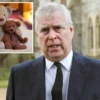
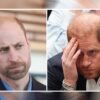
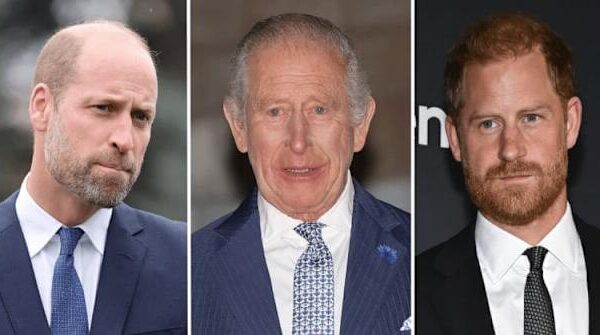
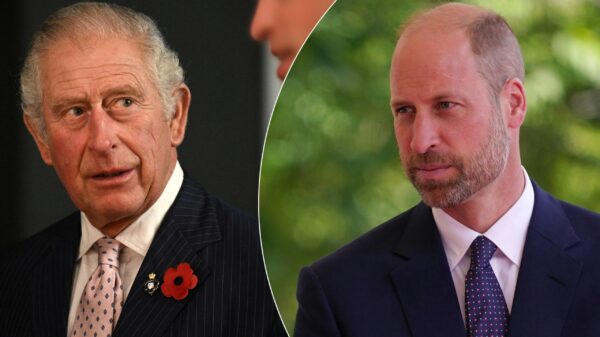
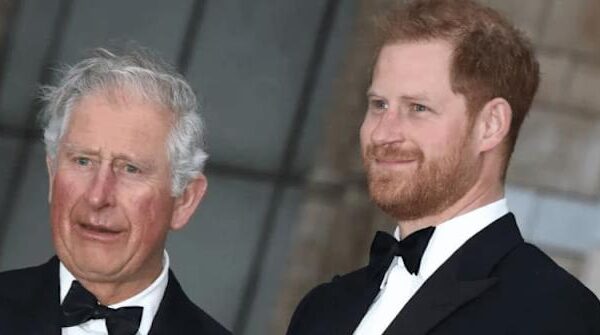
He believes that the striking similarities he sees between his own facial features and those of Charles, Prince William, and Prince Harry bolster his case.
To share his stance, he has taken to social media, posting side-by-side comparisons showcasing these resemblances.
Dorante-Day expressed his views on Facebook, pointing out, “The images of William, myself, Charles, and Harry highlight a significant inconsistency.
The left side of my face mirrors Charles’s exactly, while neither William nor Harry shares this resemblance.
Who are Charles’s real sons?”
He strongly believes that a four-way paternity test is crucial to definitively answer these questions.
Now, this isn’t just about facial features for Dorante-Day.
He has voiced his frustrations about what he perceives as a system of lies and corruption that the monarchy has perpetuated for nearly six decades.
“The truth behind the facade maintained by the monarchy and government for 58 years needs uncovering,” he passionately noted.
“There are criminal activities at play that must be brought into the light.”
The emotional weight of his claims is tied to his childhood experiences.
Dorante-Day recounted how he draws strength from memories of his grandmother’s words and the deep sense of longing he feels to understand his origins.
The idea that his life has been influenced by hidden dealings and attempts to thwart his quest for truth has left him undeterred in his mission.
“When I think about giving up, I remember my grandmother’s advice, the struggles I’ve faced, and the pain in my own eyes,” he reflected.
Adding another layer to his story, Dorante-Day claims that his adoptive grandmother, who had a connection to the late Queen Elizabeth II, revealed on her deathbed that he was the biological child of Charles and Camilla.
Skeptics have pointed out the timeline inconsistencies, noting that he was born in 1966—four years before Charles and Camilla supposedly met.
However, Dorante-Day contests these details, asserting that the public narrative is misleading.
He even reached out to the late Queen in hopes of getting answers, a move that ended in disappointment.
Following Queen Elizabeth‘s passing, Dorante-Day has felt a heightened sense of isolation.
He grew increasingly frustrated with King Charles‘s silence regarding his public claims.
Whether or not his allegations are valid, he maintains that the royal family and UK authorities should address his situation rather than ignore it.
His journey is not about fame or financial gain but rather about uncovering the truth of his lineage as an adopted child.
As King Charles and Queen Camilla prepare for their visit to Australia, Dorante-Day’s call for a paternity test has gained renewed attention.
His belief that a four-way test is a necessary step has stirred the pot in media circles, putting his assertions under the spotlight yet again.
The father of nine argues vehemently that the evidence he presents is simply too compelling to dismiss casually.
Born on April 5, 1966, in Portsmouth, UK, Dorante-Day was adopted at eight months old.
He claims that Charles studied in Australia shortly before his birth, and that Camilla was largely absent from public sight during that period, adding fuel to his theories.
Furthermore, he has shared his views on inconsistencies in the timeline of events surrounding the royal couple’s relationship, suggesting that they were in contact much earlier than reported.
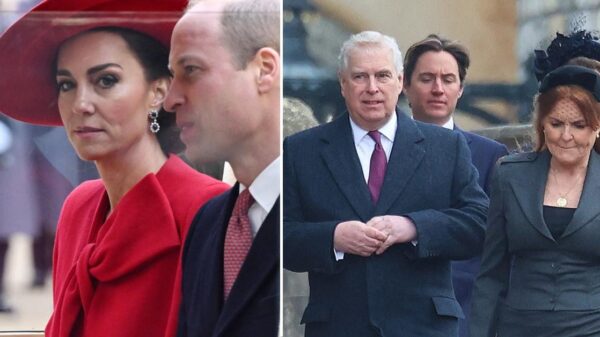
In various interviews, he has emphasized the potential physical similarities between himself and the younger generation of royals, including traits that he insists are shared by his own children and those of Prince William and Kate Middleton.
Dorante-Day remains committed to his pursuit, promising ongoing action aimed at convincing the King to submit to a paternity test.
His unwavering belief challenges the narratives surrounding royal family dynamics, pushing boundaries on how lineage and truth are perceived in the public eye.
With each social media post, comparisons, and public statement, Dorante-Day continues to fuel debate about identity, legacy, and the pressures of royal secrecy—leaving the world questioning just how far the truth may extend.