





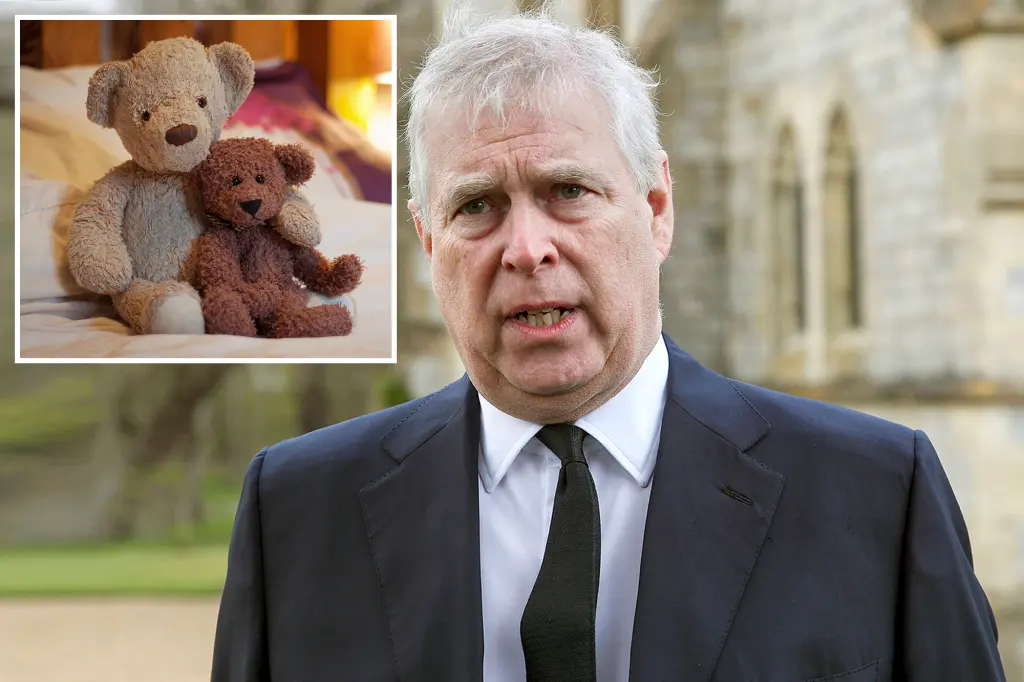
In an astonishing glimpse behind the closed doors of Buckingham Palace, a former maid has revealed the unusual demands of Prince Andrew concerning his extensive teddy bear collection.
Charlotte Briggs, who worked for the prince, shared her experiences which included a dedicated training day focused solely on the royal’s 72 soft toys.
Briggs, now reflecting on her tenure, recounted how she was immediately briefed on the peculiarities of Andrew’s teddy bears shortly after she began her role.
The expectations were set high for arranging these plush companions to his liking, particularly after his divorce from Sarah Ferguson in 1996.
“He had very specific ideas about how he wanted them organized,” she stated, describing it as “so peculiar.”
At the young age of 21, Briggs faced the daunting task of ensuring that each bear was meticulously positioned in Andrew’s royal chambers.
She explained that most of his collection consisted of bears dressed in nautical attire, a nod perhaps to his past as a Royal Navy helicopter pilot.
The arrangement was no small feat.
According to Briggs, creating the perfect display required about thirty minutes each day.
“They had to be in a precise order on his four-poster bed, the largest in the back and the tiniest upfront,” she recalled, with his cherished bears occupying special “thrones” flanking the bed.
Briggs’ commentary on Andrew’s strange attachment to his toys highlighted not only the absurdity of the situation but also the pressure she faced in meeting his expectations.
This week, unsettling insights emerged when a former palace guard remarked that the prince’s temper would flare if his teddy bears were not positioned correctly, confirming Briggs’ own experiences.
In a candid moment, she disclosed how often he would raise his voice, leading to personal distress.
One such incident involved her mistakenly leaving a gap in the curtains, which prompted Andrew’s furious outburst: “Can’t you f—ing do anything right?” This episode left her in tears, provoking thoughts about how unreasonable it was for him not to tend to his own needs.
Reflecting on her time spent under his employment, she pointed out the irony—an individual recognized for his military service during the Falklands War was unable to take charge of a simple task like closing curtains.
“It was utterly ridiculous,” she remarked, emphasizing that it illustrated a profound sense of entitlement.
Briggs admitted that she was a reluctant recruit for the role, as few were willing to take on the challenges associated with Andrew’s notorious behavior.
Tales of tantrums and fiery demands had already given him a troublesome reputation long before she applied.
Her stint with the prince was short-lived.
She chose to resign less than a year later, having left her post just as the world was about to witness the tragedy of Princess Diana‘s death in 1997.
Despite the salacious details emerging from her account, Buckingham Palace and representatives for Prince Andrew opted to maintain silence and didn’t comment on the revelations shared by Briggs.
These insights come at a time when attention has intensified on Andrew, particularly due to ongoing legal battles in New York with Virginia Giuffre, who claims she was coerced into sexual encounters with him.
He has adamantly denied her allegations, maintaining his innocence while navigating the fallout from his personal and public life.