



The story of Princess Diana and her marriage to Prince Charles remains a hot topic, even many years later.
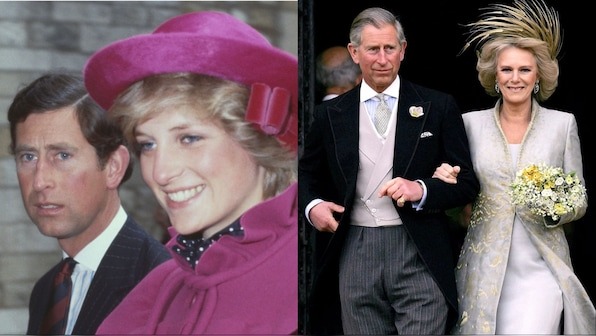
It’s well-known that their relationship was rocky, especially after Diana uncovered Charles’s long-standing affair with Camilla Parker Bowles.
Yet, in a surprising twist revealed by royal author Ingrid Seward, Diana actually did not hold Camilla accountable for the disintegration of her marriage.
Ingrid Seward, who had a close rapport with Diana, spoke about her insights on the podcast, “A Right Royal,” where she shared that just before Diana’s tragic passing in 1997, Diana told her, “It wasn’t Camilla that ruined our marriage; it was the people around Charles.” This comment has surfaced again, igniting discussions about the many factors influencing Diana’s tumultuous royal life.
The late princess expressed frustration about the influence of Charles’s inner circle, highlighting that they contributed to the complications in their relationship.
Seward reflected on this revelation, pondering its implications, while also recalling Diana’s father’s remarks on the complexities of the royal family dynamics.
It appears that Diana felt there was more at play than just her husband’s affair.
Charles, however, seemed to have a different perspective.
According to biographer Robert Jobson in his book Charles at Seventy: Thoughts, Hopes and Dreams, Charles believed that their marriage fell apart because they entered into it without truly knowing each other.
He purportedly said, “I desperately wanted to get out of the wedding,” after he realized the extent of their incompatibility during their engagement.
Moreover, Andrew Morton, in his book Diana: Her True Story—In Her Own Words, pointed out how Diana’s increasing popularity became a point of contention.
He recounted how crowds would cheer for her during public appearances, sometimes causing Charles to feel overshadowed.
This jealousy might have played a significant role in pushing him closer to Camilla.
As their marriage unraveled, both Charles and Diana began to publicly air their grievances.
Their escalating feud was so severe that even Queen Elizabeth, who traditionally opposed divorce, pushed for them to separate.
The fallout led to a tragic end in 1996 when the couple officially divorced, just a year before Diana’s untimely death in a car accident.
In a candid 1995 interview with the BBC’s Martin Bashir, Diana made waves when she said, “There were three of us in this marriage, so it was a bit crowded.” This remark, directed at Camilla, shocked many and reportedly did not sit well with the royal family, prompting a strong response from the Queen who insisted on a resolution to the marital strife.
Diana’s frustrations with royal life were underscored in her conversations with Seward, where she reportedly mentioned feeling guilty about her admissions regarding her affair with James Hewitt.
It seems that guilt and pain were frequent companions during her time in the royal spotlight.
In terms of family dynamics, Seward speculated on how Diana might respond to her son Harry’s recent interviews where he voiced his struggles within the royal family.
She suggested Diana would likely admire Harry’s bravery in speaking his truth, as she herself valued honest conversation, regardless of the fallout.
The tensions within the royal household, complicated by external pressures and media scrutiny, certainly contributed to the unraveling of both Charles and Diana’s marriage.
Their story serves as a cautionary tale about the challenges of love under the bright glare of public life.
As always, the whims of royal relationships continue to fuel speculation.
With discussions revived around Diana’s remarks, fans and critics alike are left to dissect the intricacies of her message about accountability and the actors behind the scenes in one of history’s most well-documented royal dramas.
Was it merely a love gone wrong, or were deeper issues at play?
The unfolding narrative raises fascinating questions about the human condition against the backdrop of royalty.
After all, in the grand scheme of things, isn’t love supposed to transcend such complexities?