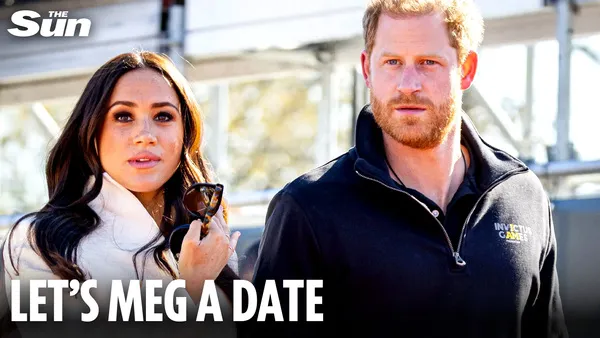
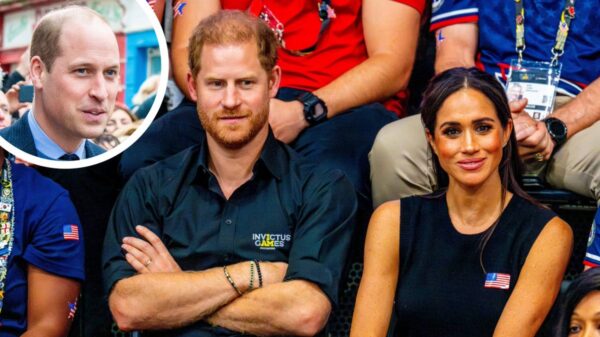






For the last five years, Prince Harry and Meghan Markle have embarked on a significant journey, moving between the UK, Canada, and the United States in search of a life free from royal constraints.
Yet their exit from royal duties has not shielded them from relentless public criticism.
Sentiments about the couple are markedly polarized; some commend their pursuit of independence, while others condemn them as traitors to the Crown.
In Britain, Harry and Meghan are often unfairly labeled as disloyal.
Critics accuse them of capitalizing on their royal backgrounds while distancing themselves from the monarchy.
Their continued use of royal honors in their business ventures has exacerbated this perception, especially now that they reside in an extravagant California mansion worth £10.9 million ($14 million), a stark departure from their royal obligations.
Public sentiment in the UK leans heavily negative towards Meghan, with a recent poll indicating that 65% of Britons view her unfavorably.
Harry’s image is also tarnished; only 26% of respondents express a positive opinion of him.
Many regard him as “spoiled” and “ungrateful,” particularly after the release of his tell-all memoir, Spare, which revealed intimate family details that many felt were an unwarranted breach of trust.
The British monarchy remains an esteemed establishment, woven into the fabric of national identity, tradition, and social stability.
A 2019 survey showed that even working-class citizens hold the monarchy in significant regard.
The Sussexes’ public forays—like interviews and documentaries—are often seen as direct affronts to this institution, which many see as a cornerstone of British life.
When Harry and Meghan briefly called Canada home in 2020, their move stirred tensions regarding the nation’s already tenuous relationship with the monarchy.
In Canada, the Crown symbolizes much of the country’s identity, yet the royal family has historically maintained a considerable distance.
Their brief stint on Vancouver Island drew criticism, especially when rumors suggested that Canadian taxpayers might cover their security, a notion quickly dismissed by officials.
This was followed by their explosive 2021 interview with Oprah Winfrey, which ignited fierce discussions across the Commonwealth.
During the interview, Meghan cited racist comments from a royal family member concerning their child’s potential skin tone, leading to widespread outrage.
Polls revealed that 48% of Canadians began to view the monarchy as a “systemically racist institution,” prompting critiques about its relevance from prominent political figures like Jagmeet Singh, leader of the New Democratic Party.
In the United States, Harry and Meghan’s reception has been mixed, caught in a web of fascination and discontent.
Americans have long held a fascination with British royalty, but the Sussexes’ perceived betrayal of the Queen has marred their appeal.
Ingrid Seward, editor-in-chief of Majesty magazine, observed that Americans felt let down by Harry and Meghan’s actions, especially toward the beloved monarch.
Despite their initial popularity, the aftermath of their high-profile projects, including the Oprah interview, Harry’s memoir, and their Netflix series, has seen their standing diminish.
As the initial thrill faded, so did public interest, leading to reports that their social circles in Los Angeles have begun to shrink.
Their professional endeavors have stumbled as well.
In 2023, Spotify chose to terminate its £16 million ($20 million) contract with the Sussexes’ Archewell Audio after they produced merely 12 episodes over two years.
Detractors argue that Harry and Meghan haven’t made meaningful contributions to American society, putting their status in the U.S. in jeopardy.
Complicating matters further is the potential political shift with Donald Trump’s re-election bid.
Trump has openly criticized Harry, claiming he has “betrayed the Queen,” and suggested that Harry’s U.S. visa could be scrutinized over past admissions of drug use mentioned in his memoir.
Even though the Biden administration has safeguarded Harry’s visa status, Trump hinted that he would consider this issue if he were to return to office.
Harry and Meghan’s transition from royal life to self-sufficiency underscores the challenges of reconciling individual choices with societal expectations.
While they aim for autonomy, their journey illustrates the complexities of modern celebrity and the monarchy’s ongoing relevance in today’s world.
As they seek to find their place in the U.S., their ability to stay relevant while staying true to their values remains uncertain.