







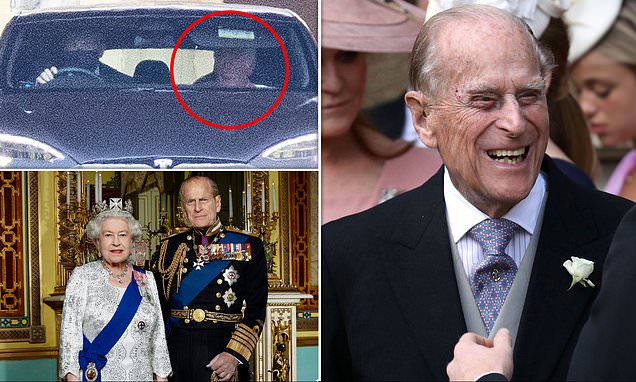
In a poignant revelation, royal biographer Gyles Brandreth has shared that Queen Elizabeth II was unable to reach her husband, Prince Philip, before he passed away on April 9, 2021.
This detail adds a layer of sadness to the story of their decades-long partnership, which lasted an extraordinary 73 years.
Brandreth’s book, “Elizabeth: An Intimate Portrait,” reveals a heart-wrenching account of that fateful morning.
While it was previously reported that the Queen was by Philip’s side, he asserts that she was, in fact, not there when he took his last breath.
Philip, the Duke of Edinburgh, had been resting in a hospital bed set up in his dressing room at Windsor Castle when complications arose.
On that day, Philip went to the bathroom with the assistance of a nurse.
Upon returning, he expressed feeling faint and requested help getting back into bed.
Unfortunately, the situation escalated quickly, and he succumbed before anyone could fetch the Queen.
Brandreth elaborates that she had not yet risen and was not called until after a doctor confirmed Philip’s passing.
Reflecting on his decades-old friendship with the royal couple, Brandreth emphasized the nature of their relationships.
“Royalty offers friendliness, not friendship,” he explained, highlighting the inherent distance that comes with their position in society.
Despite the kindness Philip showed him during their years of acquaintance, he was always aware of the limitations placed on such bonds.
The loss of Prince Philip left an indelible mark on Queen Elizabeth, though she found small comforts in the weeks following his death.
According to Brandreth, Britain’s longest-reigning monarch turned to the popular police drama “Line of Duty” for solace, engaging with the show and laughing at its complex plots and dialogue.
Vice Admiral Sir Tony Johnstone-Burt, the Queen’s Master of the Household, was reportedly instrumental in keeping her spirits up during that difficult period by watching the show with her.
Despite being introduced to television when it was still in its infancy, the Queen had a love-hate relationship with it.
She remarked on the challenges of understanding modern shows, lamenting, “There’s an awful lot of mumbling on television now.” It’s a relatable sentiment—many of us have encountered the frustration of trying to decipher poorly spoken dialogue!
The couple, who met as teens and married in 1947, experienced a lifetime of monumental changes together.
Their partnership was steady through times of war, change, and personal trials.
Throughout it all, they remained devoted to one another, especially during their private moments spent together at Windsor Castle during the COVID-19 lockdown.
Philip’s funeral was a solemn affair attended by just 30 family members due to pandemic restrictions.
The simplicity of the ceremony, which he had planned himself, reflected his character—one that favored a no-nonsense approach to life.
A former palace spokeswoman described how this muted farewell was probably the way he would have wanted it.
During the service, Queen Elizabeth, clad in black and wearing a mask, poignantly sat alone in a pew.
Her daughter, Princess Anne, later commented that the image of her mother during the funeral was more jarring than the in-person experience for the family, illustrating the heightened emotion captured in the moment.
Throughout their 73 years together, Elizabeth and Philip welcomed four children: King Charles III, Princess Anne, Prince Andrew, and Prince Edward, along with numerous grandchildren and great-grandchildren.
Their love story, described by biographers as enduring and deep, offers a glimpse into the intimate bond that transcends royal duties and public personas.
As we remember Queen Elizabeth, who passed away herself on September 8, 2022, it’s evident that her life was profoundly shaped by her partnership with Prince Philip.
They are now at rest side by side at the King George VI Memorial Chapel in Windsor Castle, a final resting place fit for an extraordinary royal couple whose legacy will echo through the ages.