

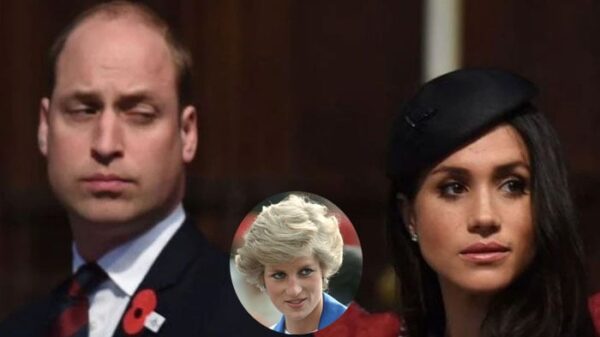
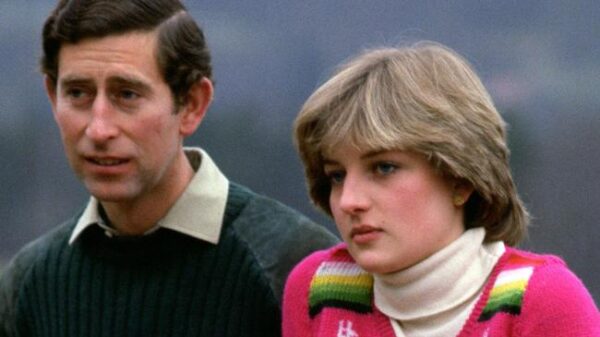
Princess Diana died in August 1997, when Prince William was fifteen and Prince Harry was twelve.
She left them many things — her compassion, her directness, her complicated legacy — but she also left them something less tangible and more enduring: an instinct.
A set of values about what mattered, what to guard against, and what to recognise when it arrived.
Those who knew Diana well, and who have watched William’s response to the events of the past decade, believe they can trace a line from the mother’s private counsel to the son’s current position.
Diana, they say, saw this coming. Not Meghan specifically. But someone like her.
The evidence for this lies partly in what Diana said and partly in what William does.
Those who knew her describe a woman who was acutely aware of what the pressures of royal life could do to the people subjected to them — and equally aware of what certain kinds of personalities could do to the institution.
She had watched the palace machinery respond to her own combination of emotional expressiveness, media savviness, and refusal to be contained, and she understood, from the inside, how dangerous that combination could be.
Royal author Ingrid Seward, who spent years close to Diana and wrote extensively about her, has noted that Diana was “very anxious” about the direction Harry eventually took — a direction, Seward has clarified, that Diana would not have endorsed, even as she would have understood some of the impulses behind it.
The anxiety was specific. Diana worried about what she called the wrong kind of influence entering her sons’ lives.
She did not mean a foreign-born woman or a divorcée or an actress.
She meant someone whose ambitions were not aligned with the wellbeing of the institution — or, more precisely, with the wellbeing of the boys she had given everything to protect.
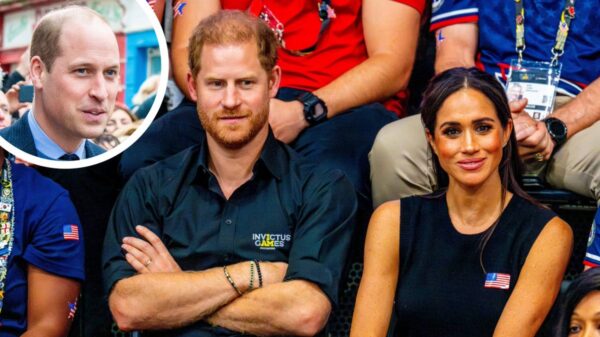
William’s reported fury at comparisons between Meghan and Diana is, in this context, deeply revealing.
Multiple sources close to the Prince of Wales have described him as “furious” and “infuriated” when those comparisons are made — when commentators or Meghan’s supporters suggest that Diana would have approved of her daughter-in-law’s choices, or that the two women share a common spirit of institutional defiance.
William finds the equation not merely inaccurate but offensive, as if it reduces his mother to a simple rebel when she was something far more complex.
Diana’s relationship with the media is the most commonly misunderstood aspect of her life.
She did not simply “go to the press.” She used the press surgically, at specific moments, for specific purposes — and she did so with a clear-eyed understanding of the costs involved.
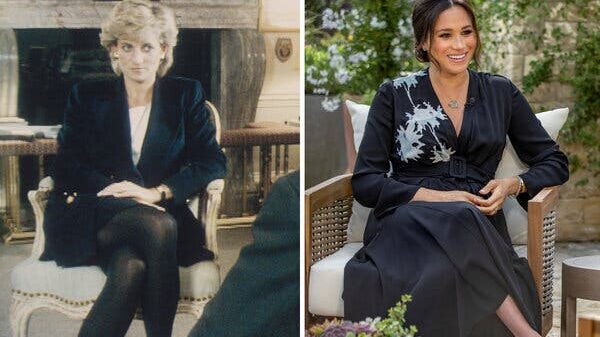
The 1995 Panorama interview with Martin Bashir, the most explosive media intervention of her life, was not a spontaneous act of grievance-airing.
It was a calculated move in a specific tactical situation. She knew what she was doing. She understood the fallout.
She did it anyway, because she believed the situation required it.
What Diana said privately to both William and Harry about the people they would eventually love and marry cannot be known with certainty — she died before either of them was old enough for those conversations to be urgent.
But those who knew her well, who heard her talk about her hopes for her sons, describe a consistent theme: she wanted them to find people who understood duty, who could carry the weight of the institution without being crushed by it, and who would strengthen rather than fracture the bonds that held the family together.
Whether she would have seen those qualities in Meghan is the question.
The photographer John Swannell, who knew Diana personally, has suggested she would not have.
Royal biographer Tina Brown, whose portrait of Diana is the most comprehensive available, has noted that Diana would have been “very protective” of Harry — and “very anxious” about where he ended up.
Neither of them claims to speak for Diana definitively.
But both have spent enough time with her, absorbed enough of her perspective, to have a view that carries weight.
William carries the memory of his mother differently from Harry.
Harry’s grief has been more public, more processed in the therapeutic language of trauma and abandonment.
William’s has been more contained, more private, more formed into something useful rather than spoken aloud.
Those who are close to him describe a man who thinks about what Diana would have wanted in very concrete terms — not as an abstract sentiment but as a practical guide.
When he evaluates situations, she is part of the evaluation.
The warning Diana left William was not, in all probability, about Meghan Markle.
It was about a type — about the kind of person and the kind of dynamic that could fracture what she had worked so hard to give her sons despite the worst marriage in modern royal history.
She had taught them how to recognise love that was genuine and love that was complicated.
She had taught them to distrust flattery and to value constancy.
She had tried, with the limited time she had, to give them the emotional tools they would need in a world that would place extraordinary demands on both.
That William and Harry have taken such different paths from those tools — that one has stayed and fought for the institution while the other has left and fought against it — is perhaps the most poignant aspect of Diana’s legacy.
She gave them both the same education.
They drew from it completely different conclusions.
And the figure of their mother, invoked constantly in the public narrative surrounding both of them, has become a kind of contested territory — each side claiming her as their validator, neither side entirely wrong.
Those who knew Diana most closely tend to be the most careful about what they claim to know.
They remember a woman of extraordinary complexity — capable of tremendous warmth and considerable calculation, of selfless devotion and sharp strategic awareness.
She was not a simple figure, and the warnings she might have left her sons were not, they believe, simple either.
What they say with confidence is this: Diana saw in the monarchy both a prison and a purpose.
She understood that the institution would demand everything from the people within it and would not always give enough in return.
She fought that reality for herself, and she tried to prepare her sons for it.
Whether her preparation was sufficient — whether the instincts she passed on were strong enough to navigate what came after her — is the question that her life, and her sons’ lives, continues to ask.