

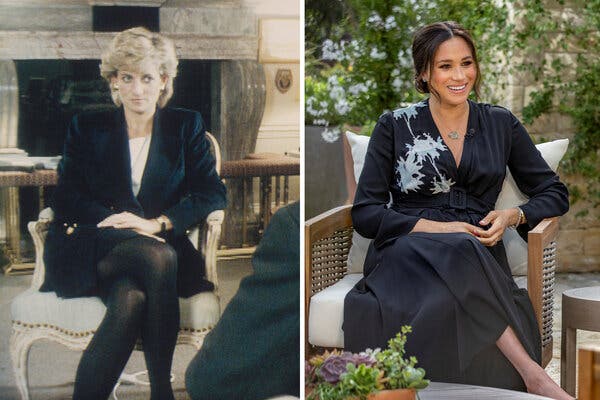
The question has been asked in royal circles, in tabloid columns, and in drawing rooms across Britain for years: what would Princess Diana have made of Meghan Markle?
Those who knew Diana best — the photographers, biographers, and intimate friends who spent time with her before her death in 1997 — have reached a striking consensus.
Diana would not have been a fan.
And at least one person who spent considerable time with her has provided a word so specific, so charged, that it has lodged in the public imagination ever since.
That word came from John Swannell, the photographer who worked with Diana over many years and developed a genuine friendship with her during that time.
Swannell did not speculate vaguely when asked what Diana would have thought of the American actress who married her younger son.
He gave a direct answer. “I don’t think she would have liked her,” he said, “because she’d think she’d stolen her son.
He’s like a puppet now.” The word he reached for was stark: Diana would have branded Meghan a thief — a woman who had taken Harry from his family, his country, and, Swannell implied, from himself.
The puppet metaphor is worth pausing on.
Swannell did not merely suggest that Harry had been influenced by Meghan, or that their relationship had changed him.
He said Harry had become controlled — that his responses, his statements, and his decisions bore the imprint of someone else’s direction.
Whether that assessment is fair is a matter of debate.
What is not debatable is that it represents the private view of someone who knew Diana intimately and believed he was articulating what she would have felt.
Swannell went further. “She seemingly had an agenda when she came over,” he said of Meghan — a claim that echoes, almost word for word, the private views of Lady Elizabeth Anson, the Queen’s first cousin, who told royal biographer Sally Bedell Smith shortly before the 2018 wedding: “We think she engineered it all.” The convergence of these two independent assessments, from two people with entirely different relationships to the royal family, is notable.
Both point to a woman arriving with a plan.
Tina Brown, the author and royal commentator who wrote extensively about Diana in her biography The Diana Chronicles, has been equally direct.
Diana, she told interviewers, was “very, very protective” of Harry.
She was also, Brown noted, “very anxious about this direction they’ve taken” — a phrase that encompasses both Harry’s Megxit and the years of public grievance-airing that followed it.
Brown was careful to note that Diana was also complicated, and that she herself had used the media in ways that the palace found problematic.
But the distinction Brown drew was clear: Diana fought from within, for her own dignity and her sons’ wellbeing.
What Harry and Meghan have done, in Brown’s reading, is something different.
Diana’s relationship with Harry was ferociously close.
He was the more openly emotional of her two sons, the one who wore his feelings near the surface in ways that mirrored her own tendency toward passionate self-expression.
She worried about William’s reserve and found in Harry a kind of kindred spirit — someone who struggled with the same tension between institutional duty and personal authenticity that had defined and ultimately destroyed her own royal life.
If anyone understood the pressure Harry would face, it was her.
But understanding that pressure was precisely why, those who knew her believe, Diana would have been alarmed by the direction Harry took.
She had spent the last years of her life trying to build an existence outside the palace’s grip while maintaining her connection to her sons and to the charitable causes that gave her life meaning.
Her separation from Charles had been painful and public.
Her battles with the institution had cost her enormously.
She had never suggested that the answer was to leave entirely — to cross an ocean, cut ties with the family, and begin a war of public revelations from a Californian compound.
William’s reported fury at comparisons between Meghan and Diana is instructive here.
Those close to William say he finds the equation offensive — that using Diana’s name to validate Meghan’s choices misrepresents who Diana was and what she stood for.
Whether William is right about his mother’s likely views is something that cannot be determined with certainty.
But his instinct — that Diana would not have recognised herself in Meghan’s story — is shared by the biographers, photographers, and friends who have spoken most openly on the subject.
There is also the matter of the children.
Diana’s defining motivation in everything she did was the wellbeing of William and Harry.
She fought the institution not as an abstract ideological project but because she believed it was destroying her sons as well as herself.
The question her friends ask, when they try to imagine how she would have responded to Meghan, is simply this: would Harry seem happier to her now?
Would the son she described as a “wild animal” who needed the right person to calm and ground him — would that son seem calmed and grounded by his current life?
The answer most of them give is no.
What Swannell’s “thief” comment captures is something specific and painful: the sense that Harry has been removed not just from his family and his country, but from a version of himself.
The Harry who played polo and served in Afghanistan and showed up at charity events with his sleeve rolled up — that Harry is not visible in the man who now gives Netflix interviews and reads passages from his memoir about his brother’s betrayals.
Whether Meghan is responsible for that change, or whether she simply provided the conditions under which Harry’s existing pain could finally find an exit, is perhaps the central question of his adult life.
Diana, of course, never had the chance to answer it.
She died in Paris in August 1997, when Harry was twelve years old.
She never met Meghan.
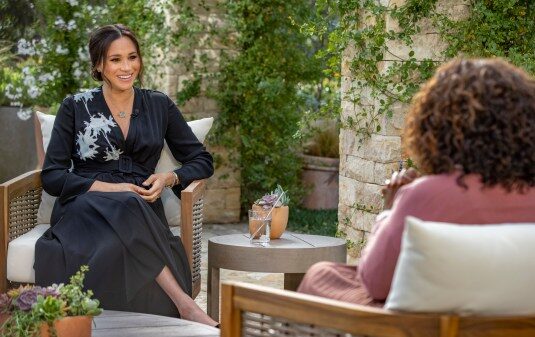
She never saw the Oprah interview or read Spare or watched the Netflix documentary.
Everything that is said about what she would have thought is, necessarily, speculation — projection filtered through grief and through the particular lens of whoever is doing the projecting.
But the people who project most confidently are those who knew her.
Swannell spent years in her company.
Brown has written the most comprehensive account of her life available.
And both, when pressed, point in the same direction.
Diana would have seen in Meghan something that troubled her.
She would have used a word that cut.
And she would have found, as she always did, a way to say precisely what she meant.
The word John Swannell gave us was “thief.” Diana, he believed, would have felt her son was taken — not by malice necessarily, but by the same irresistible force that takes people from the lives they were born into when a powerful love arrives and rearranges everything.
Whether she would have blamed Meghan or forgiven her — whether she would have fought for Harry or mourned what she could not change — is something only Diana could have told us.
And Diana is not here to say.