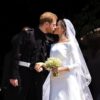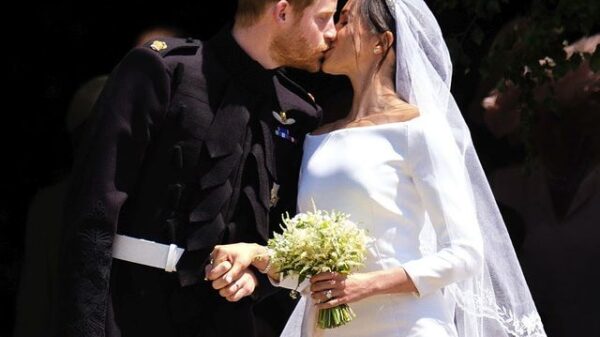


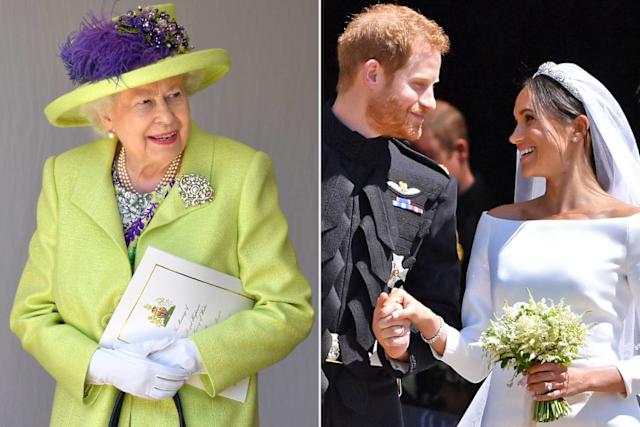
Long before the world watched Meghan Markle walk down the aisle of St. George’s Chapel in Windsor, some of the people who knew her best were trying to stop her from getting there.
Meghan has spoken about this herself — the friends who pulled her aside, who asked the hard questions, who told her plainly that the life she was walking into would be unlike anything she had experienced before.
Their warnings were specific.
Their concern was genuine.
And Meghan, in love and determined, did not listen.
The clearest account came from Meghan herself.
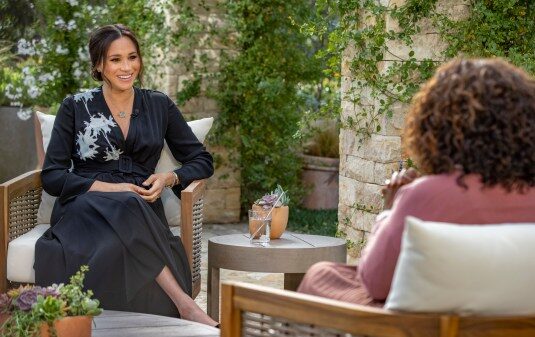
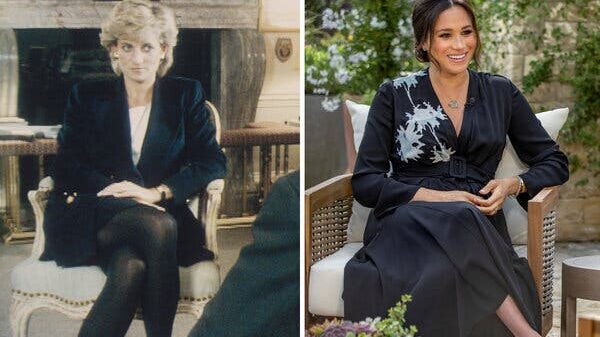
In interviews and in the Netflix documentary Harry & Meghan, she described how friends warned her that marrying into the British royal family would “destroy” her — not through malice, but through the grinding machinery of an institution that had, by her account, already claimed Princess Diana and countless others.
Some friends told her she had no idea what she was getting into.
Others, with more specific knowledge of how the palace worked, were even more pointed in their concern.
What Meghan described was a pattern familiar to anyone who has watched a friend walk into a situation they know will be difficult: the private conversations, the unanswered questions, the sense that no amount of rational argument would penetrate the particular armour that romantic certainty provides.
She heard the warnings.
She understood them intellectually.
She proceeded anyway.
From the British side of the equation, the pressure came from an unexpected direction.
Prince William, Harry’s brother, reportedly made his reservations known before the engagement was announced.
Those who have read Harry’s memoir Spare will recall his account of William raising concerns about the relationship — characterising Meghan in ways Harry found offensive and brotherly, as if William was trying to protect him while simultaneously insulting the woman he loved.
The conversation, by Harry’s account, damaged their relationship in ways that have never fully healed.
William’s concern, as reported by multiple sources, was less about Meghan personally than about pace.
Harry and Meghan had known each other for a little over a year when the engagement was announced in November 2017.
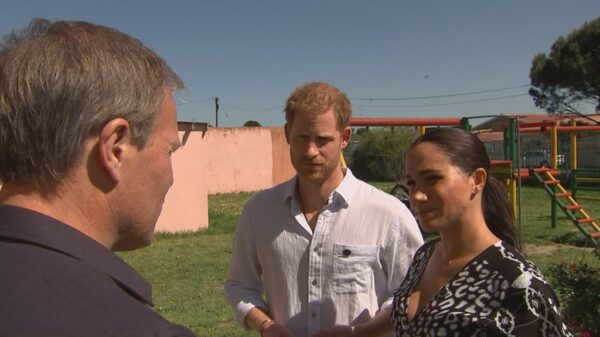
They had conducted much of their relationship at a distance — Harry in the UK, Meghan in Toronto filming Suits.
The rushed timeline gave William pause, as it gave the Queen pause, as it apparently gave some of Meghan’s own friends pause.
Everyone who cared for one of them was saying the same thing: slow down.
The friend who comes closest to being named in these accounts is a woman from Meghan’s pre-royal life who reportedly told her, in direct terms, that she was about to become the most scrutinised woman in the world without any of the institutional preparation that royal family members typically receive.
She pointed to the treatment of other women who had married into the British establishment and asked Meghan whether she was ready for that level of exposure.
Meghan, by her own account, said she was.
She later acknowledged that she had underestimated what was coming.
There is a particular kind of loneliness in being the friend who gives the warning that goes unheeded.
You watch someone you love move toward something you can see but they cannot, and when you speak up, the best you can hope for is that they remember, later, that you tried.
Several of Meghan’s friends from her television years have quietly faded from her public life since the wedding.
Whether that reflects the natural contraction of a friendship group when one member’s life changes dramatically, or whether it reflects something more specific about what happened when those friendships were tested, depends on who you ask.
What is clear is that the warnings came from multiple directions and none of them landed.
Not from Meghan’s American friends who had watched the royal machine from the outside.
Not from William, who had grown up inside it.
Not from the Queen, who had gently suggested Harry might want more time.
The wedding happened.
The fanfare was extraordinary.
And within two years, almost everything the people who raised concerns had predicted had come to pass.
Meghan has been admirably honest about the fact that she was unprepared for what royal life would demand.
She has spoken about not being given adequate support, about the isolation she felt, about the media treatment that preceded her mental health crisis.
What she has been less forthcoming about is the degree to which those who tried to warn her were providing the support she later said was absent — they just provided it before the wedding, not after, and she was not in a position to receive it.
The tragedy of warnings, as a literary device and as a human experience, is that they are almost never sufficient.
The person who needs to hear the warning is usually the last person able to act on it.
Love is not particularly responsive to risk assessment.
The institution Harry was embedded in had spent centuries insulating itself from individual emotional choices, and Meghan arrived with more personal conviction than institutional knowledge.
Neither quality, in the end, was enough.
The friends who tried to stop the wedding are mostly silent on the subject now.
Some have maintained their relationship with Meghan at a distance.
Others have drifted away entirely.
A few have privately noted that they were not surprised by how things unfolded — that what happened after the wedding was, in their view, the predictable consequence of choices made before it.
They do not say this with satisfaction.
They say it with the particular grief of people who loved someone enough to try, and failed.
What history will make of those warnings — of William’s brotherly intervention, of the friends’ transatlantic phone calls, of the Queen’s quiet “wait a year” — is not yet clear.
What is already clear is that they came too late, or not late enough, or were simply swamped by the momentum of something too large and too passionate to be stopped by the well-intentioned concern of people who could see, from the outside, what love does not permit you to see from within.