


On the night before her wedding to Prince Charles, Princess Diana had “a very bad bit of bulimia.”
That phrase, in its clinical simplicity, captures something essential about what the most famous royal marriage of the twentieth century actually was — not the fairy tale that a billion television viewers chose to see, but a crisis already underway before the first vow was spoken.
Diana would later describe that evening, and the weeks around it, as the beginning of something that would define her entire marriage: a desperate, self-destructive response to an emotional reality that no one around her was willing to acknowledge.
Diana told the story herself, in the recordings she made secretly for Andrew Morton’s 1992 biography Diana: Her True Story.
She spoke without self-pity and without evasion.
The bulimia had begun during the engagement — triggered, she believed, by the accumulating pressure of the royal machine and by the particular helplessness of being unable to make Charles see what she was going through.
By the honeymoon on the Royal Yacht Britannia, it had taken over entirely. “By then the bulimia was appalling, absolutely appalling,” she said. “It was rife, four times a day on the yacht.”
The condition Diana had before she would marry Charles — the condition in the truest sense of the word, the prerequisite that she needed to be met — was simple: she needed to know that he loved her and only her.
It was a need that the palace’s courtship machinery had never addressed, and that Charles himself appeared constitutionally unable to satisfy.
His relationship with Camilla Parker Bowles had not ended with the engagement.
Diana knew it.
He knew she knew it.
And the knowledge sat between them throughout the engagement, poisoning the weeks that should have been the happiest of her life.
The royal family’s response to Diana’s visible distress was consistent and, in retrospect, shocking.
Rather than addressing the underlying crisis — the loveless quality of a marriage being constructed for dynastic rather than romantic purposes, the young woman’s desperate need for reassurance that was going unmet — they treated her illness as the problem. “They all blamed the failure of the marriage on the bulimia,” Diana said, “and that’s taken some time to get them to think differently.” The bulimia was not the cause of the marriage’s failure.
It was the symptom.
But the institution, as always, preferred the symptom to the underlying truth.
Diana had been twenty years old when she became engaged to Charles.
She had known him for barely thirteen months.
The courtship had been conducted largely in public, at formal events and royal engagements, with the understanding — shared by everyone except, apparently, Diana herself — that emotional intimacy was not the point.
The point was lineage, duty, the continuation of a dynasty.
Diana arrived in the relationship expecting something that the institution had never promised and was not equipped to provide.
“Anything I could find I would gobble up and be sick two minutes later,” she said of the bulimia’s grip on her during the honeymoon. “Very tired.” The exhaustion she described was not merely physical.
It was the exhaustion of a person doing enormous emotional labour in conditions of complete institutional indifference — trying to hold herself together in a marriage that had begun without the foundations marriages require, surrounded by people whose response to her distress was to suggest that she was the problem.
Charles’s behaviour during this period has been assessed with varying degrees of charity by biographers.
Some have argued that he was himself in a difficult position — genuinely fond of Diana, obligated to marry for reasons of duty rather than love, and unsure how to handle a wife whose emotional needs were overwhelming in ways he had not anticipated.
Others have been less generous.
Diana’s own account suggests a man who responded to her crying with irritation, who dismissed her attempts to communicate her distress as tiresome, and who continued his relationship with Camilla with a lack of discretion that was, she believed, designed to be seen.
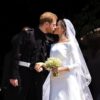
The wedding itself — that June morning in 1981, watched by a global audience of seven hundred million people — was, by Diana’s account, already a performance.
She was performing serenity she did not feel.
She was performing love for a man who had not given her reason to feel loved.
She was performing the role of a woman beginning the happily-ever-after that the fairy tale required, while privately battling an illness that no one around her would acknowledge as real.
The vows she spoke, including the famous stumble in which she called her husband “Philip Charles Arthur George” rather than “Charles Philip Arthur George,” were delivered in a state of considerable internal distress.
She had not slept well.
She had not eaten well — or rather, she had eaten and immediately purged, the cycle that would dominate her life for the next decade.
The dress, the cathedral, the Prince of Wales beside her — all of it was real.
Her peace of mind was not.
What Diana needed, before she could have walked down that aisle in any meaningful psychological sense, was what she never got: a clear, unambiguous statement from Charles that Camilla was in his past and Diana was his future.
That is not a complicated request.
In any ordinary courtship, it would have been automatic — implicit in the proposal, confirmed by the engagement, renewed by the wedding vows.
In this courtship, in this engagement, in this marriage, it was never given.
And the absence of it created the condition that the media photographed as radiance and that Diana experienced as breakdown.
She would later say that she chose bulimia over alcohol because the latter would have been obvious.
That calculation — weighing two forms of self-destruction against each other for their visibility — is as precise a description of life inside the House of Windsor as any royal memoir has managed.
She could not leave.
She could not speak.
She could not demand what she needed.
All she could do was find a way to manage what was happening to her in private, in the privacy of her own body, away from the cameras and the courtiers and the man who had married her for reasons that had nothing to do with the feeling that the cameras, with their trained eyes for spectacle, chose to call love.
The condition Diana needed met was never met.
The marriage lasted eleven years, produced two sons, and ended in the most public unravelling the modern monarchy has experienced.
She died seven years after the divorce, still young, still trying to build something that felt like her own life.
The bulimia eventually went into remission.
The need that produced it never fully did.
And the wedding that the world watched as the beginning of a fairy tale began, as she would later tell it, with a woman alone in a palace the night before, consumed by something the palace had no language for and no intention of addressing.