

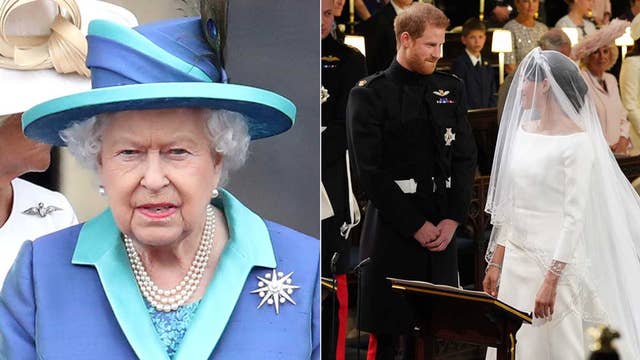
In the months before Prince Harry and Meghan Markle‘s engagement was made public, Queen Elizabeth II delivered a quiet but unambiguous message to her grandson: wait.
According to royal biographer Hugo Vickers, whose work draws on sources close to the Palace, the late Queen advised Harry to give the relationship at least a year before committing to marriage.
Harry proposed to Meghan within weeks of receiving that counsel.
The detail, surfaced in Vickers’s extensive research into the royal family’s private dynamics, reveals a Queen who was not hostile to Meghan but deeply concerned about the pace of things.
She had watched her grandson fall hard and fast, and the speed of the relationship — Harry had known Meghan for barely a year before he went down on one knee — troubled her.
The advice was not a condemnation.
It was a grandmother’s attempt to protect her grandson from rushing into something irreversible.
Harry, by his own account in his memoir “Spare,” was utterly certain from almost the first date that Meghan was the woman he would marry.
That certainty, which reads as romantic conviction in his telling, collided directly with his grandmother’s institutional caution.
The Queen had seen romances bloom and collapse within the royal family before.
She had also seen what happened when the Palace moved too slowly.
What she was asking of Harry was a middle path — and he did not take it.
The engagement announcement came in November 2017.
Harry and Meghan had been together for approximately sixteen months.
By royal standards, where courtships can stretch across many years — William and Kate dated for nearly a decade before their wedding — the timeline was short.
The Hello magazine account of the Queen’s concerns notes that she found the speed “concerning,” and that several senior courtiers shared her unease, though none felt empowered to press Harry further once it was clear his mind was made up.
Sources close to the couple at the time recall Harry as visibly impatient with any suggestion of delay.
Those around him noted that he had spent years in a kind of romantic limbo, his previous serious relationship with Chelsy Davy having foundered partly on the impossibility of royal life.
When Meghan appeared to embrace the prospect of royal duties, Harry was convinced he had found someone built for the role.
His grandmother’s request to slow down, however reasonable, felt to him like an obstacle rather than wisdom.
What the Queen was perceiving, those who later analysed the period suggest, was not a flaw in Meghan but a vulnerability in Harry.
He had never truly processed the grief and anger that followed his mother’s death, and he had spent his adult life searching for a stable emotional anchor.
The Queen, who had witnessed the same pattern in Harry’s father — Charles’s disastrous rush through the formalities of romance — may have recognised something familiar and worrying in her youngest grandson’s behaviour.
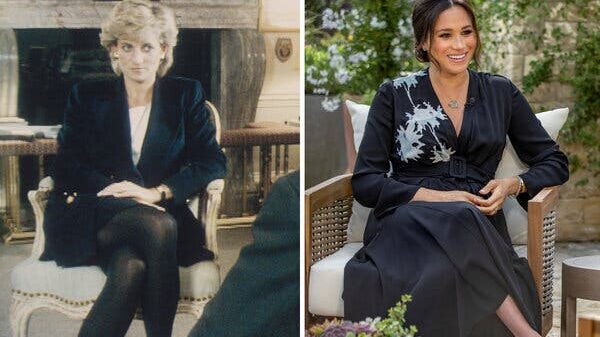
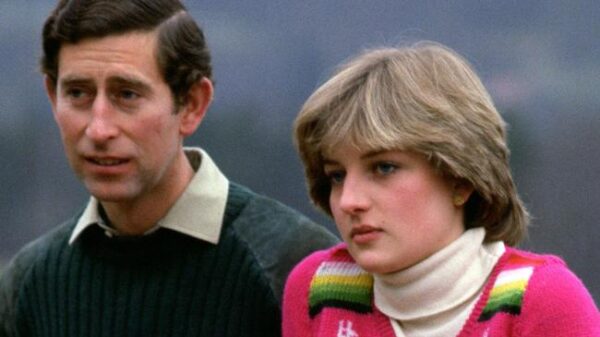
The parallel with Charles and Diana, though rarely made explicit at the time, hung over the engagement.
Charles and Diana had also moved quickly, also with Palace pressure partly behind them, and the result had been one of the most publicly documented marital collapses in modern history.
The Queen had been in the room for every act of that tragedy.
When Harry arrived, certain and impatient, it is not difficult to imagine what she was quietly thinking.
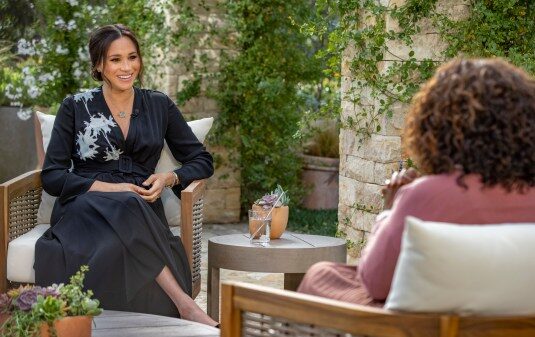
For her part, Meghan Markle stepped into the engagement photocall looking composed and confident.
She spoke warmly of the Queen in early interviews, describing her as welcoming and kind.
Whatever conversations had taken place behind closed doors, none of them surfaced in public at the time.
The Queen, whose discipline in maintaining a public face was absolute, gave no indication that she had reservations.
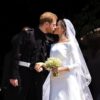
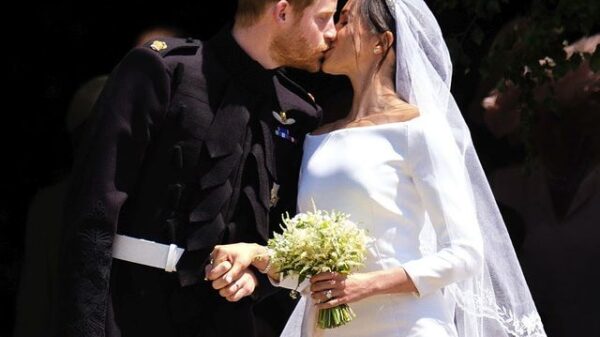
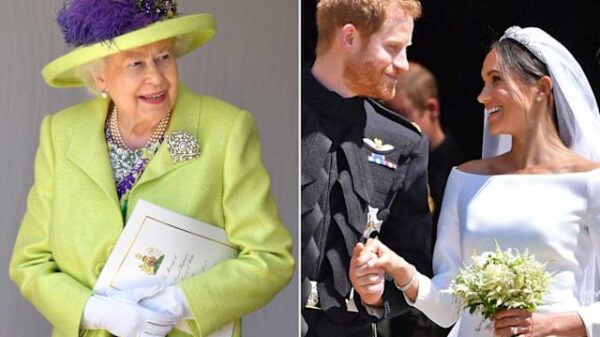
She attended the wedding, she smiled, she played her part.
The significance of the “wait a year” advice only became clear in retrospect, as the Sussex story unravelled through 2019, 2020, and beyond.
What Meghan’s supporters read as Palace hostility toward her, some royal observers came to see as something older and more specific: the concern of a woman who had lived through one catastrophic royal marriage and did not want to watch another one happen in accelerated time.
The Queen’s advice was not about Meghan.
It was about Harry.
Vickers’s account is particularly interesting because it positions the Queen not as an obstacle but as a realist.
She was not trying to prevent the marriage.
She was trying to ensure that the couple — and her grandson specifically — had given themselves enough time to understand what they were committing to.
The Palace life Meghan would be entering was unlike anything she had experienced as an actress in Toronto.
A year, the Queen seems to have believed, might have made the difference.
In the event, nothing of the sort happened.
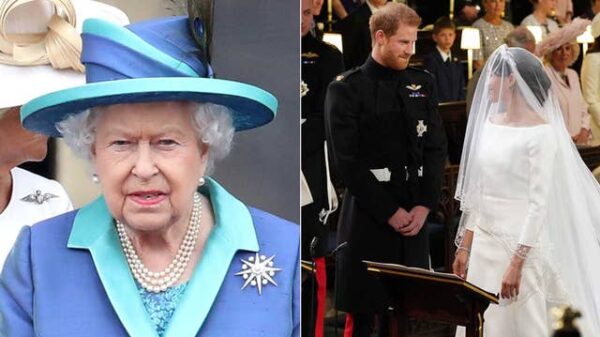
Harry moved at his own speed, the engagement was announced, the wedding was planned on an extraordinary scale, and by January 2020 — barely two years after they had stood together at Windsor Castle and accepted the world’s congratulations — Harry and Meghan were announcing their intention to step back from royal duties.
The timeline the Queen had perhaps foreseen, compressed into something nobody could have predicted.
Queen Elizabeth II died in September 2022, having never publicly broken from the careful diplomatic language she maintained about Harry and Meghan’s departure.
Whether she ever reflected, privately, on the afternoon she told her grandson to wait — and on what happened when he did not — is something that died with her.
What remains is the documented fact of the advice itself: wise, measured, and ultimately unheeded.