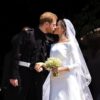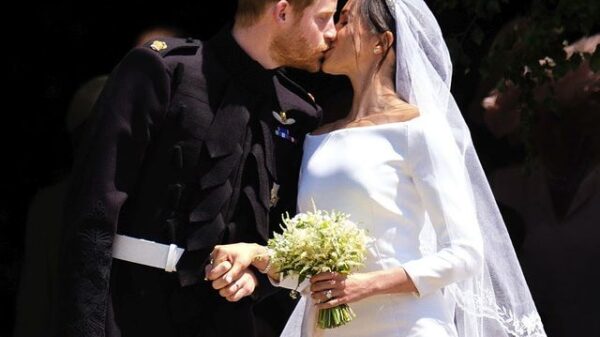
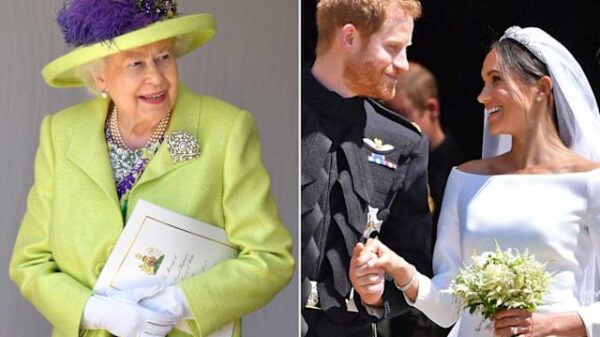
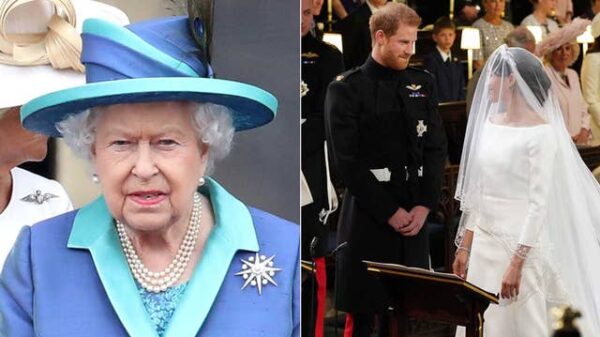


When Prince Harry married Meghan Markle in May 2018, the guest list included some of the closest friends he had made over three decades — men and women who had known him through Eton, the military, and the wilder years that followed.
By 2023, the majority of them were no longer in his life in any meaningful way.
Not because they had been driven away by the Royal Family, as the Sussex narrative has sometimes suggested, but because Harry himself had, according to multiple accounts, asked them to choose a side — and they had chosen the one that did not include him.
The “choose sides” dynamic, documented by the Daily Record and confirmed by multiple royal correspondents with sources in Harry’s former circle, began to crystallise shortly after the couple’s move to Frogmore Cottage and intensified dramatically following Megxit in January 2020.
Friends who had maintained relationships with members of the Royal Family, or who had declined to publicly endorse Harry and Meghan’s account of events, found themselves quietly frozen out.
Calls went unreturned.
Invitations stopped coming.
The friendship, in each case, simply ceased to exist as a functional relationship.
The Mirror’s reporting from this period identifies a pattern that several of Harry’s former friends described in remarkably similar terms: an initial period of distance, followed by a pointed absence of contact, followed by a dawning realisation that the relationship was over.
None of the men in question were publicly denounced.
None were named in the Oprah interview or in “Spare” as enemies.
They simply vanished from Harry’s world, and the world noticed their absence.
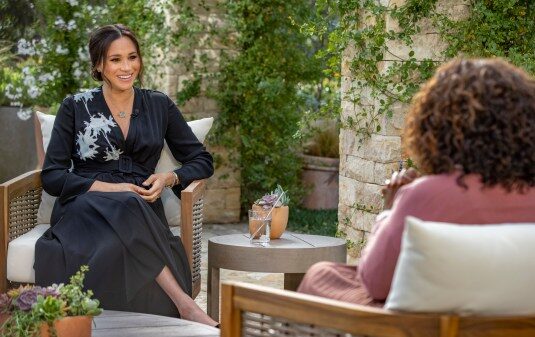
The Times of India’s coverage of the story, drawing on international reporting, notes that the narrowing of Harry’s circle was visible at a practical level in his public appearances.
The group of friends who had been fixtures at his side through his twenties and early thirties — the polo set, the Eton contingent, the military companions — were absent from his California life.
The names that appeared around him in his new chapter were overwhelmingly Meghan’s contacts, drawn from the entertainment industry and the worlds of wellness and philanthropy that she navigated.
News.com.au’s reporting on the friendship collapse captures the sentiment of several of those who drifted away.
The common thread is not hostility toward Meghan — most of those quoted are careful to avoid that framing — but a sense that the friendship with Harry had become conditional in a way that friendship, by its nature, cannot sustain.
When loyalty is demanded rather than offered freely, the thing being demanded is no longer quite friendship.
Among those who had been closest to Harry in his military years, the distance is particularly notable.
Harry’s time in the Army, including two tours of Afghanistan, had forged bonds of the kind that military veterans describe as some of the strongest possible.
Several of those men attended the wedding.
By the time the Netflix documentary aired, none of them appeared in any footage.
Their absence from that film is its own kind of statement.
The polo world, which had been a significant part of Harry’s social life through his twenties, tells a similar story.
He had been a serious and committed player, had captained teams and competed at a high level, and had built genuine friendships within that community.
His move to California effectively ended that chapter — polo, for all its glamour, does not travel well across an ocean and a lifestyle change.
But the ending of the polo friendships was also something more than geography.
Several players who had known Harry for years noted that contact simply stopped.
What Harry’s former friends have said, carefully and largely off the record, is that they did not feel they were abandoning him.
They felt that the terms of the friendship had changed in ways they could not accommodate.
Some describe being asked, implicitly or explicitly, not to maintain relationships with members of the Royal Family — particularly William and Kate — if they wanted to stay close to Harry and Meghan.
For people whose social world overlapped significantly with the Waleses’ circle, this was an impossible ask.
The irony of the Sussex narrative — that Harry and Meghan were rejected by the institution and left with no support — is that the evidence from Harry’s pre-Meghan friendship circle runs in the opposite direction.
These were not people who left him because they disliked Meghan or because the Palace told them to keep their distance.
Many of them had been genuinely delighted by the relationship at first.
They left, or were pushed to the margins, because the architecture of Harry’s new life left no room for them.
The most poignant accounts come from men who had served with Harry in Afghanistan — people who had shared genuine danger with him and who understood, better than most, what he had been through in the years between his mother’s death and his marriage.
These were people with no interest in royal politics, no stake in the Palace’s institutional survival, and no reason to be hostile to the woman Harry loved.
Their distance from him now reflects not a rejection of Harry but an acceptance that the Harry they knew is no longer available.
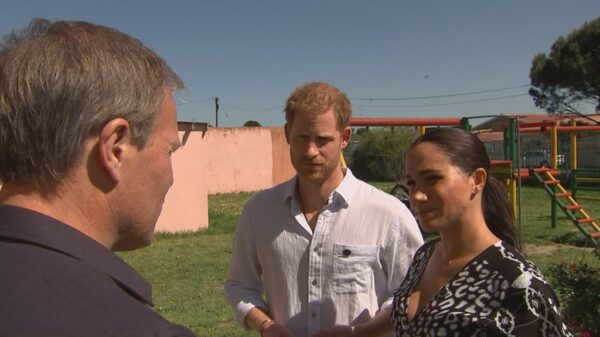
Harry has spoken in interviews about feeling lonely in California, about the difficulty of building a life in a new country without the social infrastructure he had known in Britain.
He has described that isolation as a consequence of royal life — of the security requirements and the public scrutiny that make ordinary friendship difficult.
What he has not addressed, at least publicly, is the degree to which that isolation was also a consequence of choices made closer to home, in the management of relationships that had existed long before Meghan entered the picture.
The pattern, taken as a whole, tells a story that is both recognisably human and specifically, sadly royal.
When love arrives with sufficient force, it can reorganise a life so completely that nothing from before fits the new shape.
Harry’s great love story was also, without anyone necessarily intending it, a great friendship dissolution.
The men who had stood with him through his wildest years, his military service, and his private grief found themselves, one by one, on the outside of a door that had closed quietly and would not open again.