


Among the incidents cited by royal insiders as evidence of the difficulties surrounding Meghan Markle‘s integration into the Royal Family, one stands out for the directness of the institutional response it provoked.
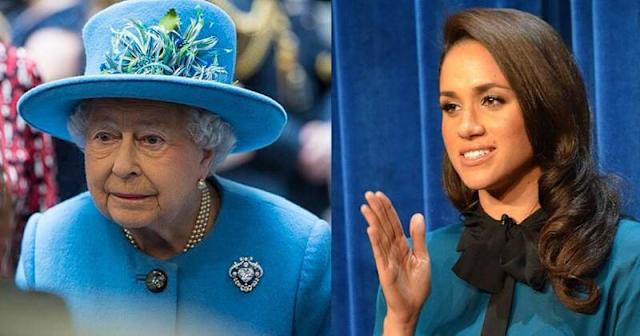
According to reporting by the New York Post, the Daily Mail, and The Express, Meghan was verbally harsh toward a gardener working on the grounds of Windsor Castle — and the incident was significant enough that Queen Elizabeth II personally addressed Meghan’s conduct in the matter.
It was not an anonymous complaint or a courtier’s memo.
It was the Queen herself.
The New York Post’s reporting, published in April 2025 and drawing on a source described as familiar with the household, describes Meghan as having “berated” the gardener in a manner that other staff present found disproportionate and alarming.
The precise nature of the exchange was not detailed in the reporting, but the language used — “berating,” “very rude” — suggests something beyond a brief or minor confrontation.
The incident, sources say, was reported upward through the household hierarchy and eventually reached the Queen.
What makes the story significant is not the incident itself — royal households are large, complex operations and confrontations between members and staff occur within all of them — but the level at which it was addressed.
Queen Elizabeth II, who famously conducted herself with extreme reserve in personal confrontations and who managed even the most difficult situations through layers of advisers and protocol, is said to have spoken to Meghan directly.
The Queen speaking directly to a family member about a staff-related incident was, by the standards of how the Palace normally handled such things, unusual.
The Daily Mail’s account of the episode, which also draws on household sources, adds that the Queen’s intervention was quiet but unambiguous.
She made clear, in the way that only someone with her authority and precision could, that the standard of conduct she expected from those who bore the royal name included the treatment of staff.
This was not a lecture.
It was a correction — the kind that the Queen delivered rarely and only when she felt it was genuinely necessary.
The Express’s coverage of the incident places it in the context of a broader pattern of complaints from Windsor household staff about Meghan’s conduct.
The bullying allegations that emerged from within the Palace in early 2021, which resulted in an internal inquiry, referenced a style of management and personal interaction that some staff members found deeply uncomfortable.
Several senior aides departed from the Sussex household in a relatively short period.
The gardener incident, in this reading, was not an isolated event but part of a pattern that eventually became impossible for the institution to ignore.
Meghan’s representatives have consistently denied the bullying allegations, characterising them as attempts by members of the Palace establishment to undermine her ahead of the Oprah interview and to distract from the couple’s broader grievances.
This counter-narrative — that complaints about Meghan’s conduct were weapons in an institutional war rather than genuine accounts from genuine people — is one that Meghan’s supporters have generally found persuasive.
The Palace inquiry, which concluded without publishing its findings, left the matter unresolved in any publicly verifiable way.
What the gardener incident adds to the picture is specificity.
It is not a general allegation about management style or workplace culture.
It is a documented account, confirmed by multiple sources, of a specific confrontation with a specific person — a person who was, in the social architecture of royal life, very much at the bottom of a hierarchy that Meghan was very much at the top of.
The power differential between a working member of the Royal Family and a groundskeeper at Windsor Castle is absolute, and the use of that differential in ways that other staff found troubling is the substance of the allegation.
The Queen’s intervention, if it occurred as described, speaks to something about how she managed the Sussex situation in its earlier phases.
She was not, according to those who knew her, a confrontational person in her private dealings.
She had survived every conceivable crisis of her reign by managing them at one remove, through intermediaries and protocol and the careful deployment of institutional authority.
For her to involve herself directly in a staff matter involving Meghan suggests that the incident was, in her judgment, serious enough to warrant an exception to her normal method of management.
Those who were part of the Windsor household during the period of Harry and Meghan’s residence have described an atmosphere of considerable tension.
The couple’s needs and expectations did not always align with the rhythms of the established household operation, and the adjustment period was, by several accounts, difficult for both sides.
Staff who had served the Royal Family for many years found the Sussex household’s demands — about press access, about scheduling, about the management of Meghan’s public image — significantly different from what they had known.
Meghan, who came from a professional world where stars are surrounded by protective layers of management and where demands on support staff are understood as part of the job’s normal texture, may have found the transition to royal household norms genuinely confusing.
The culture of royal staff service is specific and historical — it carries expectations about how members of the family comport themselves that are not written down anywhere and that newcomers absorb gradually.
The evidence suggests that this absorption did not happen smoothly in Meghan’s case.
The gardener is, by definition, anonymous in this story — the account identifies his role and the nature of the incident, not his identity.
He has not given interviews, has not sold his story, and appears to have continued his work at Windsor after the incident.
His anonymity is consistent with the culture of royal household staff, who are expected to maintain discretion as an absolute professional obligation.
That the incident became known at all suggests it was discussed within household circles, where it was clearly regarded as notable enough to remember and, eventually, to share.
In the larger context of Meghan’s time in the Royal Family, the gardener episode occupies a specific place: it is evidence, for those who find it credible, that the difficulties of her integration were not exclusively the responsibility of the institution she was joining.
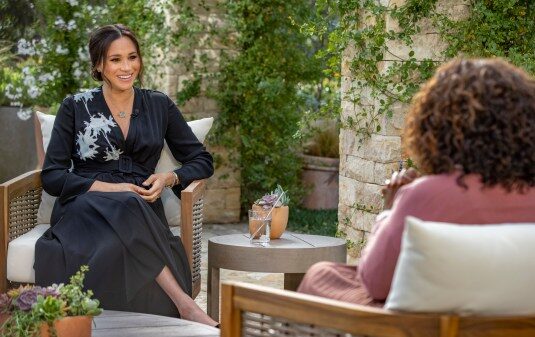
The narrative that dominated the Oprah interview and the Netflix documentary positioned Meghan as a woman failed by a cold and unsupportive establishment.
The gardener incident, and the Queen’s response to it, suggests a more complicated truth — one in which both the institution and the individual it welcomed were, in different ways, unprepared for each other.
Queen Elizabeth II, who spent her entire reign navigating impossible tensions with grace and without editorial comment, never spoke publicly about Meghan.
Whatever she observed, whatever she concluded, whatever she said in that direct conversation about the gardener incident, stayed within the walls of Windsor Castle.
It is only now, in the years since her death, that fragments of what she knew and what she did are beginning to reach the surface — and they complicate the story considerably.