



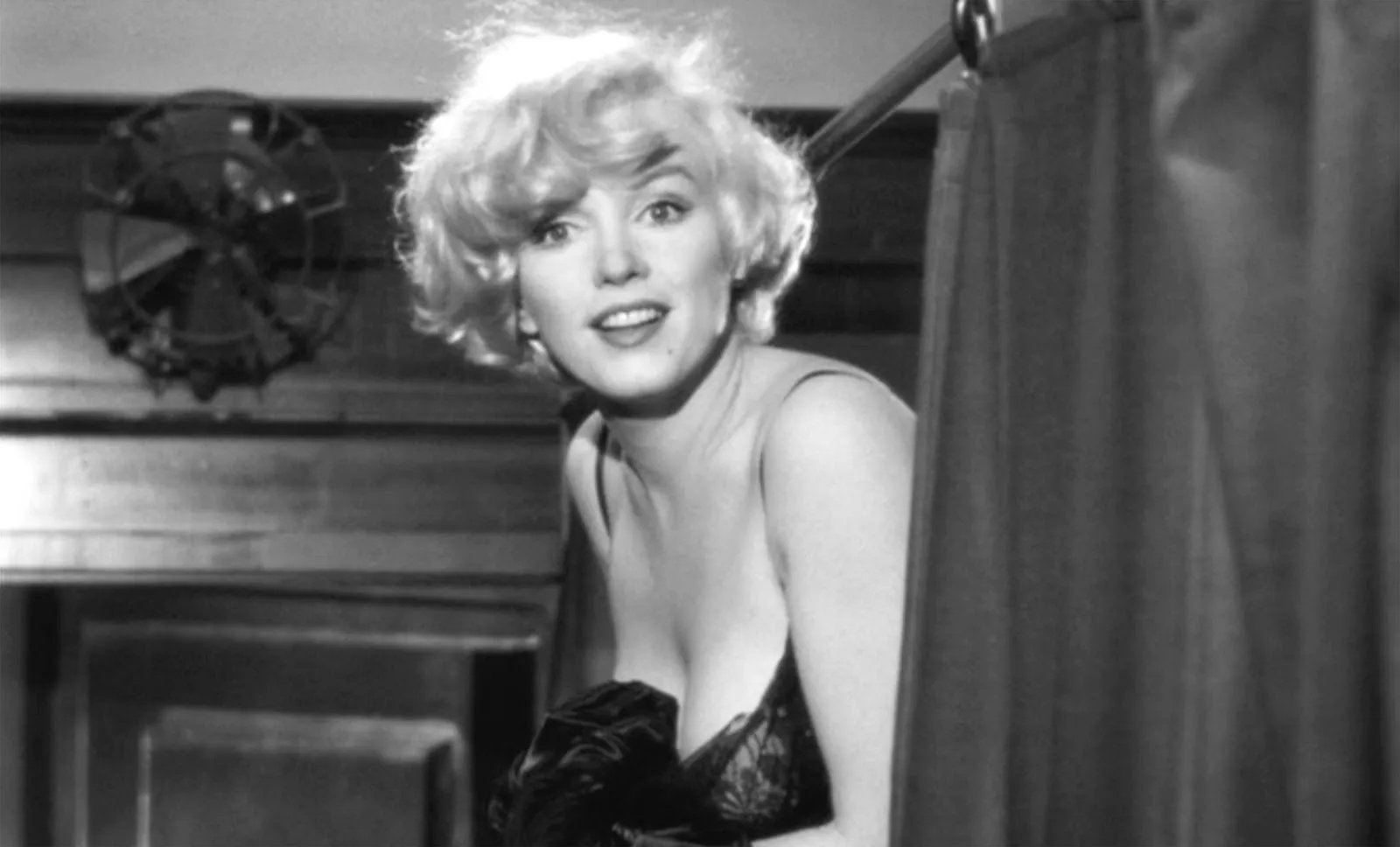
Marilyn Monroe remains one of the most iconic figures in Hollywood history.
Her life, both on and off-screen, continues to captivate audiences decades after her untimely death.
Here’s an in-depth look at 73 intriguing facts about the blonde bombshell that reveal the complex woman behind the glamorous facade.
1. Marilyn Monroe had an IQ of 168, higher than Albert Einstein.
Contrary to her “dumb blonde” persona, Marilyn Monroe was incredibly intelligent.
With an IQ of 168, she surpassed even the renowned genius Albert Einstein, whose IQ was estimated to be around 160.
This high intelligence allowed her to be witty, quick-thinking, and articulate in interviews and conversations, often surprising those who expected her to embody the ditzy characters she played on screen.
2. Suspicious circumstances surround Marilyn’s death.
The official cause of Marilyn Monroe‘s death on August 5, 1962, was listed as probable suicide by barbiturate overdose.
However, several inconsistencies and peculiarities have led many to question this conclusion:
– Her housekeeper, Eunice Murray, changed her story multiple times regarding the events of that night, raising suspicions about what really happened.
– Initially, no water glass was found near Marilyn’s bed, despite the fact that she had difficulty swallowing pills and always needed water to take them.
Later, a glass mysteriously appeared on the floor near the bed.
– Marilyn’s organs and tissue samples inexplicably disappeared before further toxicology tests could be conducted, preventing a more thorough investigation into the cause of her death.
– Just hours before her death, Marilyn had phone conversations with several people, including Joe DiMaggio Jr., who reported that she sounded cheerful and upbeat, contradicting the idea that she was suicidal.
These inconsistencies have fueled numerous conspiracy theories about Monroe’s death, including speculation about involvement from the Kennedy family or the mafia.
3. Marilyn was still alive when the ambulance arrived.
According to ambulance company owner Walter Schaefer, Marilyn was still alive when the ambulance arrived at her home on the night of August 4, 1962. However, she reportedly died en route to the hospital.
Strangely, her body was then brought back to her home, raising questions about the official timeline of events and why this information was not included in the initial reports of her death.
4. Marilyn’s signature breathy voice was a technique to overcome stuttering.
Marilyn’s iconic breathy, sensual voice wasn’t her natural speaking voice. It was actually a technique she developed to overcome a childhood stutter.
A speech therapist suggested this method to help her speak more fluently, and it eventually became one of her most recognizable traits.
The breathiness helped to slow down her speech and prevent stuttering, while also creating her signature sultry sound.
5. Marilyn’s mother suffered from paranoid schizophrenia.
Gladys Pearl Baker, Marilyn’s mother, was diagnosed with paranoid schizophrenia and spent most of her life institutionalized.
This mental illness significantly impacted Marilyn’s childhood and shaped her fears about her own mental health.
In one particularly disturbing incident when Marilyn was about 7 years old, Gladys attempted to kidnap her by stuffing her into a duffel bag.
This traumatic event, along with her mother’s absence throughout her life, contributed to Marilyn’s ongoing struggles with abandonment issues and her desire for a stable family life.
6. The identity of Marilyn’s father remains unknown.
The mystery surrounding Marilyn’s paternity has never been definitively solved.
Her birth certificate lists Martin Edward Mortensen as her father, but Gladys Baker had separated from him well before Marilyn’s conception.
Marilyn herself believed that Charles Stanley Gifford, with whom her mother had an affair, was her biological father.
This uncertainty about her paternity led Marilyn to fantasize about various father figures throughout her life, including Clark Gable.
Tragically, when Gable died shortly after they co-starred in “The Misfits,” Marilyn felt an overwhelming sense of guilt, as if she had somehow contributed to the death of the man she had imagined as her father.
7. The “Seven Year Itch” scene led to Marilyn’s divorce from Joe DiMaggio.
The iconic scene in “The Seven Year Itch” where Marilyn’s white dress billows up around her legs as she stands over a subway grate became one of the most famous images in cinema history.
However, it also contributed to the breakdown of her marriage to baseball legend Joe DiMaggio.
When the scene was filmed on location in New York City, thousands of onlookers gathered to watch, hooting and cheering as Marilyn’s skirt repeatedly blew up.
DiMaggio, who was on set that day, became furious at what he saw as a public display of his wife’s sexuality.
The couple had a violent argument that night in their hotel room, and Marilyn filed for divorce shortly after, just 274 days into their marriage.
8. Marilyn considered “Marilyn Monroe” to be a separate persona.
Marilyn often spoke of “Marilyn Monroe” as if she were a different person. She saw her public persona as a character she could turn on and off at will.
Friends and colleagues often noted how she could transform from Norma Jeane, her given name, into the glamorous Marilyn Monroe in an instant.
Actor Eli Wallach once recounted walking down the street with Marilyn, completely unrecognized, until she decided to “be Marilyn” and instantly drew a crowd.
This ability to separate her public and private selves helped her cope with the pressures of fame but also contributed to her feelings of isolation and identity confusion.
9. Marilyn’s death led to a spike in suicides.
The news of Marilyn Monroe’s death on August 5, 1962, sent shockwaves through the world and had a profound impact on her fans.
In the week following her death, suicide rates spiked dramatically. In New York City alone, the suicide rate reached a record high of 12 in a single day.
One particularly poignant suicide note read, “If the most wonderful, beautiful thing in the world has nothing to live for, then neither must I.”
This tragic response to her death underscores the deep connection many felt to Marilyn and the devastating impact of her loss.
10. Joe DiMaggio had roses delivered to Marilyn’s grave for 20 years.
Despite their short-lived marriage, Joe DiMaggio’s love for Marilyn endured long after her death.
Before she died, Marilyn had made DiMaggio promise that if she passed away before him, he would bring flowers to her grave.
True to his word, DiMaggio arranged for roses to be delivered to her crypt three times a week for 20 years following her death.
This touching gesture of devotion lasted until DiMaggio’s own death in 1999, with his last words reportedly being, “I’ll finally get to see Marilyn.”
11. Marilyn was Playboy’s first Sweetheart of the Month.
In December 1953, Marilyn Monroe became Playboy’s first Sweetheart of the Month (later renamed Playmate of the Month).
The photos used were actually from a 1949 nude calendar shoot, for which Marilyn had been paid only $50.
Hugh Hefner, recognizing their value, purchased the rights to the photos for $500 and featured them in the inaugural issue of Playboy.
This decision helped launch both Playboy magazine and further cement Marilyn’s status as a sex symbol.
Interestingly, Hefner and Monroe never actually met in person, despite her significant role in Playboy’s success.
In a final gesture of admiration, Hefner purchased the crypt next to Marilyn’s for $75,000 in 1992 and was buried there after his death in 2017. 12. Marilyn helped launch Ella Fitzgerald’s career.
Marilyn Monroe played a crucial role in advancing Ella Fitzgerald’s career during a time of significant racial segregation in the United States.
Fitzgerald was having difficulty booking shows at popular nightclubs due to her race.
Marilyn, a huge fan of Fitzgerald’s music, called the owner of the Mocambo, a famous Hollywood nightclub, and promised to sit in the front row every night if they booked Fitzgerald.
The club owner agreed, knowing that Marilyn’s presence would generate substantial publicity.
True to her word, Marilyn attended Fitzgerald’s performances every night, attracting press and crowds to the club.
This engagement helped launch Fitzgerald’s career to new heights, and she later credited Marilyn for opening doors that had previously been closed to her because of racial discrimination.
13. Marilyn owned an extensive library of over 400 books.
Contrary to her public image as a “dumb blonde,” Marilyn was an avid reader with a personal library of over 400 books.
Her collection included works by classic authors such as James Joyce, Walt Whitman, and Heinrich Heine, as well as contemporary writers of her time.
She was often photographed reading, and in interviews, she displayed a deep knowledge of literature that surprised many.
At the time of her death, she was reading Harper Lee’s “To Kill a Mockingbird” and a biography of her psychiatrist, Ralph Greenson.
This extensive library and her love for literature demonstrate Marilyn’s intellectual curiosity and depth, challenging the superficial image often associated with her.
14. Marilyn founded her own production company.
In 1955, Marilyn Monroe, along with photographer Milton Greene, founded Marilyn Monroe Productions.
This made her only the second woman in Hollywood, after Mary Pickford, to start her own production company.
The company’s formation was part of Marilyn’s strategy to gain more control over her career and the roles she played.
It was a bold move that challenged the studio system of the time, where actors were typically bound by restrictive contracts.
The company produced only one film, “The Prince and the Showgirl” (1957), in which Marilyn starred alongside Laurence Olivier.
Despite its limited output, the creation of this company demonstrated Marilyn’s business acumen and her desire for creative control over her work.
15. Marilyn struggled with memorizing lines.
Despite her talent and dedication to acting, Marilyn often had difficulty memorizing her lines.
This struggle was evident during the filming of “Some Like It Hot,” where she famously took 60 takes to deliver the simple line, “It’s me, Sugar.”
Her difficulty with lines was often attributed to her perfectionism and anxiety about her performances.
To cope with this, she relied heavily on cue cards and multiple retakes, which sometimes frustrated her co-stars and directors.
However, many who worked with her noted that once she got the line right, her delivery was often perfect and deeply emotional.
16. Marilyn was originally cast as Holly Golightly in “Breakfast at Tiffany’s.”
Truman Capote, the author of the novella “Breakfast at Tiffany’s,” originally wanted Marilyn Monroe to play the lead role of Holly Golightly in the film adaptation.
Marilyn was very interested in the part and even performed two scenes for Capote, who later said she was “terrifically good.”
However, Marilyn’s drama coach and advisor, Paula Strasberg, convinced her to turn down the role, believing it wasn’t suitable for her image.
The part eventually went to Audrey Hepburn, much to Capote’s disappointment. He later said, “Paramount double-crossed me in every way and cast Audrey.”
This missed opportunity remains one of the great “what-ifs” in Hollywood history.
17. Marilyn’s “Happy Birthday Mr. President” dress was incredibly tight.
The flesh-colored, rhinestone-studded dress Marilyn wore to sing “Happy Birthday” to President John F. Kennedy on May 19, 1962, at Madison Square Garden, has become one of the most famous dresses in history.
Designed by Jean Louis, the dress was so tight that Marilyn had to be sewn into it.
It was adorned with over 2,500 hand-stitched crystals, giving it a nude illusion that caused a sensation when she appeared on stage.
The dress was so form-fitting that Marilyn wore nothing underneath it, adding to its scandalous nature.
This performance, and the dress itself, fueled rumors about Marilyn’s alleged affair with President Kennedy.
In 2016, the dress sold at auction for $4.8 million, setting a record for the most expensive dress ever sold at auction.
18. Marilyn was a devoted student of method acting.
Despite her reputation as a sex symbol, Marilyn was serious about her craft and dedicated to improving her acting skills.
She was a student at the Actors Studio in New York, studying under Lee Strasberg, the father of method acting.
Marilyn embraced the technique wholeheartedly, often diving deep into her characters’ psyches and drawing on her own emotional experiences for her performances.
Her commitment to method acting sometimes led to conflicts on set, as she would often consult with her acting coach, Paula Strasberg (Lee’s wife), between takes, much to the frustration of some directors.
However, this dedication also led to some of her most critically acclaimed performances, such as her role in “Bus Stop” (1956).
19. Marilyn converted to Judaism when she married Arthur Miller.
In 1956, prior to her marriage to playwright Arthur Miller, Marilyn Monroe converted to Judaism.
This decision was not taken lightly; she studied with Rabbi Robert Goldburg and showed a genuine interest in the faith.
Her conversion certificate stated that she “was impressed with the seriousness of Jewish ethics and the dream of peace and brotherhood of all men as promulgated by the Hebrew prophets.”
This spiritual journey was just one of several religious explorations in Marilyn’s life, reflecting her search for meaning and belonging.
20. Marilyn was an early practitioner of yoga.
Long before yoga became a mainstream fitness trend in the West, Marilyn Monroe was an enthusiastic practitioner.
She learned yoga from Indra Devi, known as “the First Lady of Yoga,” who also taught other Hollywood stars like Greta Garbo and Gloria Swanson.
Marilyn incorporated yoga into her daily routine, believing it helped both her physical fitness and mental well-being.
She was even photographed in various yoga poses for magazines, helping to popularize the practice in America.
21. Marilyn was paid only $50 for her famous nude calendar photos.
In 1949, when Marilyn was a struggling actress, she posed nude for photographer Tom Kelley.
She was paid just $50 for the shoot, which she agreed to do because she was behind on her car payments.
The photos were originally intended for a calendar, but in 1953, one of these images became the centerfold for the first issue of Playboy magazine.
Hugh Hefner bought the rights to the photo for $500, and it helped launch both Playboy and Marilyn’s career as a sex symbol.
When the photos were made public, they nearly derailed Marilyn’s career, but her honest admission that she had posed due to financial desperation actually endeared her to the public.
22. Marilyn used an unusual skincare technique.
Marilyn was known for her flawless, luminous skin, which she achieved through an unconventional method.
She used hormone cream to whiten her skin, which had the side effect of causing a light down of blonde hair to grow on her face.
Rather than removing this peach fuzz, Marilyn chose to keep it, believing that it caught the light in photographs and gave her face a soft, glowing appearance on camera.
This attention to detail in her appearance demonstrates the level of thought and care Marilyn put into crafting her image.
23. Marilyn underwent plastic surgery early in her career.
In the early stages of her career, Marilyn had several plastic surgeries to enhance her appearance.
These procedures included a tip rhinoplasty to refine the shape of her nose and a chin implant to strengthen her jawline.
The surgeries were arranged and paid for by her agent, Johnny Hyde, who believed they would help advance her career in Hollywood.
While these alterations were relatively minor, they contributed to the transformation of Norma Jeane Baker into the Marilyn Monroe that the world came to know.
24. Marilyn was underpaid compared to her contemporaries.
Despite her immense popularity and star power, Marilyn Monroe was often paid significantly less than her co-stars and contemporaries.
For example, when she co-starred with Jane Russell in “Gentlemen Prefer Blondes” (1953), Russell was paid $200,000 while Monroe received just $18,000.
Even at the height of her fame, for her last completed film “The Misfits” (1961), she was paid $300,000, whereas her co-star Clark Gable received $750,000.
This pay disparity was a constant source of frustration for Marilyn and reflected the broader gender inequalities in Hollywood at the time.
25. Marilyn’s iconic white dress from “The Seven Year Itch” sold for millions.
The pleated halter dress Marilyn wore in the famous subway grate scene from “The Seven Year Itch” (1955) has become one of the most recognizable costumes in film history.
In 2011, the dress was sold at auction for a staggering $4.6 million, highlighting its status as a piece of Hollywood iconography.
The dress, designed by William Travilla, was made of rayon-acetate crepe and was purposely weighted to achieve the perfect billowing effect for the scene.
Its sale price reflects not only the dress’s significance in film history but also the enduring fascination with Marilyn Monroe herself.
26. Marilyn was a huge fan of Abraham Lincoln.
Marilyn Monroe had a deep admiration for Abraham Lincoln, identifying strongly with his humble beginnings and rise to prominence.
She often read biographies about Lincoln and was known to quote him.
In her autobiography “My Story,” Marilyn wrote, “I used to read everything I could find about him.
He was the only famous American who seemed most like me, at least in his childhood.”
This connection to Lincoln reflects Marilyn’s own journey from a difficult childhood to becoming an American icon.
Her interest in Lincoln also demonstrated her intellectual curiosity and engagement with American history, countering her public image as merely a beautiful actress.
27. Marilyn struggled with endometriosis and fertility issues.
Throughout her adult life, Marilyn Monroe suffered from severe endometriosis, a condition where tissue similar to the lining of the uterus grows outside the uterus.
This condition caused her extreme pain and contributed to her struggles with fertility.
Marilyn desperately wanted to have children and experienced several miscarriages during her marriages.
The inability to have children was a source of deep sorrow for her, and she often spoke about her desire for motherhood in interviews.
Her struggles with endometriosis also led to several hospitalizations and surgeries, contributing to her dependence on pain medication and her fragile emotional state in later years.
28. Marilyn was athletic and enjoyed physical activities.
Contrary to her glamorous image, Marilyn Monroe was quite athletic and enjoyed various physical activities.
In the early 1940s, while living on Catalina Island with her first husband James Dougherty, she studied weightlifting with a former Olympic champion named Howard Corrington.
Later in her life, she took up surfing, often going tandem surfing with her boyfriend Tommy Zahn.
She would balance on his shoulders as they rode the waves, displaying impressive physical skill and balance.
Marilyn also enjoyed hiking and was known to practice yoga regularly.
This active side of Marilyn contrasts with her public image as a delicate sex symbol and reveals her diverse interests and capabilities.
29. Marilyn was reading “To Kill a Mockingbird” at the time of her death.
When Marilyn Monroe passed away on August 5, 1962, she was in the middle of reading Harper Lee’s “To Kill a Mockingbird.”
The book was found on her nightstand, along with a biography of her psychiatrist, Ralph Greenson.
Her choice of reading material provides insight into her intellectual interests and her engagement with contemporary literature.
“To Kill a Mockingbird,” published in 1960, deals with serious themes of racial injustice and moral growth, reflecting Marilyn’s interest in social issues and her depth as a reader.
This detail adds another layer to our understanding of Marilyn beyond her public persona, showing her as a thoughtful individual engaged with the important literature of her time.
30. The musician Marilyn Manson took his stage name partially from Marilyn Monroe.
Brian Hugh Warner, better known by his stage name Marilyn Manson, created his pseudonym by combining Marilyn Monroe’s first name with the last name of Charles Manson.
This juxtaposition was intended to highlight the dual nature of American culture – the beautiful and the grotesque, the admired and the reviled.
By incorporating Marilyn Monroe’s name into his stage persona, Manson acknowledged her enduring cultural impact and her status as an American icon.
This use of her name decades after her death demonstrates the lasting power of Marilyn Monroe’s image and her continued relevance in popular culture.
31. Marilyn’s real name was Norma Jeane Mortenson.
Born on June 1, 1926, in Los Angeles, California, Marilyn entered the world as Norma Jeane Mortenson.
She was later baptized as Norma Jeane Baker, using her mother’s maiden name.
The transformation from Norma Jeane to Marilyn Monroe was a gradual process that began when she started modeling and acting.
Various stage names were considered, including Jean Adair and Carole Lind, before settling on Marilyn Monroe.
She legally changed her name to Marilyn Monroe in March 1956, when she was already a major star.
The name change symbolized her transformation from an ordinary girl to a glamorous movie star, but the dichotomy between Norma Jeane and Marilyn would remain a significant aspect of her identity throughout her life.
32. Marilyn often went out in public wearing only a black mink coat.
One of Marilyn’s more daring habits was to go out in public wearing nothing but a black mink coat given to her by Joe DiMaggio.
This behavior was part of her provocative public image and her comfort with her own sexuality.
It also reflected her love of fur coats, which became a significant part of her glamorous image.
The practice of wearing nothing under her coat added to her mystique and fueled her reputation as a sex symbol.
However, it also demonstrated her confidence and her willingness to challenge social norms, traits that were integral to her persona both on and off screen.
33. Marilyn was never nominated for an Academy Award.
Despite her immense popularity and several critically acclaimed performances, Marilyn Monroe was never nominated for an Academy Award.
This lack of formal recognition from the film industry was a source of disappointment for Marilyn, who longed to be taken seriously as an actress.
She delivered standout performances in films like “Bus Stop” (1956) and “Some Like It Hot” (1959), which many critics and fans believed were worthy of Oscar nominations.
The absence of Oscar recognition for Marilyn highlights the often complex relationship between popular appeal and critical acclaim in Hollywood, as well as the industry’s sometimes narrow view of what constituted award-worthy acting, particularly for women known primarily for their beauty and sex appeal.
34. Marilyn’s home had an elaborate bugging system.
In 1972, actress Veronica Hamel purchased Marilyn Monroe’s former home in Brentwood, Los Angeles.
During renovations, an extensive and sophisticated system of wiretaps was discovered throughout the house.
This discovery fueled conspiracy theories about Monroe’s death, with some speculating that the bugging was installed by the FBI, CIA, or other government agencies due to Marilyn’s alleged connections with the Kennedy family.
Others theorized it might have been installed by the mafia or even by Marilyn herself due to her paranoia in her final years.
The presence of this surveillance system adds another layer of mystery to the circumstances surrounding Marilyn’s life and death, and has contributed to ongoing speculation about the extent to which she was monitored and by whom.
35. Marilyn was discovered while working in a munitions factory during World War II.
In 1944, while working at the Radioplane Company, a munitions factory, as part of the war effort, Marilyn (then still Norma Jeane) was discovered by photographer David Conover.
Conover was taking pictures of women contributing to the war effort for Yank magazine when he noticed the striking young woman with curly brunette hair.
This chance encounter marked the beginning of Marilyn’s modeling career, which would eventually lead her to acting and stardom.
The fact that Marilyn’s entry into show business began while she was doing her part for the war effort adds a patriotic element to her origin story and highlights how different her life might have been without this serendipitous meeting.
36. Fox initially dropped Monroe for being “unphotogenic.”
In a surprising twist of fate, given her later status as one of the most photographed women in the world, Fox Studios initially dropped Marilyn Monroe in the late 1940s because they deemed her “unphotogenic.”
This decision came after her small role in the film “Scudda Hoo! Scudda Hay!”
(1948) was largely cut from the final version.
The studio’s failure to recognize Marilyn’s photogenic qualities and star potential is now seen as one of the great misjudgments in Hollywood history.
This early setback in her career demonstrates the challenges Marilyn faced in her rise to stardom and the perseverance she needed to overcome such obstacles.
37. Marilyn was an accomplished cook.
Despite her glamorous public image, Marilyn Monroe enjoyed domestic activities and was particularly fond of cooking.
She was known to be quite skilled in the kitchen, often preparing elaborate meals for friends and loved ones.
Her stuffing recipe, which was discovered after her death, was published in The New York Times in 2010 and was found to be surprisingly complex and flavorful.
This hidden talent adds depth to our understanding of Marilyn, showing her as someone who enjoyed simple pleasures and had interests beyond the world of Hollywood glamour.
Her love for cooking also reflected her desire for a normal, domestic life, something that often eluded her due to her fame.
38. Marilyn had a Maltese terrier named Maf, a gift from Frank Sinatra.
In the last years of her life, Marilyn owned a Maltese terrier named Maf, short for “Mafia Honey.”
The dog was a gift from Frank Sinatra in 1960, reflecting her close relationships with some of the biggest names in entertainment at the time.
Marilyn adored Maf and was often photographed with him.
The dog’s name was a playful reference to Sinatra’s alleged mafia connections, demonstrating Marilyn’s sense of humor.
After Marilyn’s death, Maf was cared for by Sinatra’s secretary, Gloria Lovell.
The story of Maf has captured the public imagination to such an extent that in 2010, author Andrew O’Hagan wrote a novel from the dog’s perspective titled “The Life and Opinions of Maf the Dog, and of His Friend Marilyn Monroe.”
39. Marilyn left a significant portion of her estate to her psychiatrist for the benefit of mental health institutions.
In her will, Marilyn Monroe left 25% of her estate to her psychiatrist, Dr. Marianne Kris, with the stipulation that it be used “for the furtherance of the work of such psychiatric institutions or groups as she shall elect.”
This bequest reflected Marilyn’s own struggles with mental health and her desire to help others facing similar challenges.
After Dr. Kris’s death, this portion of the estate was transferred to the Anna Freud Centre in London, a child therapy clinic.
Marilyn’s decision to support mental health causes in her will demonstrates her compassion and her recognition of the importance of mental health care, influenced no doubt by her own experiences and those of her mother.
40. Marilyn was buried in her favorite green Pucci dress.
For her funeral, Marilyn was dressed in one of her favorite garments – a green Emilio Pucci sheath dress.
Pucci was one of Marilyn’s favorite designers in her later years, and she often wore his colorful, form-fitting dresses.
The choice of this particular dress for her burial reflected her personal style and love of fashion.
It was a departure from the typical somber attire used for funerals, much like how Marilyn herself often defied conventions.
This final fashion statement has become part of the Marilyn Monroe lore, symbolizing her vibrant personality and her enduring influence on style and popular culture.
41. Marilyn wrote an autobiography titled “My Story.”
In the mid-1950s, Marilyn collaborated with screenwriter Ben Hecht to write her autobiography, “My Story.”
The book provides insight into Marilyn’s early life, her rise to fame, and her thoughts on love and career.
However, it wasn’t published until 1974, long after her death.
The autobiography reveals a thoughtful, introspective side of Marilyn that was often overshadowed by her public image.
In the book, she discusses her difficult childhood, her ambitions, and her feelings about her fame with surprising candor.
While some have questioned how much of the book was Marilyn’s own words versus Hecht’s, it remains a valuable source for understanding Marilyn’s perspective on her own life and career.
42. Marilyn was a fan of classical music and jazz.
Despite her association with pop culture, Marilyn had a deep appreciation for classical music and jazz.
She was particularly fond of Beethoven, Mozart, and Louis Armstrong.
This love for sophisticated music contrasted with her public image and revealed her cultured side.
Marilyn often listened to classical music to relax and prepare for her roles.
Her appreciation for diverse musical styles reflected her broader intellectual curiosity and her desire to engage with art in various forms.
This facet of her personality adds depth to our understanding of Marilyn, showing her as someone with refined tastes that went beyond her public persona.
43. Marilyn had a tumultuous childhood with multiple foster homes.
Marilyn’s early life was marked by instability and hardship.
Due to her mother’s mental illness and inability to care for her, Marilyn spent time in orphanages and cycled through 11 sets of foster parents throughout her childhood.
This constant upheaval had a profound impact on her emotional development and contributed to her lifelong struggles with abandonment issues and her search for stability and love.
Despite these challenges, or perhaps because of them, Marilyn developed a resilience and determination that would serve her well in her later career.
Her difficult upbringing also fueled her desire for success and acceptance, driving her ambition in Hollywood.
44. Marilyn used the alias “Zelda Zonk” to maintain privacy.
In an attempt to maintain some semblance of a normal life away from the constant scrutiny of the public eye, Marilyn often used the alias “Zelda Zonk” when trying to avoid attention.
She would use this name to check into hotels or make reservations, allowing her brief moments of anonymity.
The choice of such a distinctive and somewhat comical name reveals Marilyn’s playful side and her sense of humor about her own fame.
It also highlights the challenges she faced in maintaining privacy as one of the most recognized women in the world, and her creative attempts to carve out moments of normalcy in her very public life.
45. Marilyn was in talks to star in a Jean Harlow biopic.
Throughout her career, Marilyn was frequently compared to 1930s sex symbol Jean Harlow, another blonde bombshell who died young.
Marilyn was a great admirer of Harlow and had long been interested in portraying her on screen.
In fact, for several years before her death, Marilyn had been in discussions with her friend, producer Sidney Skolsky, about starring in a biopic of Harlow.
The project never materialized due to Marilyn’s untimely death, but the potential casting highlights the perceived similarities between the two actresses and Marilyn’s desire to take on more challenging, dramatic roles.
The fact that Marilyn never got to play her idol remains one of the great “what-ifs” of Hollywood history.
46. Marilyn was named “The Most Advertised Girl in the World.”
In 1953, at the height of her fame, the Advertising Association of the West named Marilyn Monroe “The Most Advertised Girl in the World.”
This title reflected her incredible popularity and her effectiveness as a marketing tool.
Marilyn’s image was used to sell a wide variety of products, from cameras to cars to soft drinks.
Her ability to attract attention and influence consumer behavior made her a valuable asset in advertising.
This designation underscores the extent of Marilyn’s fame and her impact on popular culture, as well as the commodification of her image, a process that continues long after her death.
47. The “Happy Birthday Mr. President” dress sold for a record-breaking amount.
The sheer, rhinestone-studded dress that Marilyn wore to sing “Happy Birthday” to President John F. Kennedy in 1962 has become one of the most famous dresses in history.
In 2016, the dress was sold at auction for a staggering $4.8 million, setting a new record for the most expensive dress ever sold at auction.
The high price reflects both the dress’s historical significance and Marilyn’s enduring appeal.
Designed by Jean Louis, the dress was so tight that Marilyn had to be sewn into it, and its nude color and strategically placed rhinestones created a scandalous, nearly-nude effect.
The dress, and Marilyn’s breathless performance in it, have become iconic symbols of her sex appeal and her connections to powerful men.
48. Marilyn was crowned Castroville’s first Artichoke Queen.
In 1948, before she became a major star, Marilyn was crowned the very first Artichoke Queen of Castroville, California.
This quirky title came early in her career when she was still primarily working as a model.
The event was a publicity stunt for the artichoke-growing region, but it provided valuable exposure for the young Marilyn.
Photos of her posing with artichokes helped to raise her profile and showcased her photogenic qualities.
This early brush with fame, albeit on a small scale, foreshadowed the much greater fame that was to come.
It’s a charming anecdote that connects the glamorous Marilyn Monroe with small-town Americana.
49. Marilyn discussed “The Brothers Karamazov” with Nikita Khrushchev.
In September 1959, during Soviet leader Nikita Khrushchev’s visit to the United States, he expressed a desire to meet Marilyn Monroe.
At a luncheon in Los Angeles, Marilyn and Khrushchev had a brief but memorable conversation about Fyodor Dostoevsky’s novel “The Brothers Karamazov.”
Marilyn expressed her admiration for the book and her desire to play the character of Grushenka in a film adaptation.
This interaction surprised many who underestimated Marilyn’s intellectual interests.
It demonstrated her knowledge of literature and her ability to engage in substantive conversations, even with world leaders.
The meeting also highlighted Marilyn’s global appeal, crossing even the tense Cold War divide.
50. Marilyn’s first marriage was arranged to prevent her return to an orphanage.
At the age of 16, Marilyn (then Norma Jeane) married James Dougherty, a 21-year-old factory worker.
This marriage was essentially arranged by her foster parents, the Goddards, who were moving to West Virginia and couldn’t take Norma Jeane with them.
Rather than see her return to an orphanage, they proposed the marriage to Dougherty.
While not a love match, the marriage provided Norma Jeane with stability during her teenage years.
However, it was short-lived, ending in 1946 when her modeling career began to take off.
This early marriage reflects the difficult choices Marilyn faced in her youth and her desire to escape the instability of her childhood.
51. Marilyn Monroe’s favorite artist was Francisco Goya.
Marilyn had a deep appreciation for art, and her favorite artist was the Spanish painter Francisco Goya.
She once said, “I know this man very well, we have the same dreams, I have had the same dreams since I was a child.”
This connection to Goya’s work, known for its emotional intensity and often dark themes, reveals a depth to Marilyn’s artistic sensibilities that many might not expect.
Her identification with Goya’s dreams suggests that she saw in his work a reflection of her own inner emotional landscape.
This appreciation for fine art was part of Marilyn’s broader intellectual interests, challenging the stereotype of her as merely a beautiful face.
52. Marilyn had several religious conversions throughout her life.
Marilyn’s spiritual journey was complex and evolving throughout her life.
She became a Christian Scientist at the age of 18, likely influenced by her foster family at the time.
Later in life, she explored various alternative spiritualities, including Anthroposophy, the philosophy espoused by Rudolf Steiner.
Most famously, she converted to Judaism before her marriage to playwright Arthur Miller in 1956. Her conversion was not merely for show; she studied seriously with Rabbi Robert Goldburg and maintained an interest in Jewish theology and culture even after her divorce from Miller.
These spiritual explorations reflect Marilyn’s ongoing search for meaning and belonging throughout her life.
53. Marilyn’s iconic white dress from “The Seven Year Itch” was worn by Kim Kardashian to the 2022 Met Gala.
In a controversial move that sparked much debate, Kim Kardashian wore Marilyn Monroe’s famous white dress from “The Seven Year Itch” to the 2022 Met Gala.
The dress, which Marilyn wore in the iconic scene where it billows up around her legs over a subway grate, is considered a piece of Hollywood history.
Kardashian’s wearing of the dress was met with mixed reactions, with some praising it as a tribute to Monroe and others criticizing it as disrespectful to the garment’s historical significance.
The incident reignited public interest in Monroe and demonstrated her enduring influence on popular culture, nearly 60 years after her death.
54. Marilyn reportedly had an affair with Albert Einstein.
According to Marilyn’s former roommate, actress Shelley Winters, Marilyn once hinted at having had an affair with the renowned physicist Albert Einstein.
While this claim has never been substantiated and many historians doubt its veracity, it has become part of the Marilyn Monroe lore.
The rumor speaks to Marilyn’s alleged intellectual interests and her connections with notable figures outside of Hollywood.
It also reflects the public’s fascination with Marilyn’s personal life and the many rumors and legends that have grown up around her over the years.
55. Marilyn spent her last night at Frank Sinatra’s Cal Neva casino.
In the days leading up to her death, Marilyn reportedly spent time at the Cal Neva Lodge, a casino owned by Frank Sinatra on the California-Nevada border.
She was allegedly there in the company of Sinatra and Chicago mob boss Sam Giancana.
This detail has fueled various conspiracy theories about Marilyn’s death, with some suggesting that her connections to Sinatra and Giancana, as well as her alleged affairs with John and Robert Kennedy, played a role in her demise.
While the exact events of her final days remain shrouded in mystery, this reported last visit to Cal Neva adds another layer of intrigue to the circumstances surrounding her death.
56. Marilyn didn’t actually love diamonds as much as her famous song suggests.
Despite famously singing “Diamonds Are a Girl’s Best Friend” in the film “Gentlemen Prefer Blondes,” Marilyn Monroe wasn’t actually very fond of expensive jewelry in her personal life.
She owned very few pieces of fine jewelry, preferring costume jewelry for most occasions.
The only significant pieces she owned were a diamond necklace and a pair of pearl earrings given to her by Joe DiMaggio, and a diamond ring from her marriage to Arthur Miller.
This preference for simpler accessories contrasts with her glamorous on-screen persona and reflects her relatively modest personal tastes.
57. Marilyn was a natural brunette.
Although she’s iconic as a blonde, Marilyn Monroe was naturally a brunette.
She first dyed her hair blonde in 1946 when she began her modeling career, at the suggestion of a modeling agency.
The transformation from brunette Norma Jeane to blonde Marilyn was part of her reinvention as a Hollywood sex symbol.
She maintained her blonde hair through various shades throughout her career, from platinum to a softer honey blonde.
The change was so fundamental to her image that many people are surprised to learn she wasn’t a natural blonde.
This transformation underscores the extent to which “Marilyn Monroe” was a carefully crafted persona.
58. Marilyn was an early advocate for civil rights.
Marilyn Monroe was ahead of her time in her support for civil rights.
She was a vocal supporter of the Civil Rights Movement and used her fame to challenge racial segregation.
One of the most famous examples of this was her support of Ella Fitzgerald.
When the Mocambo nightclub in Hollywood refused to book Fitzgerald because of her race, Marilyn promised to sit in the front row every night if they would book her.
The club agreed, and Marilyn kept her promise, generating significant publicity for Fitzgerald.
This incident helped launch Fitzgerald’s career and demonstrated Marilyn’s commitment to racial equality.
Throughout her career, Marilyn consistently refused to perform at segregated venues, using her star power to push for change.
59. Marilyn had a strained relationship with her “Some Like It Hot” co-stars.
Despite “Some Like It Hot” being one of her most successful and beloved films, Marilyn had a difficult relationship with her co-stars, particularly Tony Curtis.
Her chronic lateness and difficulty remembering lines frustrated the cast and crew.
Curtis famously said that kissing Marilyn was “like kissing Hitler,” though he later retracted this statement.
Director Billy Wilder, while acknowledging her challenges, also praised her talent, saying, “Anyone can remember lines, but it takes a real artist to come on the set and not know her lines and yet give the performance she did!”
The difficulties on set, contrasted with the brilliant final product, illustrate both Marilyn’s struggles and her undeniable on-screen magic.
60. Marilyn was known for being chronically late to film sets.
Throughout her career, Marilyn developed a reputation for being habitually late to film sets, sometimes delaying production for hours or even days.
This behavior was a source of frustration for many directors and co-stars.
On the set of “Some Like It Hot,” her tardiness and difficulty remembering lines reportedly led to over 80 takes for a simple scene.
Her lateness was often attributed to her insecurities and perfectionism, as well as her reliance on pills to manage her anxiety and insomnia.
Despite these challenges, many who worked with her noted that when she did arrive and perform, the results were often worth the wait.
61. Marilyn suffered from severe stage fright throughout her career.
Despite her confident on-screen persona, Marilyn suffered from crippling stage fright throughout her career.
She often became physically ill before performances or important scenes, sometimes vomiting or breaking out in hives.
This anxiety contributed to her chronic lateness and difficulty remembering lines.
Her stage fright was so severe that she would sometimes require multiple takes for even simple scenes.
However, once she overcame her initial fear, she was known for delivering powerful, emotionally resonant performances.
Her ability to transform from a nervous wreck into a captivating screen presence was a testament to her talent and determination.
62. Marilyn was one of the first actresses to speak openly about sexual abuse in Hollywood.
Marilyn Monroe was ahead of her time in her willingness to speak out about the dark side of Hollywood, including sexual harassment and abuse.
In her partially ghostwritten autobiography “My Story,” she discussed the sexual exploitation she faced as a young actress, describing Hollywood as an “overcrowded brothel.”
She was one of the first major stars to openly address these issues, paving the way for later conversations about misconduct in the entertainment industry.
Her candor about these experiences was shocking for the time and contributed to her image as both a sex symbol and a victim of the Hollywood system.
63. Marilyn had a close friendship with Truman Capote.
Marilyn and Truman Capote developed a close friendship.
Capote was fascinated by Marilyn’s complex personality and wanted her to star in the film adaptation of his novella “Breakfast at Tiffany’s.”
He wrote about her in some of his works and offered insights into her character that went beyond her public image.
64. Marilyn’s death certificate listed her occupation as “actress and model.”
Despite her accomplishments as a producer and her desire to be taken seriously as an actress, Marilyn’s death certificate simply listed her occupation as “actress and model.”
This reflects how she was perceived by the public and the industry at the time of her death, not fully recognizing her broader talents and achievements.
65. Marilyn briefly worked in a parachute factory during World War II.
Before her discovery as a model and actress, Marilyn worked in a parachute factory as part of the war effort during World War II.
This experience connected her to the broader American experience of the time and preceded her entry into the entertainment industry.
66. Marilyn was one of the first women in Hollywood to speak about sexual harassment.
Marilyn was ahead of her time in openly discussing the issues of sexual harassment and exploitation in Hollywood.
Her candidness about these topics was unusual for the era and helped pave the way for later conversations about misconduct in the entertainment industry.
67. Marilyn had a childhood dog named Tippy.
As a child, Marilyn had a dog named Tippy that was tragically killed by a neighbor.
This event had a lasting impact on her and contributed to the emotional challenges she faced throughout her life.
68. Marilyn wrote poetry.
In addition to her acting career, Marilyn wrote poetry.
Some of her poems were published posthumously, revealing a more introspective and artistic side to her personality that was not widely known during her lifetime.
69. Marilyn used barbiturates and amphetamines.
Marilyn struggled with substance abuse, particularly barbiturates and amphetamines.
This dependency contributed to her erratic behavior on film sets and her personal difficulties.
70.
Marilyn had an extensive fur collection.
Marilyn owned a notable collection of fur coats and was often photographed wearing them.
This was part of her glamorous image and reflected the fashion trends of her time.
71. Marilyn took acting classes with Marlon Brando.
Marilyn studied at the Actors Studio alongside other notable performers like Marlon Brando.
This demonstrates her commitment to improving her craft and her desire to be taken seriously as an actress.
72. Marilyn was known for being fashionably late.
Marilyn had a reputation for tardiness, often arriving late to events and film sets.
This habit was a source of both frustration and fascination for those who worked with her.
73. Marilyn supported the Civil Rights Movement.
Beyond her support for Ella Fitzgerald, Marilyn was a broader supporter of the Civil Rights Movement.
She refused to perform at segregated venues, using her fame to advocate for racial equality.
These facts highlight various aspects of Marilyn Monroe’s life, career, and personality, showcasing her complexity beyond her public image as a Hollywood icon.