



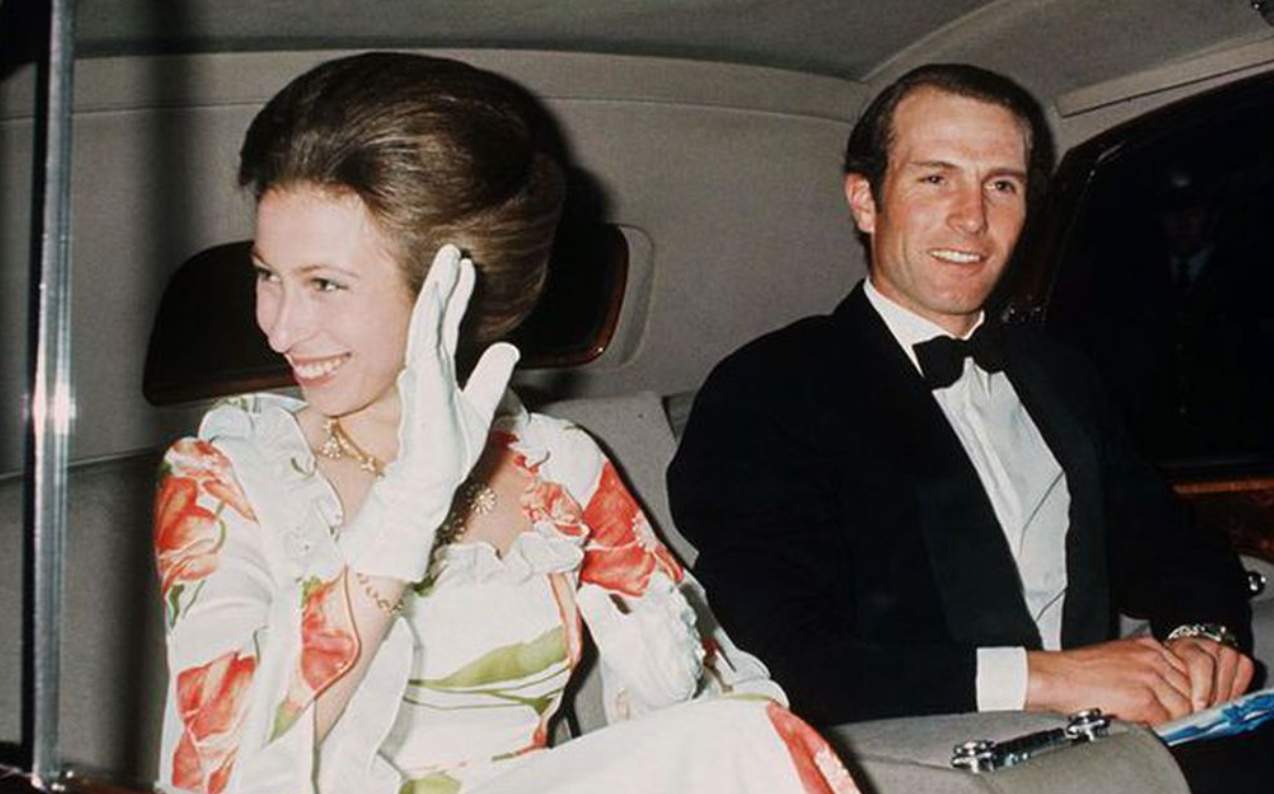
On the evening of March 20, 1974, an audacious attempt was made to kidnap Her Royal Highness Princess Anne, the only daughter of Queen Elizabeth II and Prince Philip.
The shocking incident, which left multiple people injured by gunfire, unfolded on The Mall outside Buckingham Palace and culminated in the would-be kidnapper being tackled to the ground.
The 23-year-old princess’s calm and collected response in the face of danger would cement her reputation as one of the most unflappable members of the royal family.
At the time, Anne was fourth in line to the throne and had been carrying out royal duties since the age of 18. Just months earlier, in November 1973, she had married Captain Mark Phillips in a televised ceremony at Westminster Abbey watched by an estimated 500 million people worldwide.
The attempted armed kidnapping was an unprecedented breach of royal security in modern times.
2. The Kidnapping Plot
The man behind the kidnap plot was Ian Ball, a 26-year-old unemployed laborer from North London.
Described as a loner by those who knew him, Ball had become fixated on Princess Anne and spent two years meticulously planning her abduction.
Inspired by Frederick Forsyth’s novel “Day of the Jackal,” he aimed to emulate the book’s antagonist, an assassin known only as “The Jackal.”
As part of his elaborate scheme, Ball moved from his basement flat in Bayswater to a rented house in Fleet, Hampshire, just five miles from where Anne and Captain Phillips lived at Sandhurst.
He assumed a false identity, going by the name John Williams, and rented a Ford Escort car.
Inside the vehicle, he stockpiled Valium tranquilizers and two pairs of handcuffs.
Ball had obtained details of Anne’s weekly schedule by simply phoning the Buckingham Palace press office, which revealed her upcoming engagements.
On March 20, he put his plan into action, typing out a ransom note on a rented typewriter.
The letter, addressed to Queen Elizabeth II, read: “Your daughter has been kidnapped.
The following are conditions to be fulfilled for release.”
Ball demanded a ransom of £3 million (equivalent to nearly £26 million today) to be paid in £5 notes, as well as a plane to Switzerland and a promise of freedom from prosecution.
3. The Incident Unfolds
At around 8 p.m. on March 20, Princess Anne and Captain Phillips were returning to Buckingham Palace by limousine after attending a charity film screening.
Accompanying the couple were Anne’s personal bodyguard, Inspector James Beaton, her lady-in-waiting Rowena Brassey, and chauffeur Alex Callender at the wheel of the maroon Austin Princess car.
As the vehicle approached the palace on The Mall, Ian Ball swerved his white Ford Escort in front of the limousine, forcing Callender to stop.
Ball leapt from his car and began firing a handgun, shattering the royal car’s rear window.
Inspector Beaton, armed with a Walther PPK pistol, exited the vehicle to confront Ball but was immediately shot in the shoulder before he could fire.
With Beaton wounded, Ball turned his attention to the limousine’s rear door, demanding entry.
“Open, or I’ll shoot!” he yelled, trying to yank open the door behind the driver’s seat, where Anne was sitting.
The princess and Captain Phillips desperately tried to hold the door shut as Ball fought to open it.
Meanwhile, in the mayhem, Anne’s lady-in-waiting managed to escape through the rear door on the other side of the car.
Beaton, despite his injuries, scrambled back into the limousine and put himself between Ball and the royal couple.
Ball fired again, shooting the inspector twice more, striking his hand as he shielded Anne and Phillips.
One bullet hit Beaton in the abdomen.
“I felt tired and very drunk, although I hadn’t been drinking,” he later recalled to police.
“I just wanted to lie down.”
Amid the melee, Callender exited the vehicle and attempted to reason with Ball, but the assailant shot the chauffeur in the chest at point-blank range.
Brian McConnell, a nearby tabloid journalist who had been following the princess’s engagements that day, rushed to the car to intervene.
“Don’t be silly, old boy,” McConnell urged Ball.
“Put the gun down.”
Ball’s response was to shoot McConnell in the chest as well.
As the situation escalated, Anne herself had a now-famous interaction with her would-be abductor.
Ball repeatedly ordered her to get out of the car, to which the princess calmly replied, “Not bloody likely!”
Even as Ball grabbed her forearm and began pulling, Anne held her ground.
“We had a sort of discussion about where or where not we were going to go,” she later recounted with characteristic understatement.
The standoff continued until an unlikely hero emerged: Ronnie Russell, a former amateur boxer who happened to be driving past.
Russell leapt from his vehicle and punched Ball twice in the head before leading Anne and her lady-in-waiting to safety.
The first police officer to arrive on the scene, Constable Michael Hills, was shot in the stomach by the wounded Ball before the assailant fled on foot.
Detective Constable Peter Edmonds, responding to Constable Hills’ radio call for backup, pursued Ball through nearby St. James’s Park.
The detective caught up to the gunman and grappled him to the ground, finally putting an end to the terrifying ordeal.
Ball was arrested and taken into custody.
4. Princess Anne’s Remarkable Composure
Throughout the traumatic incident, Princess Anne displayed extraordinary composure and presence of mind.
Despite the violence unfolding around her and the very real threat to her life, she remained level-headed and even engaged in what she later described as a “very irritating conversation” with her attacker.
As Ball tried to force her from the car, Anne recalled being “scrupulously polite” to him, believing that “it was silly to be too rude at that stage.”
Her tone remained measured and calm, with a hint of exasperation, as she repeatedly refused his demands.
It was only when Ball managed to rip the back of her dress while grappling with her that Anne admitted she “lost her rag.”
In the aftermath of the attack, Anne’s first concern was for the wounded men who had tried to protect her.
She visited Inspector Beaton, Constable Hills, McConnell, and her chauffeur Callender in the hospital, expressing her gratitude for their bravery.
The incident left Anne shaken but undeterred.
Just days later, she resumed her royal duties, determined not to let the traumatic experience define her.
5. The Aftermath & Trial
As details of the attempted kidnapping emerged, the full extent of Ian Ball’s planning and lack of remorse became apparent.
In addition to the ransom note found in his possession, Ball had written a second letter to be sent to the authorities after abducting Anne.
It included instructions for the Queen to surrender the ransom money.
During police interviews, Ball calmly admitted to his actions, showing no regret for the four men he had shot and wounded.
“They were getting in my way, so I had to shoot them,” he stated matter-of-factly.
“Well, the police, that’s their job. They expect to be shot. I took a chance of getting shot, so why shouldn’t they?”
He also claimed that one positive outcome of his failed plot was that royal security would have to be improved to protect the princess in the future.
At Ball’s trial, held at the Old Bailey in May 1974, he pleaded guilty to attempted murder and kidnapping charges.
The court heard how he had stalked Princess Anne for two years, attempting to learn her routines and movements.
Psychiatrists diagnosed Ball with schizophrenia, and he was sentenced to life imprisonment in a secure psychiatric hospital under the Mental Health Act.
He remains incarcerated at Broadmoor Hospital to this day.
6. Honours for the Heroes
In the wake of the harrowing incident, those who had come to Princess Anne’s aid were recognized for their extraordinary courage.
Inspector James Beaton, who had sustained serious gunshot wounds while shielding Anne and Captain Phillips, was awarded the George Cross, the highest civilian honor for gallantry in the United Kingdom.
The Queen herself presented Beaton with the medal just eight months after the attack.
Ronnie Russell, the passing boxer who had confronted Ball and led Anne to safety, received the George Medal for his actions, as did Constable Michael Hills.
Chauffeur Alex Callender, journalist Brian McConnell, and Detective Constable Peter Edmonds were each awarded the Queen’s Gallantry Medal for their bravery.
When Russell received his George Medal from the Queen in November 1974, in a ceremony also attended by Princess Anne, the monarch expressed her profound personal gratitude.
“The medal is from the Queen,” she told Russell, “but I want to thank you as Anne’s mother.”
It was later revealed that, in recognition of Russell’s heroism, the Queen had also quietly arranged for his mortgage to be paid off, saving him from the threat of repossession.
7. Increased Royal Security
The brazen attempt to abduct Princess Anne exposed serious vulnerabilities in the royal family’s security arrangements.
At the time, it was common for senior royals to have only a single protection officer accompanying them, as Anne did on the night of the attack.
The ease with which Ball was able to obtain the princess’s schedule and track her movements highlighted the need for stricter information control.
In the immediate aftermath of the incident, Anne’s security was visibly bolstered.
When she visited the wounded men in the hospital, the princess arrived with two police officers flanking her, a marked departure from her previous solo protection.
Beaton, who continued to serve as Anne’s bodyguard for another five years, later recalled that the Royal Family’s approach to security changed “overnight” following the attack.
The Metropolitan Police Service’s Royalty Protection Branch, responsible for safeguarding the royal family, undertook a comprehensive review of its procedures and implemented wide-ranging reforms.
The number of protection officers assigned to senior royals was increased, and additional backup vehicles were deployed to provide enhanced support.
Bulletproof glass was fitted to the windows of royal cars, and the vehicles themselves were upgraded to withstand potential attacks.
Communication and coordination between the royals’ personal protection teams and local police forces were also improved to ensure a more robust and responsive security network.
The Walther PPK pistols carried by royal bodyguards, which had proven ineffective during the Mall incident, were replaced with more reliable firearms.
Royalty protection officers underwent rigorous additional training to prepare them for worst-case scenarios.
The legacy of the attempted kidnapping can still be seen in the strict security measures surrounding the royal family today, five decades later.
The incident served as a chilling reminder that even the most senior members of the monarchy were not immune to the threat of violence and compelled a fundamental reassessment of the way they were protected.
8. Anne’s Bravery and Legacy
Princess Anne’s remarkable courage and composure during the terrifying kidnap attempt solidified her reputation as one of the toughest and most unflappable members of the royal family.
Her refusal to be cowed by her armed attacker and her now-legendary “Not bloody likely!”
retort in the face of danger have become an indelible part of her public persona.
The incident, which made headlines around the world, is widely regarded as one of the most dramatic episodes in modern royal history.
Yet for Anne, it was simply another challenge to be met with her characteristic determination and dry wit.
In the years since the attack, she has spoken about it with understated nonchalance, downplaying her own bravery and emphasizing the heroism of those who came to her aid.
Now, 50 years later, the Princess Royal remains one of the hardest-working members of the royal family, consistently carrying out more public engagements than any other senior royal.
In 2022 alone, the then-72-year-old Anne conducted an impressive 214 official duties, cementing her status as the most industrious member of the monarchy.
The attempted kidnapping also had a profound impact on public perceptions of the royal family.
In an era when the monarchy was often seen as distant and aloof, the shocking attack on Princess Anne humanized the royals and underscored their vulnerability.
The outpouring of public sympathy and support in the wake of the incident helped to foster a new sense of connection between the royal family and the British people.
For Anne herself, the traumatic experience served as a testament to her resilience and fortitude.
In the decades since, she has faced numerous other challenges, both personal and public, with the same unwavering spirit and wry humor that she displayed on that fateful March evening in 1974. Her enduring popularity and respect are a tribute to the strength of character she demonstrated in the face of unimaginable danger.
9.
The attempted kidnapping of Princess Anne on March 20, 1974, remains one of the most shocking and dramatic episodes in the modern history of the British royal family.
The audacious plot, masterminded by a lone gunman with a delusional fixation on the princess, came perilously close to success and left multiple people wounded.
Yet it was Anne’s extraordinary bravery and composure in the face of mortal danger that would come to define the incident.
Her refusal to be intimidated by her armed attacker, her famous “Not bloody likely!”
retort, and her cool-headed handling of the situation have become the stuff of royal legend.
The attack also served as a stark wake-up call for the monarchy, exposing the inadequacies of the royal family’s security arrangements and prompting a major overhaul of protection protocols.
The heroism of those who came to Anne’s aid, from her bodyguard and chauffeur to a passing boxer and the police officers who apprehended the gunman, was rightly celebrated and honored.
Half a century later, the events of that March evening still resonate as a powerful reminder of the courage and resilience of the royal family in the face of adversity.
Princess Anne’s unflappable response to the attack has cemented her status as one of the most formidable and respected members of the monarchy, a woman whose strength of character and indomitable spirit continue to inspire admiration to this day.
As we mark the 50th anniversary of the attempted kidnapping, it is an opportunity to reflect on the enduring legacy of a truly extraordinary moment in royal history – a moment when a young princess faced down danger with unshakable poise and emerged as a true heroine of the House of Windsor.