










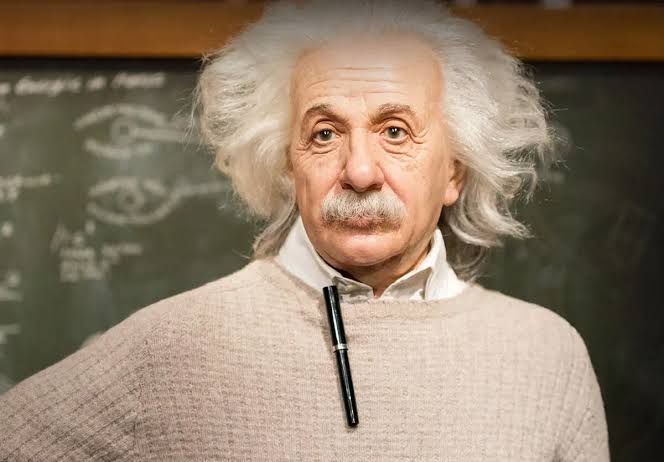
Albert Einstein, the renowned physicist and one of the most influential scientists of the 20th century, left an indelible mark on the world with his groundbreaking theories and contributions to our understanding of the universe.
From his theory of relativity to his famous equation E=mc², Einstein’s work revolutionized scientific thought and earned him international acclaim.
However, the circumstances surrounding his death and the bizarre fate of his brain have become the subject of much fascination and controversy.
2. Einstein’s Final Days
In the years leading up to his death, Albert Einstein’s health had been deteriorating.
He suffered from an abdominal aortic aneurysm, which had been surgically reinforced in 1948. Despite the successful operation, Einstein’s condition worsened over time.
When doctors suggested further surgery to address the issue, Einstein refused, famously stating, “I want to go when I want. It is tasteless to prolong life artificially.
I have done my share, it is time to go. I will do it elegantly.”
During his final days, Einstein remained intellectually active, working on various projects and contemplating the complexities of the universe.
One of his last known pieces of writing, left unfinished on his desk, delved into the philosophical and political implications of the atomic age.
The excerpt, which ends abruptly mid-sentence, reads:
“In essence, the conflict that exists today is no more than an old-style struggle for power, once again presented to mankind in semireligious trappings.
The difference is that, this time, the development of atomic power has imbued the struggle with a ghostly character; for both parties know and admit that, should the quarrel deteriorate into actual war, mankind is doomed.
Despite this knowledge, statesmen in responsible positions on both sides continue to employ the well-known technique of seeking to intimidate and demoralize the opponent by marshaling superior military strength.
They do so even though such a policy entails the risk of war and doom.
Not one statesman in a position of responsibility has dared to pursue the only course that holds out any promise of peace, the course of supranational security, since for a statesman to follow such a course would be tantamount to political suicide.
Political passions, once they have been fanned into flame, exact their victims…”
3. The Day Einstein Died
On April 18, 1955, at the age of 76, Albert Einstein passed away at Princeton Hospital in New Jersey.
The cause of his death was reported to be a ruptured abdominal aortic aneurysm, the very condition he had refused further treatment for.
Einstein’s death sent shockwaves through the scientific community and the world at large, as people mourned the loss of one of the greatest minds in history.
In accordance with Einstein’s wishes, his body was cremated, and his ashes were scattered at an undisclosed location.
He had made it clear that he did not want his remains to become a shrine or a place of worship, stating, “I want to be cremated so people won’t come to worship at my bones.”
On that fateful day, only one photographer managed to capture the events surrounding Einstein’s death: Ralph Morse, a photojournalist working for LIFE magazine.
Armed with his camera and a case of scotch to help gain access and loosen tongues, Morse documented the somber occasion, providing a rare glimpse into the private moments of Einstein’s passing.
4. The Mystery of Einstein’s Last Words
As Albert Einstein lay on his deathbed, he uttered a few final words in his native German.
Unfortunately, the only witness to these words was his nurse, who did not understand the language.
As a result, the content of Einstein’s last statement remains a mystery, forever lost in translation.
The fact that Einstein’s final thoughts were spoken in German, a language that held deep personal significance for him, only adds to the intrigue surrounding his last moments.
Many have speculated about what profound insights or reflections the brilliant physicist might have shared in those fleeting seconds before his passing.
However, the true nature of Einstein’s last words will likely remain an enigma, leaving us to ponder the untold wisdom that died with him.
5. The Controversial Removal of Einstein’s Brain
The story of Einstein’s brain took a bizarre turn shortly after his death.
During the autopsy, pathologist Dr. Thomas Harvey made the controversial decision to remove Einstein’s brain without proper authorization.
Harvey, who had performed the autopsy, claimed that he had received permission from Einstein’s son, Hans Albert Einstein, to preserve the brain for scientific study.
However, the legality and ethics of this action have been called into question over the years.
In addition to the brain’s removal, it was later revealed that another individual had taken Einstein’s eyeballs as a souvenir.
The identity of this person remains unknown, adding to the macabre nature of the events surrounding Einstein’s postmortem examination.
The removal of Einstein’s brain and eyeballs sparked debates about the rights of the deceased, the ownership of body parts, and the ethical boundaries of scientific research.
While some argued that studying Einstein’s brain could provide invaluable insights into the neurological basis of genius, others condemned the actions as a violation of Einstein’s dignity and his family’s wishes.
6. The Journey of Einstein’s Brain
Following the removal of Einstein’s brain, Dr. Thomas Harvey embarked on a strange and controversial journey with the organ.
Harvey’s initial plan was to study the brain and publish his findings, hoping to uncover the secrets behind Einstein’s extraordinary intellect.
However, as time passed, no studies were forthcoming, and Harvey’s whereabouts, along with the location of the brain, became a mystery.
Years later, Harvey resurfaced, and it was discovered that he had been keeping Einstein’s brain in a jar inside an old cider box, tucked away behind a beer cooler in his Kansas home.
The revelation of the brain’s peculiar storage conditions only added to the oddity of the situation.
Despite the unconventional circumstances, Harvey remained determined to unlock the mysteries of Einstein’s brain.
He began sending small sections of the brain to various researchers around the world, hoping that their expertise could shed light on the neurological basis of Einstein’s genius.
However, the studies conducted on these samples yielded inconclusive results, failing to provide any groundbreaking insights into Einstein’s intellectual capabilities.
7. Scientific Studies on Einstein’s Brain
Over the years, several scientific studies have been conducted on Einstein’s brain, each seeking to unravel the secrets behind his extraordinary mind.
One of the most notable studies was led by Dr. Marian Diamond, a neuroanatomist at the University of California, Berkeley.
Diamond’s research focused on the role of glial cells, the support cells of the brain, in relation to intelligence.
Upon examining samples of Einstein’s brain, Diamond reported that Einstein had a higher ratio of glial cells to neurons compared to the average brain.
She hypothesized that this increased ratio might have contributed to Einstein’s enhanced cognitive abilities, as glial cells play a crucial role in providing nutrients and support to neurons.
However, Diamond’s findings were met with skepticism from the scientific community, as critics pointed out several methodological flaws in her study, including the small sample size and the lack of proper controls.
Another study, conducted by Dr. Britt Anderson from the University of Alabama, focused on the thickness and neuron density of Einstein’s cerebral cortex.
Anderson discovered that Einstein’s frontal cortex was thinner than average but had a higher density of neurons.
This finding was further explored by Dr. Sandra Witelson, a neuroscientist at McMaster University, who had access to a larger portion of Einstein’s brain.
Witelson’s analysis revealed a peculiar feature in Einstein’s brain: the absence of the Sylvian fissure, a prominent groove that typically separates the parietal lobe into distinct compartments.
This absence resulted in Einstein’s parietal lobe being 15 percent wider than the average brain.
The parietal lobe is associated with mathematical ability, spatial reasoning, and three-dimensional visualization, skills that were crucial to Einstein’s groundbreaking theories.
Witelson proposed that the unique structure of Einstein’s brain, particularly the absence of the Sylvian fissure, may have allowed for enhanced communication between neurons in the parietal lobe, enabling his exceptional problem-solving abilities.
However, the exact implications of these neuroanatomical differences remain a topic of ongoing research and debate.
8. The Legacy of Einstein’s Brain
The fascination with Einstein’s brain persists to this day, as researchers and the public alike continue to ponder the biological basis of his genius.
The story of the brain’s removal, its subsequent journey, and the scientific studies conducted on it have become part of the mythology surrounding Einstein.
In 1998, after years of safeguarding Einstein’s brain, Dr. Thomas Harvey returned the remaining portions to the University Medical Center at Princeton, where they were placed in the care of the pathology department.
This gesture marked a symbolic end to the brain’s extraordinary odyssey and a return to its rightful place.
Despite the numerous studies conducted on Einstein’s brain, the exact neurological mechanisms underlying his intellectual prowess remain elusive.
While certain structural differences have been observed, the complex interplay between genetics, environment, and individual experiences that shaped Einstein’s mind continues to be a subject of ongoing research and speculation.