




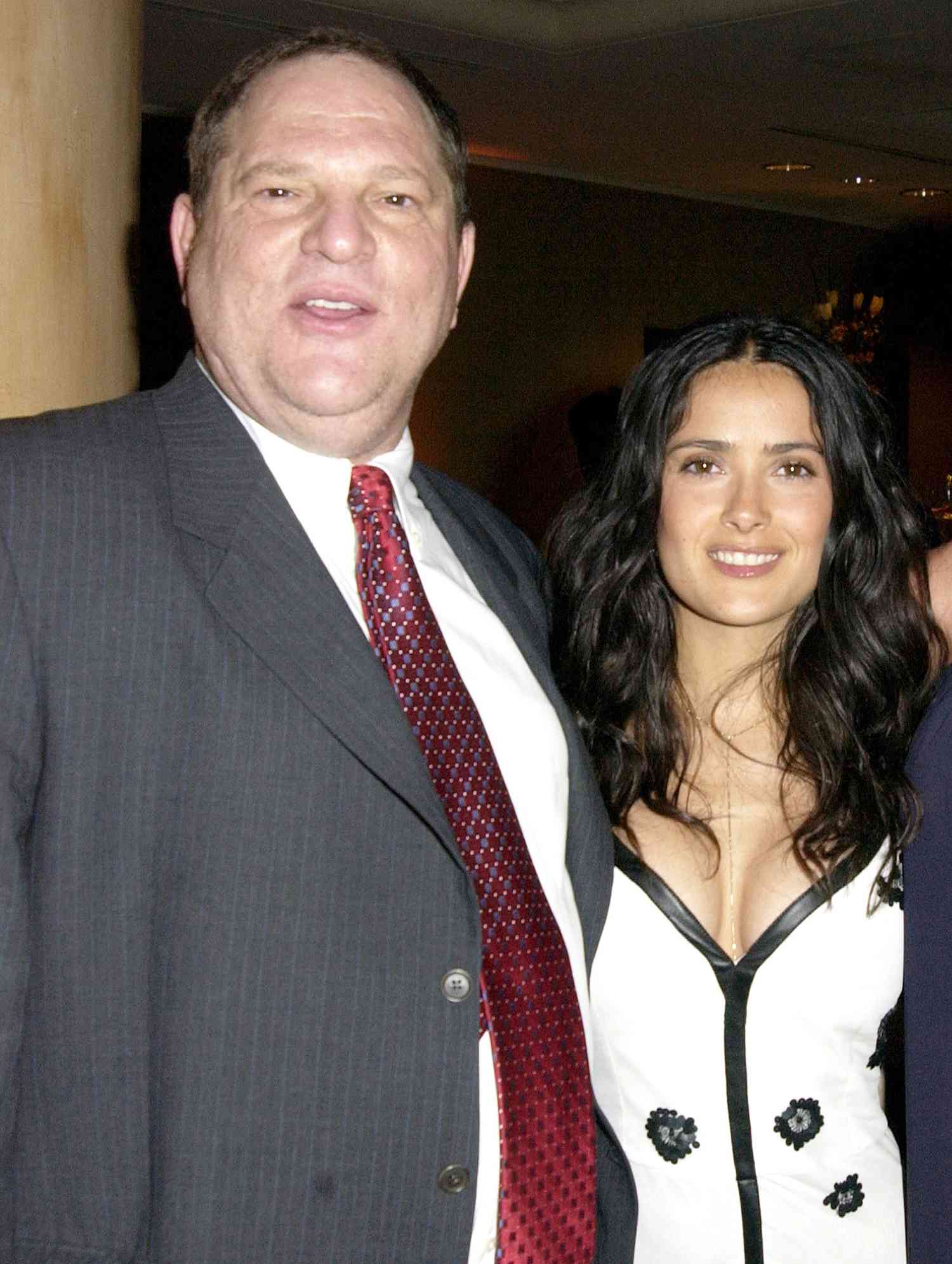
In December 2017, Hollywood was rocked by yet another powerful account of sexual harassment and abuse at the hands of disgraced producer Harvey Weinstein.
This time, the voice belonged to acclaimed actress Salma Hayek, who penned a searing op-ed for the New York Times, revealing years of harassment, stalking, and manipulation by Weinstein.
Hayek’s story, centered around the production of her passion project “Frida,” a biopic about the legendary artist Frida Kahlo, shed light on the insidious nature of Weinstein’s behavior and the toll it took on her personally and professionally.
2. Background
Salma Hayek, a Mexican-born actress, had been making waves in Hollywood since the mid-1990s with breakout roles in films like “Desperado” and “From Dusk Till Dawn.”
By the late 1990s, Hayek had set her sights on bringing the story of Frida Kahlo to the big screen, a project that would become both her greatest triumph and a source of immense trauma.
The “Frida” biopic was more than just another role for Hayek; it was a passion project that she had been developing for years.
The film would tell the story of the iconic Mexican artist Frida Kahlo, exploring her life, art, and tumultuous relationship with fellow artist Diego Rivera.
Hayek saw this as an opportunity to showcase her talents not just as an actress, but as a producer, bringing an important Latina story to a global audience.
3. Initial Encounters with Weinstein
Hayek’s journey with “Frida” took an unexpected turn when Harvey Weinstein and his company Miramax became involved in the project.
In her New York Times op-ed, Hayek revealed that she was initially naïve about Weinstein’s intentions.
She wrote, “I was so excited to work with him and that company. In my mind, I wasn’t a nobody.
I was a proven actress and producer who had, in his own words, ‘saved’ the project.”
However, Hayek soon realized that Weinstein’s interest in the project was not purely professional.
She stated, “Little did I know it would become my turn to say no to Harvey Weinstein.”
This marked the beginning of what would become a years-long struggle to bring “Frida” to the screen while fending off Weinstein’s advances and navigating his volatile behavior.
4. Pattern of Harassment
As Hayek worked to get “Frida” off the ground, she found herself subjected to a relentless pattern of harassment from Weinstein.
In her account, she detailed how Weinstein would show up at her hotel room unannounced, often in the middle of the night.
He would call her incessantly, making inappropriate requests and sexual advances.
Hayek wrote, “No to me taking a shower with him.
No to letting him watch me take a shower.
No to letting him give me a massage.
No to letting a naked friend of his give me a massage.
No to letting him give me +ral sex.
No to my getting n=ked with another woman.”
Each refusal was met with increasing hostility from Weinstein, who seemed unable to accept that Hayek was not interested in a sexual relationship with him.
The actress described how she repeatedly said no to Weinstein’s advances over a number of years, at “hotel after hotel, location after location, where he would show up unexpectedly.”
This persistent harassment created an atmosphere of constant tension and fear for Hayek as she tried to focus on bringing her film to life.
5. Escalation of Abuse
As Hayek continued to rebuff Weinstein’s advances, his behavior escalated from harassment to outright threats.
She described Weinstein’s reactions to her refusals as “Machiavellian rage,” painting a picture of a man who was used to getting his way and reacted with fury when denied.
In one particularly chilling incident, Hayek recounted that Weinstein threatened her life.
She wrote, “The range of his persuasion tactics went from sweet-talking me to that one time when, in an attack of fury, he said the terrifying words, ‘I will kill you, don’t think I can’t.’”
This threat exemplified the extreme measures Weinstein was willing to take to exert control over Hayek and others in the industry.
The escalating abuse took a significant toll on Hayek’s mental health and well-being.
She found herself constantly on edge, never knowing when Weinstein might appear or what he might do next.
The dream of bringing Frida Kahlo’s story to the screen had turned into a nightmare of harassment and fear.
6. The Battle for Frida
As Hayek fought off Weinstein’s advances, she also found herself in a battle to maintain control over her passion project.
Weinstein, frustrated by Hayek’s rejections, began to use his power as a producer to threaten the very existence of the film.
Hayek revealed that Weinstein threatened to take “Frida” away from her, leveraging his position at Miramax to potentially shelve the project entirely.
Determined not to let her dream die, Hayek fought back.
She wrote, “I was so smart to get myself into this situation, but then I was so stupid.
I felt my baby had been kidnapped, and I was convinced that my brother and I must solve the situation, when I should have gone to the relevant authorities.”
In a display of remarkable resilience and savvy, Hayek managed to secure the legal rights to the role of Frida Kahlo.
She recounted, “I was clever enough to corner him legally, to make a film that he didn’t want to make because he was not getting what he wanted out of me for doing the movie, and he still had to do it.”
However, Weinstein didn’t give up easily.
He presented Hayek with a list of seemingly impossible demands “to clear himself legally.”
These included a rewritten script free of charge, $10 million in financing, an A-list director, and a prominent cast.
Against all odds, Hayek managed to meet these demands, demonstrating her determination to see the project through despite Weinstein’s attempts to derail it.
7. Sexual Coercion on Set
Even after Hayek had overcome numerous obstacles to get “Frida” into production, Weinstein’s abusive behavior continued on set.
He persistently pushed for more revealing scenes and gratuitous nudity, using his power as a producer to pressure Hayek into situations that made her deeply uncomfortable.
The most egregious example of this was Weinstein’s insistence on including a full-frontal nude sex scene between Hayek’s character and another woman.
This scene was not in the original script and seemed to serve no purpose other than to fulfill Weinstein’s personal fantasies.
Hayek described the immense distress this demand caused her: “He had been constantly asking for more skin, for more sex…
But this time, it was clear to me he would never let me finish this movie without him having his fantasy one way or another.
There was no room for negotiation.”
Feeling trapped and desperate to complete the film she had worked so hard to make, Hayek felt she had no choice but to agree to the scene.
She recalled, “I arrived on the set the day we were to shoot the scene that I believed would save the movie.
And for the first and last time in my career, I had a nervous breakdown: My body began to shake uncontrollably, my breath was short and I began to cry and cry.”
The experience was so traumatic that Hayek had to take tranquilizers to get through the filming of the scene.
She wrote, “It was not because I would be naked with another woman.
It was because I would be naked with her for Harvey Weinstein.
But I could not tell them then.”
8. Impact on Hayek’s Mental Health
The prolonged abuse and harassment from Weinstein, coupled with the stress of fighting for her project, took a severe toll on Hayek’s mental health.
In her 2021 interview with Marc Maron, Hayek revealed the long-lasting impact of her experiences.
“I was very, very strong, but when I would go home, sometimes I would be depressed for weeks,” Hayek admitted.
The constant pressure, threats, and violation of her boundaries left deep emotional scars that persisted long after the production of “Frida” had ended.
Hayek described the experience as “traumatizing,” indicating that the effects of Weinstein’s abuse extended far beyond the immediate moments of harassment.
The actress found herself grappling with depression and anxiety, struggling to reconcile the strength she showed in standing up to Weinstein with the emotional turmoil she experienced in private.
9. Staying Silent
Like many of Weinstein’s victims, Hayek chose to stay silent about her experiences for many years.
In her New York Times op-ed, she explained her reasons for not speaking out earlier, revealing the complex emotions and considerations that victims of abuse often grapple with.
Hayek wrote, “I had brainwashed myself into thinking that it was over and that I had survived; I hid from the responsibility to speak out with the excuse that enough people were already involved in shining a light on my monster.
I didn’t consider my voice important, nor did I think it would make a difference.”
She also touched on the challenge of explaining her experiences to her loved ones, particularly the details she had previously omitted when discussing her interactions with Weinstein.
This highlights the additional burden that victims often carry – the fear of not being believed or understood, even by those closest to them.
10. The Wider Context
Hayek’s story, while deeply personal, was far from unique.
Her account joined a chorus of voices from other actresses who had experienced similar abuse at the hands of Weinstein.
In her op-ed, Hayek mentioned Ashley Judd, another actress who had spoken out about Weinstein’s behavior.
Hayek’s revelations also shed light on the broader issues facing women in the film industry.
She posed the question, “Why do so many of us, as female artists, have to go to war to tell our stories when we have so much to offer?
Why do we have to fight tooth and nail to maintain our dignity?”
These questions highlighted the systemic nature of the problems in Hollywood, where power imbalances and a culture of silence had long enabled abusive behavior to continue unchecked.
11. Weinstein’s Downfall
In 2020, Harvey Weinstein was convicted of sexual assault and rape in the third degree, resulting in a 23-year prison sentence.
This conviction marked a significant moment in the #MeToo movement and provided a measure of justice for his many victims.
Hayek’s response to the allegations becoming public and Weinstein’s subsequent downfall was complex.
In her interview with Marc Maron, she revealed that when the allegations against Weinstein began emerging in 2017, she “started spiraling down again.”
This reaction underscores the long-lasting trauma of abuse and how even seeing justice served can resurface painful memories for survivors.
12. Hayek’s Reflections
Despite the trauma she endured, Hayek has shown remarkable resilience and strength in her reflections on her experiences with Weinstein.
In her New York Times piece, she wrote, “I am inspired by those who had the courage to speak out, especially in a society that elected a president who has been accused of sexual harassment and assault by more than a dozen women and whom we have all heard make a statement about how a man in power can do anything he wants to women.”
Hayek has also grappled with her perception of herself as both a victim and a survivor.
She told Marc Maron, “I came out of it and I said, ‘I won. I beat him at his game.
I’m not a victim. I healed. I’m a fighter, I’m strong.’”
This statement reflects the complex journey many survivors go through in processing their experiences and reclaiming their narratives.
13. Conclusion
Salma Hayek’s story serves as a powerful testament to the pervasive nature of sexual harassment and abuse in the entertainment industry.
Her experiences with Harvey Weinstein during the production of “Frida” illuminate the ways in which powerful figures can exploit their positions to harass and manipulate others.
Hayek’s decision to speak out, joining the voices of many other women in the #MeToo movement, has contributed to a seismic shift in how the industry and society at large view and address sexual harassment.
Her story underscores the importance of believing survivors, challenging power structures that enable abuse, and creating safe environments for all in the entertainment industry and beyond.
The journey of bringing “Frida” to the screen, despite the immense challenges and abuse Hayek faced, stands as a testament to her strength and determination.
It also serves as a stark reminder of the obstacles that many women in the industry have had to overcome to tell their stories and pursue their artistic visions.
As the industry continues to grapple with the fallout from the Weinstein scandal and other high-profile cases of abuse, Hayek’s story remains a powerful call to action.
It challenges us all to work towards a future where no one has to endure such abuse in pursuit of their dreams, and where the voices of survivors are heard, believed, and acted upon.