


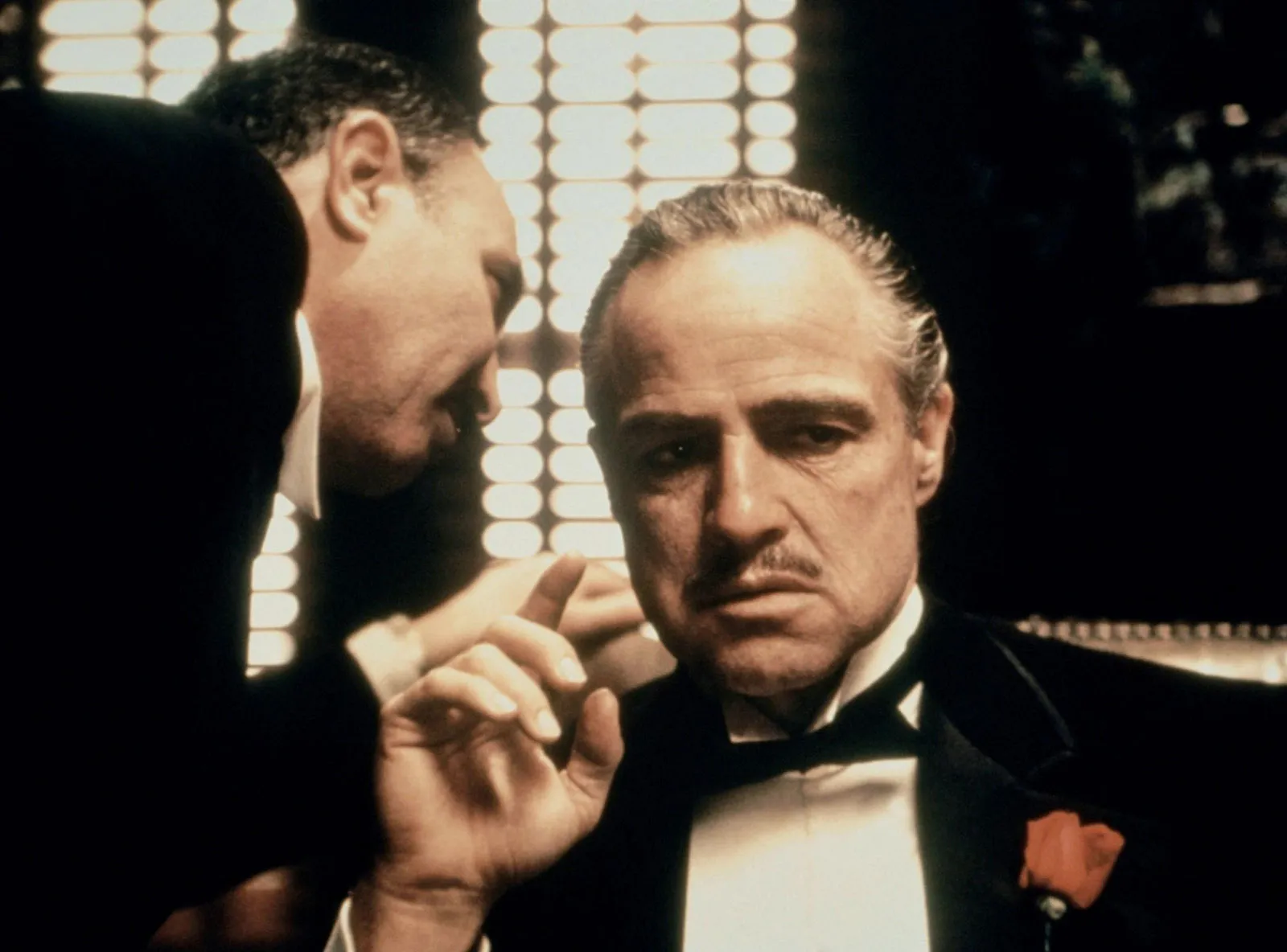
Marlon Brando, one of the most influential actors of the 20th century, was a complex and often misunderstood figure.
From his groundbreaking performances to his eccentric personal life, Brando left an indelible mark on Hollywood and popular culture.
Let’s dive into 63 fascinating facts about this iconic actor, exploring the depths of his character, career, and lasting impact.
1. He refused to accept his Academy Award for “The Godfather” and sent Sacheen Littlefeather to decline the award on his behalf in protest of the treatment of Native Americans in the film industry.
In 1973, Brando made headlines when he declined to attend the Academy Awards ceremony where he was nominated for Best Actor for his role as Vito Corleone in “The Godfather.”
Instead, he sent Native American activist Sacheen Littlefeather to refuse the award on his behalf.
Littlefeather, dressed in traditional Apache attire, took the stage and delivered a brief speech explaining Brando’s decision to protest Hollywood’s portrayal of Native Americans in film and television.
This unprecedented move sparked controversy and brought attention to the issue of Native American representation in the entertainment industry.
2. He had a troubled personal life, including the murder of his daughter Cheyenne’s boyfriend and Cheyenne’s subsequent suicide.
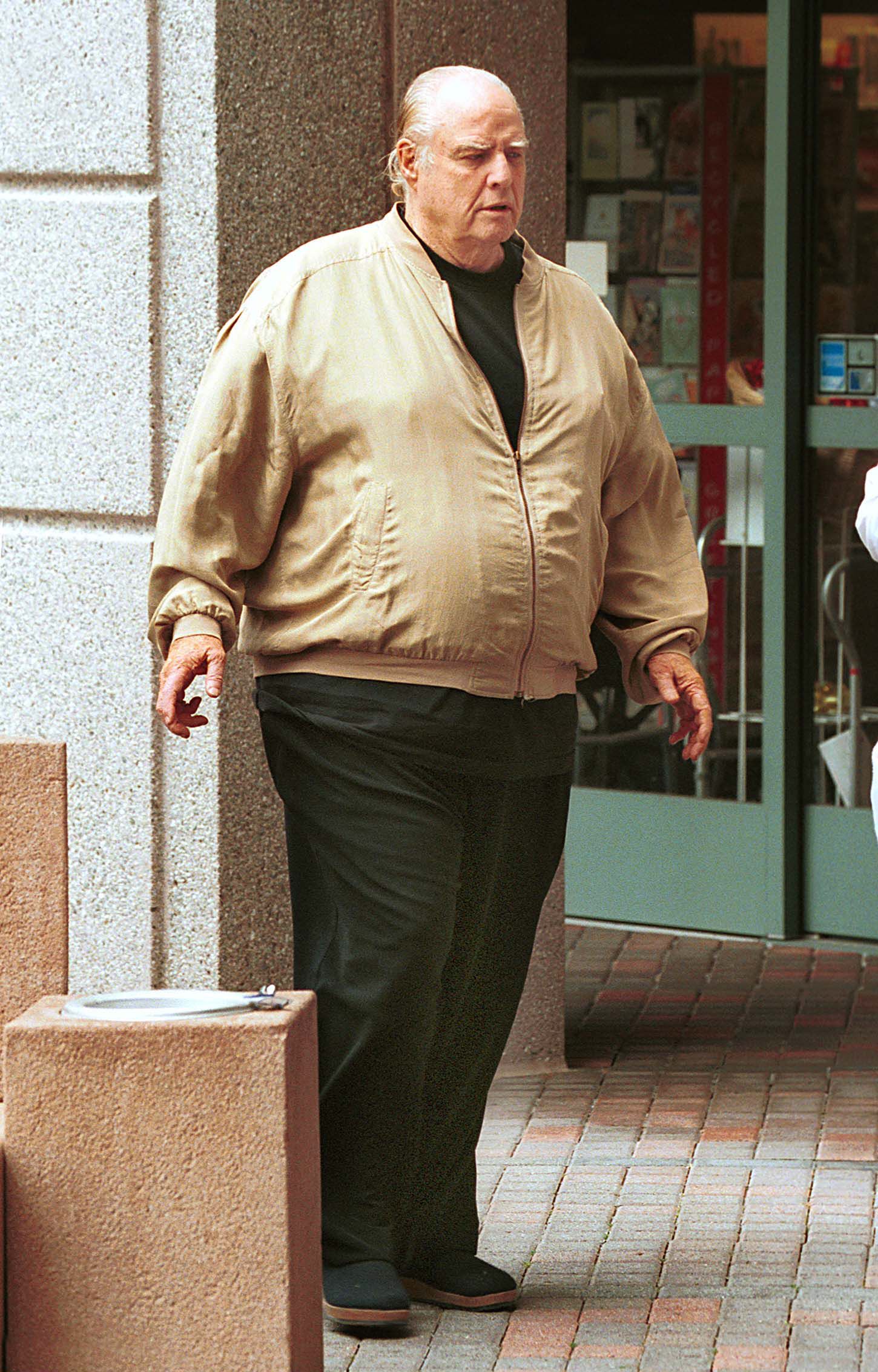
Brando’s personal life was marked by tragedy, particularly concerning his children.
In 1990, his son Christian Brando shot and killed Dag Drollet, the boyfriend of Brando’s daughter Cheyenne, at the family’s home on Mulholland Drive.
Christian claimed the shooting was accidental and occurred during an argument about Drollet’s alleged abuse of Cheyenne.
The incident deeply affected the Brando family, and Cheyenne struggled with depression and drug addiction in the aftermath.
Tragically, in 1995, Cheyenne took her own life at the age of 25, hanging herself at her mother’s home in TahitI. 3. He got circumcised in his 60s without anesthesia to test his meditation and pain control abilities.
In a surprising display of his commitment to mind-over-matter techniques, Brando decided to undergo circumcision in his 60s without the use of anesthesia.
He believed that through meditation and mental control, he could manage the pain of the procedure.
Brando had long been interested in various forms of spirituality and alternative practices, and this extreme act was a testament to his belief in the power of the mind.
While he initially wanted to perform the entire procedure without any pain relief, doctors insisted on using a local anesthetic for safety reasons.
4. He would often have cue cards hidden around the set or written on props to help him remember his lines during filming, as he disliked memorizing lines.
Brando was notorious for his aversion to memorizing lines, believing that it interfered with the spontaneity of his performances.
To work around this, he would often have cue cards placed strategically around the set, sometimes even on other actors.
In “The Godfather,” for example, cue cards were reportedly taped to Robert Duvall’s chest during some scenes.
Brando argued that this method allowed him to deliver more natural and in-the-moment performances, as he was reacting to the words in real-time rather than reciting memorized dialogue.
5. He bought his own private island in French Polynesia called Tetiaroa after falling in love with it while filming Mutiny on the Bounty.
In 1966, Brando purchased the Tetiaroa atoll, a small group of islands in French Polynesia, after being captivated by its beauty while filming “Mutiny on the Bounty” in 1962. The actor paid $270,000 for the property, which consisted of 12 small islands surrounding a lagoon.
Brando had grand plans for Tetiaroa, envisioning it as both a personal paradise and an eco-friendly resort.
He built a small village and airstrip on the island, and it became his personal retreat from Hollywood.
Today, the island operates as a luxury eco-resort called The Brando, carrying on the actor’s vision for sustainable tourism.
6. He improvised the iconic line “I coulda been a contender” from “On the Waterfront.”
One of the most famous lines in cinema history, “I coulda been a contender,” was reportedly improvised by Brando during the filming of “On the Waterfront” (1954).
The scene, in which Brando’s character Terry Malloy confronts his brother Charley (Rod Steiger) in the back of a taxi, was originally scripted differently.
Brando’s improvisation added a layer of raw emotion and vulnerability to the character, elevating an already powerful scene to legendary status.
This moment exemplifies Brando’s talent for spontaneity and his ability to fully inhabit his characters.
7. He was expelled from high school for riding a motorcycle through the halls.
Brando’s rebellious nature was evident from an early age.
While attending Libertyville High School in Illinois, he was expelled for riding his motorcycle through the school hallways.
This act of defiance was characteristic of the young Brando, who often struggled with authority figures and traditional educational settings.
After his expulsion, his father sent him to Shattuck Military Academy in Minnesota, hoping the strict environment would straighten him out.
However, Brando’s rebellious streak continued, and he was eventually asked to leave the academy as well.
8. He was notorious for being difficult to work with and clashing with directors/producers.
Throughout his career, Brando gained a reputation for being challenging to work with on set.
He often clashed with directors and producers, demanding script changes, refusing to follow direction, and sometimes showing up unprepared.
On the set of “Mutiny on the Bounty” (1962), his behavior was so disruptive that it reportedly led to cost overruns and the replacement of the original director.
During the filming of “Apocalypse Now” (1979), Brando arrived on set overweight and unprepared, causing significant delays and frustration for director Francis Ford Coppola.
Despite these difficulties, many still considered working with Brando worth the trouble due to his immense talent and the power of his performances.
9. He turned down several iconic roles including James Bond in “Dr. No” and Billy Bibbit in “One Flew Over the Cuckoo’s Nest.”
Brando was offered numerous high-profile roles throughout his career, some of which he famously turned down.
He was considered for the role of James Bond in “Dr. No” (1962), which eventually went to Sean Connery and launched the iconic franchise.
Brando was also offered the role of Billy Bibbit in “One Flew Over the Cuckoo’s Nest” (1975), a part that ultimately went to Brad Dourif and earned him an Oscar nomination.
Other notable roles Brando declined include the lead in “Lawrence of Arabia” (1962) and the role of Ziggy Stardust, which was offered to him by David Bowie for a proposed film adaptation of the album.
10. He appeared in only two films in the 1980s after a series of box office disappointments.
Following a string of commercial failures in the 1960s and 1970s, Brando’s career hit a lull in the 1980s.
He appeared in only two films during this decade: “The Formula” (1980) and “The Freshman” (1990).
This period of relative inactivity was partly due to his disillusionment with the film industry and his increasing focus on personal pursuits and activism.
It wasn’t until his role in “The Freshman,” a comedy in which he parodied his Don Corleone character, that Brando began to re-engage with Hollywood, leading to a career resurgence in the 1990s.
11. He played a crucial role in the rise of the independent film movement by funding and starring in low-budget films.
In the latter part of his career, Brando became an advocate for independent filmmaking.
He used his star power and personal wealth to help fund and appear in several low-budget, independent productions.
This included films like “The Score” (2001) and “The Brave” (1997), which was directed by Johnny Depp.
Brando’s involvement in these projects helped bring attention to independent cinema and encouraged other established actors to take risks on smaller, more experimental films.
His support for independent filmmaking was part of his broader critique of the Hollywood studio system and his desire to see more diverse and challenging stories brought to the screen.
12. He was a civil rights activist and supported the African-American civil rights movement.
Brando was deeply committed to social justice causes, particularly the African-American civil rights movement.
He participated in the 1963 March on Washington and was present for Martin Luther King Jr.’s “I Have a Dream” speech.
Brando also used his celebrity status to bring attention to civil rights issues, often speaking out against racial discrimination in Hollywood and beyond.
He was known to support various civil rights organizations financially and even turned down film roles that he felt perpetuated negative racial stereotypes.
His activism extended to other causes as well, including Native American rights and environmental conservation.
13. He had a fascination with Native American culture and adopted Native American children.
Brando’s interest in Native American culture was deep and long-standing.
He studied Native American history and customs, learned several indigenous languages, and was an outspoken advocate for Native American rights.
This interest extended to his personal life as well.
Brando adopted several Native American children, including Petra Brando-Corval, who was of Quechua descent, and Miko Brando, whose mother was a Polynesian actress.
His commitment to Native American causes was evident in his Oscar protest and his ongoing support for various Native American organizations and initiatives throughout his life.
14. He suggested that his Superman character Jor-El could be portrayed as a green bagel or a suitcase that spoke with his voice.
When cast as Superman’s father, Jor-El, in Richard Donner’s 1978 “Superman” film, Brando proposed some unconventional ideas for his character’s appearance.
He suggested that Jor-El could be depicted as a green bagel or a suitcase that spoke with Brando’s voice, arguing that an alien being might take any form.
This bizarre suggestion highlighted Brando’s tendency to challenge conventional thinking and push creative boundaries.
Ultimately, director Richard Donner convinced Brando to appear in person, arguing that audiences wanted to see Marlon Brando, not a talking bagel or suitcase.
15. He was known for his unconventional fashion sense, often wearing colorful Hawaiian shirts and casual attire.
Brando’s fashion choices were as rebellious and unconventional as his approach to acting.
He often eschewed traditional Hollywood glamour in favor of more casual, comfortable attire.
He was frequently seen wearing colorful Hawaiian shirts, even at formal events, and preferred loose-fitting clothing that allowed him to move freely.
This casual approach to fashion was part of Brando’s broader rejection of Hollywood norms and his desire to be seen as a real person rather than a polished movie star.
His laid-back style influenced many and contributed to the changing fashion trends of the 1950s and 1960s.
16. He worked as an elevator operator, waiter, and other odd jobs before his acting career took off.
Before achieving fame as an actor, Brando held a variety of odd jobs to make ends meet.
After moving to New York City to pursue acting, he worked as an elevator operator at Best & Company department store.
He also had stints as a waiter, a short-order cook, and even a ditch-digger.
One of his more interesting jobs was as a department store detective, where he would pose as a shopper to catch shoplifters.
These diverse experiences in his early years helped shape Brando’s understanding of different walks of life, which he would later draw upon in his acting career.
17. He was a talented musician who played instruments like bongos and conga drums.
While primarily known for his acting, Brando was also a passionate and talented musician.
He had a particular affinity for percussion instruments, especially bongos and conga drums.
Brando often played these instruments to relax between takes on film sets or during his leisure time.
His love for music extended beyond playing; he was known to host impromptu jam sessions at his home and enjoyed collaborating with other musicians.
This musical side of Brando added another dimension to his artistic persona and reflected his diverse interests beyond acting.
18. He was the youngest actor (at age 30) to win an Academy Award for Best Actor at the time.
Brando’s groundbreaking performance in “On the Waterfront” (1954) earned him his first Academy Award for Best Actor at the age of 30, making him the youngest actor to win in that category at the time.
This record stood until 1962 when Richard Dreyfuss won at age 29 for “The Goodbye Girl.”
Brando’s win was significant not only for his age but also because it marked a shift in Hollywood towards a new, more naturalistic style of acting that Brando pioneered.
His performance in “On the Waterfront” is still considered one of the greatest in film history and cemented his status as a leading figure in American cinema.
19. He had a long list of famous romantic partners including Marilyn Monroe and Rita Moreno.
Brando’s love life was as dramatic and colorful as his on-screen performances.
He was linked romantically to numerous high-profile figures throughout his life.
His relationship with actress Rita Moreno was particularly tumultuous, lasting on and off for nearly a decade.
Brando also had a brief but intense affair with Marilyn Monroe.
Other famous partners included actresses Shelley Winters, Tallulah Bankhead, and Grace Kelly.
His romantic entanglements often made headlines and contributed to his reputation as a Hollywood bad boy.
Despite his many relationships, Brando was married three times and fathered numerous children, both within and outside of marriage.
20. He enjoyed spending time in nature and found solace in outdoor activities.
Despite his fame and success in Hollywood, Brando often sought refuge in nature.
He was an avid outdoorsman who enjoyed activities like hiking, camping, and sailing.
His love for the natural world was one of the driving factors behind his purchase of the Tetiaroa atoll in French Polynesia.
Brando found that spending time in nature helped him escape the pressures of fame and reconnect with himself.
This passion for the outdoors also informed his later environmental activism, as he became increasingly concerned about issues like climate change and habitat destruction.
21. He was considered a sex symbol and style icon of his era.
Brando’s rugged good looks and brooding on-screen presence made him one of the premier sex symbols of his time.
His portrayal of Stanley Kowalski in “A Streetcar Named Desire,” both on stage and screen, was particularly noted for its raw sexuality and animal magnetism.
Brando’s style, both on and off-screen, was widely imitated.
His portrayal of Johnny Strabler in “The Wild One” (1953), where he wore a leather jacket and rode a motorcycle, became an iconic image of rebellious youth culture.
Even as he aged and his physique changed, Brando maintained a powerful charisma that continued to captivate audiences and fellow actors alike.
22. His broken nose (from a boxing incident) was believed to have enhanced his sex appeal.
During his time on Broadway in “A Streetcar Named Desire,” Brando broke his nose in a backstage boxing match with a stagehand.
Rather than having it reset, Brando left his nose as it was, believing the imperfection added character to his face.
This decision proved fortuitous, as many felt the broken nose enhanced Brando’s rugged appeal.
Producer Irene Selznick famously remarked, “I honestly think that broken nose made his fortune.
It gave him sex appeal.
He was too beautiful before.”
The broken nose became one of Brando’s most distinctive features and contributed to his unique, unconventional attractiveness.
23. He read his Superman lines off the baby’s diaper while filming.
During the filming of “Superman” (1978), Brando employed one of his most unusual methods for avoiding memorization.
In a scene where his character Jor-El places the infant Superman into a spaceship, Brando reportedly had his lines written on the baby’s diaper.
This unorthodox approach allowed him to deliver his dialogue while appearing to gaze lovingly at the child.
While some saw this as a sign of Brando’s lack of professionalism, others viewed it as an example of his creative problem-solving and commitment to spontaneous performance.
24. He initially turned down the role of Vito Corleone in The Godfather multiple times.
Before accepting the role that would revitalize his career, Brando initially turned down the part of Vito Corleone in “The Godfather” several times.
He was hesitant to take on another role that he felt glorified violence and crime.
It took considerable persuasion from director Francis Ford Coppola, who believed Brando was perfect for the part, to convince the actor to reconsider.
Coppola even had to fight with Paramount Pictures to cast Brando, as the studio was wary of the actor’s reputation for being difficult.
Brando eventually agreed to do a screen test, which impressed the studio executives and secured him the role.
25. He lost both of his Oscar statues at different points in his life.
Brando won two Academy Awards for Best Actor in his career: one for “On the Waterfront” in 1954 and another for “The Godfather” in 1972. Curiously, both of these Oscar statues went missing at different times.
Brando claimed he didn’t know what happened to his first Oscar, only noticing its disappearance in 1994 when he was informed that it was up for auction in London.
As for the second Oscar, which he famously refused, it’s unclear if he ever actually received it after declining it at the ceremony.
The loss of these prestigious awards adds another layer of mystery to Brando’s already enigmatic persona.
26. He was known for his binge eating habits and would go on crash diets, including one consisting entirely of bananas.
Brando’s relationship with food was complex and often extreme.
He was known for his voracious appetite and tendency to binge eat, which contributed to his significant weight gain in later years.
To combat this, Brando would often embark on crash diets, some of which were quite unusual.
One such diet consisted entirely of bananas and milk.
These extreme eating habits were a source of both fascination and concern for those around him.
His weight fluctuations also presented challenges for filmmakers, who sometimes had to use creative camera angles or body doubles to accommodate Brando’s changing physique.
27. He kept the ashes of his late friend Wally Cox and would talk to them.
Brando had a close friendship with actor Wally Cox, best known for his role in the 1950s sitcom “Mr.
Peepers.”
When Cox died in 1973, Brando took possession of his ashes, telling Cox’s widow that he would scatter them in his favorite places.
However, Brando kept the ashes in his bedroom closet for many years.
He admitted to talking to Cox’s ashes regularly, feeling a continued connection to his departed friend.
This behavior, while unusual, speaks to Brando’s deep emotional attachments and his unconventional approach to grief and remembrance.
28. He lived on “Bad Boy Drive” in Beverly Hills along with other notorious Hollywood bad boys like Jack Nicholson and Warren Beatty.
In the 1970s, Brando lived on Mulholland Drive in Beverly Hills, a street that gained the nickname “Bad Boy Drive” due to its famous residents.
Brando’s neighbors included other Hollywood rebels like Jack Nicholson and Warren Beatty.
This stretch of road became infamous for the wild parties and unconventional lifestyles of its inhabitants.
The proximity of these larger-than-life personalities created an atmosphere of creative energy and rebellion that epitomized the changing face of Hollywood in the 1970s.
29. He was close friends with Michael Jackson and made his last public appearance at Jackson’s Neverland Ranch.
Despite their age difference and seemingly different personalities, Brando formed a close friendship with pop star Michael Jackson.
The two bonded over their shared experiences of fame and their feelings of being misunderstood by the public.
Brando was a frequent visitor to Jackson’s Neverland Ranch, and it was there that he made his last public appearance in 2001, attending Jackson’s 30th Anniversary Celebration.
This unlikely friendship highlights Brando’s ability to connect with people across generations and his enduring relevance in pop culture.
30. He would go into internet chat rooms to start arguments with strangers in his later years.
In his later years, as technology advanced, Brando found a new outlet for his provocative nature: internet chat rooms.
According to reports, he would enter online forums and deliberately start arguments with strangers, often taking on different personas.
This behavior reflects Brando’s lifelong love of provocation and his enjoyment of stirring up controversy.
It also shows his adaptability, embracing new technologies even in his twilight years to satisfy his need for intellectual stimulation and debate.
31. He was paid $2 million for one day of work on Scary Movie 2, which he had to drop out of due to illness.
Near the end of his career, Brando was offered a cameo role in the comedy spoof “Scary Movie 2” (2001).
He was to play a priest in the film’s opening scene, a parody of “The Exorcist.”
The producers were willing to pay Brando $2 million for what amounted to one day of work, reflecting the enduring power of his name and reputation.
Unfortunately, Brando had to withdraw from the project due to illness.
He had been hospitalized with pneumonia and was too unwell to complete the filming.
Despite his enthusiasm for the role and his desire to work, his health issues prevented him from participating in what would have been an unexpected addition to his filmography.
32. He had a ham radio and enjoyed speaking to strangers using different accents and fake names.
Brando’s love for adopting different personas extended beyond his acting career and into his personal life.
He owned a ham radio, which he used to communicate with people around the world.
Brando would often disguise his voice with various accents and use fake names during these conversations.
He particularly enjoyed speaking with people from remote locations, such as ships at sea or small islands.
This hobby allowed Brando to satisfy his curiosity about different cultures and his desire for anonymity, enabling him to connect with people who had no idea they were speaking to a Hollywood legend.
33. He was so valuable to collectors that his personal checks often went uncashed.
Brando’s signature became so valuable to collectors that many of his personal checks went uncashed.
Recipients of these checks often found that the autograph was worth more than the monetary value written on the check.
This peculiar situation speaks to Brando’s immense cultural impact and the high value placed on memorabilia associated with him.
It also created an unusual financial situation for Brando, as uncashed checks could potentially complicate his accounting and banking records.
34. He played Vito Corleone in The Godfather at age 47, convincingly portraying a character who was supposed to be 68. One of Brando’s most remarkable achievements was his portrayal of Vito Corleone in “The Godfather” (1972).
At the age of 47, Brando convincingly played a character who was supposed to be 68 years old.
To achieve this transformation, Brando used a combination of makeup, prosthetics, and acting techniques.
He stuffed his cheeks with cotton wool to create Corleone’s jowly appearance and adopted a raspy voice and hunched posture to convey the character’s age.
This performance is often cited as one of the greatest in film history and demonstrates Brando’s extraordinary ability to completely inhabit a character.
35. He admitted to having “homosexual experiences” and gave an acting workshop in full drag.
Brando was open about his sexuality in a way that was unusual for his time.
In various interviews, he admitted to having had homosexual experiences, stating that he believed human sexuality existed on a spectrum.
This openness was revolutionary for a major Hollywood star of his era.
Later in life, Brando gave an acting workshop where he appeared in full drag, further challenging conventional notions of masculinity and gender.
His willingness to discuss and explore these topics publicly contributed to broader conversations about sexuality and gender in American society.
36. He fathered 11 children with several different women.
Brando’s personal life was as complex as his professional one.
He fathered 11 children with multiple women throughout his life.
His children were born to various partners, including his three wives and several other women.
The children are:
1. Christian Brando (1958-2008) with Anna Kashfi
2. Miko Brando (B. 1961) with Movita Castaneda
3. Rebecca Brando (B. 1966) with Tarita Teriipaia
4. Tehotu Brando (B. 1963) with Tarita Teriipaia
5. Simon Teihotu Brando (B. 1963) with Tarita Teriipaia
6. Cheyenne Brando (1970-1995) with Tarita Teriipaia
7. Petra Brando-Corval (B. 1972) (adopted)
8. Maimiti Brando (B. 1977) with Tarita Teriipaia
9. Raiatua Brando (B. 1982) with Tarita Teriipaia
10. Ninna Priscilla Brando (B. 1989) with Christina Maria Ruiz
11. Myles Jonathan Brando (B. 1992) with Christina Maria Ruiz
Brando’s relationships with his children were often complicated, marked by periods of estrangement and reconciliation.
The tragic events involving Christian and Cheyenne Brando in particular cast a long shadow over Brando’s later years.
37. He screen tested for Rebel Without a Cause in 1947, long before James Dean was cast in the role.
In 1947, nearly a decade before the film was actually made, Brando screen tested for the lead role in “Rebel Without a Cause.”
At the time, the film was being developed as an adaptation of Dr. Robert M. Lindner’s book “Rebel Without a Cause: The Hypnoanalysis of a Criminal Psychopath.”
The project was eventually shelved and later revived in the 1950s with a completely different script and James Dean in the lead role.
Brando’s early involvement with this project is a fascinating “what if” in film history, and it’s interesting to consider how different the film might have been with Brando in the lead instead of Dean.
38. Despite playing many Italian characters, he had no Italian heritage and was of German and Irish descent.
Although Brando famously portrayed Italian-American characters like Vito Corleone in “The Godfather” and Terry Malloy in “On the Waterfront,” he actually had no Italian ancestry.
Brando’s heritage was primarily German and Irish.
His paternal grandfather, Marius Brando, was born in Germany, while his maternal grandfather, Michael Pennebaker, was of Irish descent.
Brando’s ability to convincingly portray characters of different ethnicities speaks to his skill as an actor and his chameleon-like ability to transform himself for a role.
39. He’s been referenced in songs by numerous artists including Elton John, Madonna, and The Beatles.
Brando’s cultural impact extended far beyond the world of film.
His name and image have been referenced in numerous songs across various genres of music.
Some notable examples include:
– “Vogue” by Madonna, which includes the line “Marlon Brando, Jimmy Dean, on the cover of a magazine”
– “Celluloid Heroes” by The Kinks, which mentions Brando alongside other Hollywood icons
– “Candle in the Wind” by Elton John, which originally referenced Brando before being rewritten for Marilyn Monroe
– “We Didn’t Start the Fire” by Billy Joel, which lists Brando among other cultural touchstones
– “The Ballad of John and Yoko” by The Beatles, which mentions Brando in passing
These musical references underscore Brando’s status as a cultural icon and his enduring influence on popular culture.
40. He fixed Tennessee Williams’ plumbing before auditioning for A Streetcar Named Desire.
In one of the more unusual anecdotes from Brando’s early career, he reportedly fixed playwright Tennessee Williams’ plumbing before auditioning for the role of Stanley Kowalski in “A Streetcar Named Desire.”
The story goes that Brando arrived at Williams’ home in Provincetown, Massachusetts, for his audition and found the playwright struggling with a broken fuse box and overflowing toilet.
Brando, who was handy with repairs, fixed both issues before delivering what Williams later described as “the most magnificent reading” he had ever witnessed.
This incident not only showcases Brando’s practical skills but also his ability to make a memorable impression, even before stepping into character.
41. He was paid $3.7 million for 10 minutes of screen time in Superman, an astronomical sum for the time.
Brando’s role as Jor-El in the 1978 film “Superman” was brief but highly lucrative.
He appeared on screen for only about 10 minutes but was paid $3.7 million for his work.
This amount was unprecedented at the time and equated to approximately $375,000 per minute of screen time.
Additionally, Brando negotiated a percentage of the film’s profits, which significantly increased his total earnings from the project.
This deal set a new standard for star salaries in Hollywood and demonstrated Brando’s enormous box office draw, even in a supporting role.
The size of his paycheck for such a small part was controversial at the time and is often cited as an example of the changing economics of the film industry in the late 1970s.
42. During the filming of Guys and Dolls, he purposely messed up scenes to force retakes, making Frank Sinatra eat cheesecake repeatedly out of spite.
The production of “Guys and Dolls” (1955) was notoriously tense, particularly due to the strained relationship between Brando and co-star Frank Sinatra.
Sinatra, who had wanted Brando’s role of Sky Masterson for himself, was resentful of Brando’s casting and made no secret of his dislike for the actor’s Method acting techniques.
In one famous incident, during a scene where Sinatra’s character had to eat cheesecake, Brando deliberately flubbed his lines multiple times, forcing Sinatra to eat slice after slice of cheesecake.
Sinatra, who hated cheesecake, became increasingly frustrated with each take.
This incident exemplifies the often difficult dynamics on set with Brando and his reputation for being challenging to work with.
43. For Apocalypse Now, Brando showed up overweight and unprepared, improvising most of his scenes after lengthy discussions with director Francis Ford Coppola.
Brando’s work on “Apocalypse Now” (1979) is legendary for both his powerful performance and the difficulties he caused during production.
When Brando arrived on set in the Philippines, he was significantly overweight and had not memorized his lines or read Joseph Conrad’s “Heart of Darkness,” on which his character was based.
This threw director Francis Ford Coppola’s plans into chaos.
To salvage the situation, Coppola spent days discussing the character with Brando, and together they reworked the role.
Many of Brando’s scenes were heavily improvised, and Coppola had to use creative lighting and camera angles to disguise Brando’s weight.
Despite these challenges, Brando’s portrayal of Colonel Kurtz became one of the most memorable aspects of the film.
44. He had a contentious relationship with director Frank Oz during the filming of The Score, referring to him as “Miss Piggy” and refusing to be on set with him.
During the filming of “The Score” (2001), one of Brando’s last films, tensions ran high between the actor and director Frank Oz.
Brando, known for his difficult behavior on set, clashed with Oz over the direction of his performance.
The situation deteriorated to the point where Brando refused to be on set if Oz was present.
He began referring to Oz as “Miss Piggy,” a reference to the Muppet character Oz had famously voiced.
The situation became so untenable that co-star Robert De Niro had to step in and direct some of Brando’s scenes.
This incident illustrates the challenges of working with Brando in his later years and his continued resistance to traditional directorial authority.
45. He claimed to have been born in various exotic locations like Calcutta, Bangkok, and Mukden, China in his Playbill biographies, enjoying making up bizarre stories.
Brando had a penchant for storytelling and mischief that extended to his own biography.
In various Playbill entries throughout his career, he would invent outlandish backstories for himself, claiming to have been born in places like Calcutta, India; Bangkok, Thailand; or Mukden, China.
He would often elaborate on these false origins with detailed, fantastical stories.
For instance, he once claimed his father was a genealogical researcher studying in Calcutta at the time of his birth.
These fabrications were part of Brando’s love for performance and his desire to maintain an air of mystery around his personal life.
They also reflect his discomfort with the cult of celebrity and his enjoyment in subverting public expectations.
46. Brando was an animal rights activist and spoke out against animal cruelty.
Throughout his life, Brando was a vocal advocate for animal rights.
He spoke out against various forms of animal cruelty, including the use of animals in entertainment and scientific research.
He supported organizations that promoted animal welfare and used his celebrity status to bring attention to these issues.
Brando’s love for animals extended to his personal life as well, where he was known to keep a variety of pets, including a raccoon and a mynah bird.
47. He had a complicated relationship with fame, often expressing disdain for the attention that came with his success.
Despite his immense success, Brando had a conflicted relationship with fame.
He often expressed frustration with the loss of privacy and the constant public scrutiny that came with his celebrity status.
In interviews, he frequently criticized the Hollywood system and the culture of celebrity worship.
This ambivalence towards fame was reflected in his sometimes erratic behavior with the press and his tendency to withdraw from public life for extended periods.
Brando’s complicated feelings about his own fame contributed to his reputation as a rebellious and unpredictable figure in Hollywood.
48. Brando turned down the role of Michael Corleone in The Godfather, which eventually went to Al Pacino.
Before being cast as Vito Corleone in “The Godfather,” Brando was initially considered for the role of Michael Corleone.
However, he turned down the part, feeling he was too old to play the character convincingly.
The role eventually went to Al Pacino, launching his career as a leading man.
Brando’s decision to play Vito instead of Michael proved to be a wise one, as it resulted in one of his most iconic performances and earned him his second Academy Award.
49. He was only eleven years older than John Cazale, who played his son Fredo in The Godfather.
In “The Godfather,” Brando played Vito Corleone, the father of Fredo Corleone, portrayed by John Cazale.
In reality, Brando was only 11 years older than Cazale.
This age discrepancy is a testament to Brando’s ability to transform himself for a role, as he convincingly played a character much older than his actual age.
It also highlights the often unrealistic age differences in Hollywood casting, where actors frequently play characters significantly older or younger than themselves.
50. Brando’s last known film role was voicing Mrs.
Sour in the animated film Big Bug Man, for which he dressed in drag during the recording sessions.
One of Brando’s final and most unusual roles was voicing Mrs.
Sour, an elderly woman, in the animated film “Big Bug Man.”
Although the film was never completed, Brando’s work on it became legendary.
For the recording sessions, Brando insisted on dressing in full drag, complete with a blonde wig, dress, and makeup.
This commitment to embodying the character, even for a voice role, demonstrates Brando’s dedication to his craft even in his final years.
It also reflects his willingness to challenge gender norms and his continued desire to push boundaries in his performances.
51. He was an early supporter of the environmental movement and campaigned for various environmental causes.
Brando was ahead of his time in his concern for environmental issues.
He was an early advocate for conservation and spoke out about the dangers of pollution and habitat destruction.
His purchase of the Tetiaroa atoll in French Polynesia was partly motivated by a desire to preserve its natural beauty and create a sustainable, eco-friendly resort.
Brando also used his platform to raise awareness about climate change and other environmental challenges, long before these issues became mainstream concerns.
52. Brando’s performance in A Streetcar Named Desire is credited with ushering in a new era of naturalistic acting in American cinema.
Brando’s portrayal of Stanley Kowalski in the 1951 film adaptation of “A Streetcar Named Desire” is considered a watershed moment in American acting.
His raw, emotionally charged performance broke with the more stylized acting traditions of the time and introduced a new level of realism to the screen.
This naturalistic approach, influenced by the Method acting technique Brando had studied, would go on to influence generations of actors and fundamentally change the way performances were approached in American cinema.
53. He was mentored by Stella Adler and was a proponent of method acting, which revolutionized the craft.
Brando studied acting under Stella Adler, one of the foremost proponents of Method acting in America.
The Method, based on the techniques of Konstantin Stanislavski, emphasizes emotional truth and drawing from personal experiences to inform performances.
Brando embraced these techniques and became one of the most famous practitioners of Method acting.
His approach to character development and his commitment to emotional authenticity in his performances helped popularize Method acting in Hollywood and influenced countless actors who followed him.
54. Brando’s iconic performance in The Wild One inspired the look and attitude of the emerging rock and roll culture.
Brando’s portrayal of Johnny Strabler in “The Wild One” (1953) had a significant impact on popular culture, particularly in the emerging rock and roll scene.
His character’s leather jacket, motorcycle, and rebellious attitude became iconic symbols of youth rebellion and nonconformity.
The film and Brando’s performance influenced fashion, music, and attitudes, helping to shape the image of the “rebel” in American culture.
Many rock musicians, including Elvis Presley and James Dean, would adopt elements of Brando’s look and demeanor from this film.
55. Brando’s full name was Marlon Brando Jr.
Born on April 3, 1924, in Omaha, Nebraska, Brando was named after his father, Marlon Brando Sr.
This detail is often overlooked, but it provides insight into Brando’s family background and the expectations that may have been placed on him as a namesake.
Despite sharing his father’s name, Brando would go on to forge his own unique identity, one that would become synonymous with revolutionary acting and cultural rebellion.
56. He studied at the American Theatre Wing Professional School at the New School university.
After being expelled from military school, Brando moved to New York City to pursue acting.
He enrolled at the American Theatre Wing Professional School, which was part of the progressive New School university.
It was here that Brando first encountered the teachings of Stella Adler and began to develop his craft.
This formative period in New York, surrounded by other aspiring actors and exposed to new ideas about performance, laid the foundation for Brando’s revolutionary approach to acting.
57. He was initially considered too young for the role of Stanley Kowalski in A Streetcar Named Desire on Broadway.
When Brando auditioned for the role of Stanley Kowalski in the original Broadway production of “A Streetcar Named Desire,” he was only 23 years old.
Many, including playwright Tennessee Williams, initially thought he was too young for the part.
However, Brando’s powerful audition convinced Williams and director Elia Kazan that he was perfect for the role.
This early triumph would launch Brando’s career and establish him as a formidable presence on stage and, later, on screen.
58. There were unsubstantiated rumors about a romantic relationship between Brando and James Dean.
Throughout his life, Brando was the subject of numerous rumors about his personal life and sexuality.
One persistent rumor suggested a romantic relationship between Brando and fellow actor James Dean.
While Brando admitted to having had homosexual experiences, he never confirmed a relationship with Dean.
These rumors reflect the intense public fascination with Brando’s personal life and the changing attitudes towards sexuality in mid-20th century America.
59. Brando’s German ancestors originally had the surname Brandau before changing it to Brando.
Brando’s paternal ancestors were of German origin, and their original surname was Brandau.
The name was changed to Brando after the family immigrated to the United States.
This detail of Brando’s family history provides insight into his heritage and the immigrant experience that shaped many American families in the late 19th and early 20th centuries.
60. He was married three times: to Anna Kashfi, Movita Castaneda, and Tarita Teriʻipaia.
Brando’s personal life was as dramatic as many of his on-screen roles.
He was married three times, each marriage marked by its own complexities.
His first marriage to Anna Kashfi lasted from 1957 to 1959 and produced his first son, Christian.
His second marriage to Movita Castaneda lasted from 1960 to 1962. His third and final marriage was to his “Mutiny on the Bounty” co-star Tarita Teriʻipaia, which lasted from 1962 to 1972. Each of these relationships contributed to Brando’s complex family life and his reputation as a passionate and sometimes turbulent romantic figure.
61. His relationship with Rita Moreno lasted on and off for eight years, including during two of his marriages.
One of Brando’s most significant romantic relationships was with actress Rita Moreno.
Their tumultuous affair lasted on and off for eight years, overlapping with two of Brando’s marriages.
Moreno has spoken openly about the passionate and often painful nature of their relationship, which had a profound impact on both of their lives.
The intensity of their connection and the complications it caused in their personal lives have become part of Hollywood lore.
62. Brando’s private island, Tetiaroa, was later turned into a hotel managed by his ex-wife Teriipaia.
After purchasing the Tetiaroa atoll in 1966, Brando had dreams of creating an eco-friendly resort on the island.
While he was unable to fully realize this vision during his lifetime, the island was later developed into a luxury eco-resort called The Brando.
Interestingly, the hotel was initially managed by his ex-wife, Tarita Teriipaia.
This development of Tetiaroa represents a continuation of Brando’s environmental ideals and his connection to French Polynesia.
63. He appeared on the cover of The Beatles’ Sgt.
Pepper’s Lonely Hearts Club Band album.
Brando’s cultural impact is evidenced by his inclusion on the iconic cover of The Beatles’ 1967 album “Sgt. Pepper’s Lonely Hearts Club Band.”
The cover, which features a collage of famous figures, includes Brando among other cultural icons like Marilyn Monroe, Bob Dylan, and Edgar Allan Poe.
His presence on this landmark album cover solidifies his status as a major cultural figure of the 20th century, recognized not just for his acting but for his broader influence on popular culture.