


Prince Philip was not a man who softened his opinions for the comfort of those receiving them.
His directness was, depending on your perspective, either his most admirable quality or his most alarming one, and it expressed itself across seventy years of public life in a series of remarks that became famous precisely because they were so unguarded.
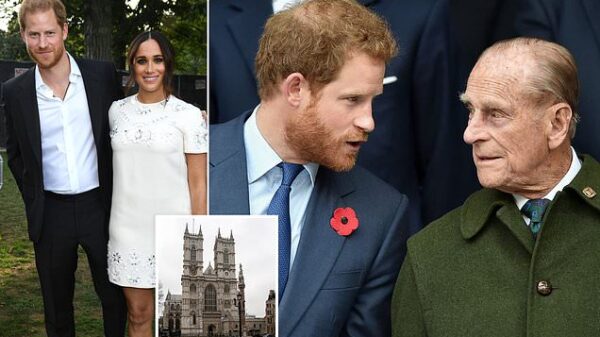
When it came to his grandson Harry’s relationship with Meghan Markle, the directness did not disappear.
It simply operated in private.
And what Philip said to Harry, before the engagement was publicly announced, has become one of the most specific and revealing private exchanges in the recent history of the Royal Family.
According to reporting by Yahoo Entertainment and Ladbible, Philip’s private assessment of Meghan centred on a view of actresses that he had held for a long time and that he expressed to Harry in terms that made his position unmistakable.
The Duke’s reported comment — “one doesn’t marry them” — is a construction that belongs to a specific generation and a specific class, in which entertainers, however talented and however personally admirable, occupied a category distinct from the one from which suitable royal partners were expected to come.
It was not a personal attack on Meghan.
It was a categorical one.
The phrase attributed to Philip — “one doesn’t marry them” — is remarkable for what it contains without saying.
The “one” is the royal one, the institutional one, the pronoun of a man who understands himself primarily as a member of a system with rules that exist for reasons beyond personal preference.
The “them” is the category — actresses, entertainers, women from outside the approved social world.
Philip had navigated the monarchy’s social architecture for seven decades, and he understood its logic, if not its justice, with considerable clarity.
Philip’s nickname for Meghan — “the American” — appears in reporting from this period and is consistent with a broader pattern of how he processed the relationship.
He did not, according to accounts, engage extensively with Meghan as an individual in the early stages of the courtship.
He observed her, assessed her category, and arrived at his conclusion.
The nickname was not hostile in tone — Philip had American connections and no documented general antipathy toward Americans.
It was categorical: a woman placed in a box defined by her nationality and her professional background rather than her specific qualities.
Harry, in his memoir “Spare,” discusses Philip with complicated affection.
He describes a grandfather who was intimidating and remote but whom he genuinely loved, and whose death in April 2021 affected him more than he had anticipated.
He does not directly address the “one doesn’t marry them” exchange in the memoir, but the broader pattern of the Philip-Harry relationship — a grandfather who expressed concerns without ever fully connecting with the person he was concerned about — is consistent with what the accounts of the pre-wedding warning describe.
The Ladbible reporting on Philip’s assessment of Meghan notes that the Duke’s position was one he had articulated before — the view that certain kinds of women were appropriate companions for royal men but not appropriate wives.
This was not an unusual position within the generation and class Philip represented; it was, in fact, the conventional one.
What was unusual was having a grandson determined to violate it with full public commitment and the support of roughly half the world’s population.
Philip had his own experience of being told, in effect, that one doesn’t marry someone from his background.
He was Greek-Danish royalty, not British, and his fitness for marriage to Princess Elizabeth was the subject of considerable institutional deliberation.
He had been assessed, found acceptable, and then spent the rest of his life subordinating himself to the institutional role of the man who supported the monarch rather than being the monarch.
His experience of the system’s assessments, while ultimately successful from his perspective, gave him a ground-level knowledge of how those assessments worked.
Whether his warning to Harry drew on that experience, or whether it was a straightforward reiteration of the class and category rules he had operated within for a lifetime, is not clear from the available accounts.
What is clear is that it did not produce the desired effect.
Harry proposed to Meghan within weeks of the advice being given.
The engagement was announced in November 2017.
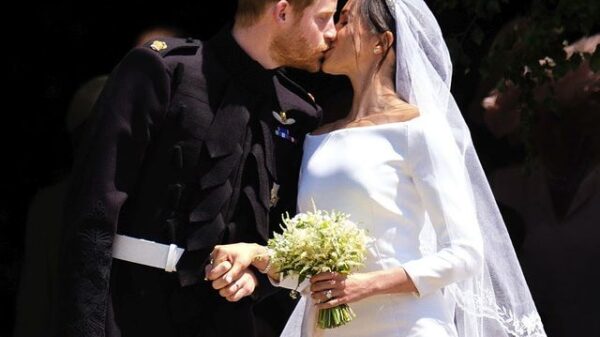
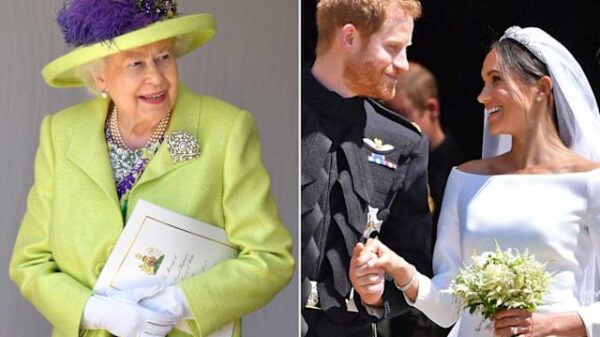
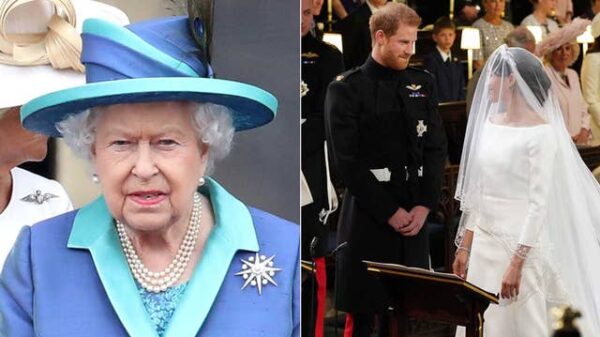
The wedding took place in May 2018.
Philip attended, playing his assigned institutional role with the discipline that had defined his entire public life.
The Yahoo Entertainment account of Philip’s pre-wedding communications with Harry describes a man who stated his position and then, having stated it, accepted the outcome without pursuing the matter further.
Philip was not, in the family’s account of him, someone who relitigated lost arguments.
He said what he thought, and when the decision went against his advice, he adapted.
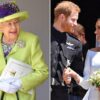
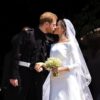
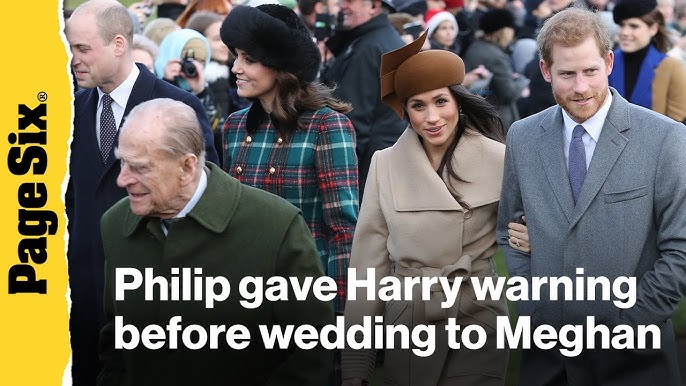
The wedding photographs show him walking beside Meghan, the woman he had said one doesn’t marry, with the composure of a man who has learned, over seven decades of public service, how to show up for the institution regardless of his private opinion.
Meghan, for her part, has described Philip as welcoming in the contexts where she has discussed him.
The public version of the relationship between the Duchess of Sussex and the Duke of Edinburgh was one of mutual respect and appropriate warmth — the presentation of a family that had absorbed a new member without visible friction.
The private version, at least at the pre-engagement stage, was apparently something rather different.
Philip’s warning to Harry is significant not because it was unusual — concern about the speed and nature of the relationship was shared by multiple members of the family — but because of its specific content.
The “one doesn’t marry them” formulation is not a personal warning about Meghan’s character or a prediction about the relationship’s outcome.
It is a statement about category, about the rules of the institution, about the things that an institution can absorb and the things it cannot.
In retrospect, given how the subsequent years unfolded, it appears to have been the most accurate prediction anyone made about the entire enterprise.
Prince Philip died in April 2021, before the Netflix documentary, before “Spare,” before the full public accounting of what Harry and Meghan had experienced and what they intended to say about it.
Whether he would have found in the subsequent events a confirmation of his warning or simply the sadness of an old man watching his family fracture, nobody can say.
He left behind a four-word formulation that, whatever its original intent, has become the most quoted thing he said about one of the defining royal stories of the twenty-first century.