



The marriage of Queen Elizabeth II and Prince Philip is one of the most documented partnerships in modern history and one of the least understood.
Its public image — seventy-three years of apparently unbroken loyalty, devotion, and mutual support — is real in its broad strokes but considerably more complicated in its details.
Among those details, according to biographers who have studied the period most closely, are questions about Philip’s fidelity during the early decades of the marriage and the Queen’s decision about what to do, or not do, about what she may have known.
That decision shaped everything that followed.
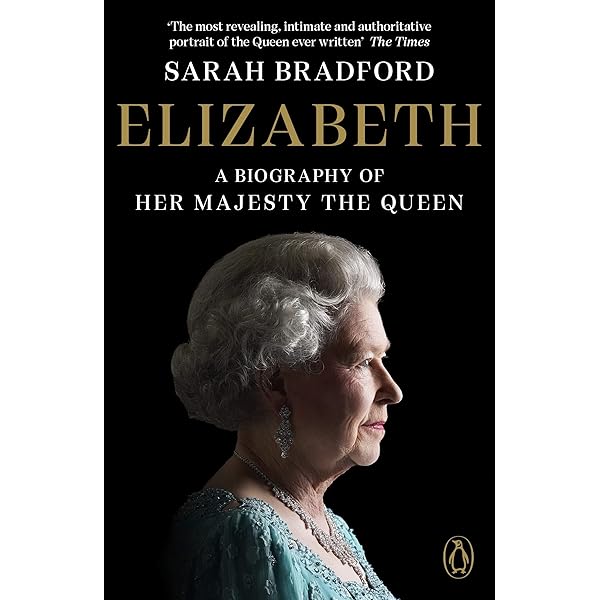
Royal biographer Sarah Bradford is among the most specific in her accounts of Philip’s alleged affairs.
As reported by Yahoo Lifestyle and Marie Claire, Bradford’s research led her to conclude that Philip had been involved in “full-blown affairs and more than one” in the years when the Queen’s attention was most heavily occupied by the demands of her new reign.
Bradford is a careful historian with a reputation for grounded sourcing, and her characterisation of “full-blown” is notably more direct than the careful hedging that most royal biographers employ when discussing the private lives of the living or recently deceased.
The specific women whose names have circulated in connection with Philip’s alleged affairs represent a cross-section of the world he moved through during the 1950s and 1960s: socialites, entertainers, aristocrats, and women who belonged to the social circles in which a young, attractive naval prince with considerable personal magnetism would have moved when the Queen was occupied with her institutional role.
The names have appeared in biographies, in documentaries, and in the testimony of people who were present in those circles.
They have not been confirmed, and they have not been successfully denied.
Philip himself, in the rare instances when he was asked about the affair allegations, responded with a combination of silence and characteristic deflection.
He did not issue denials.
He expressed frustration with the questions.
Those closest to him describe a man who regarded his private life as genuinely private — who believed that what he had done or not done in his marriage was not a matter for public accounting.
This position is consistent with the culture of the class and generation he belonged to, in which privacy about marital arrangements was expected and not simply convenient.
The Queen’s position, as reconstructed by biographers including Bradford, was similarly consistent: she did not discuss the matter, she did not make the alleged affairs a public grievance, and she maintained the marriage across seven decades until Philip’s death in 2021.
Those who have studied her have generally concluded that she knew — that a woman of her intelligence and position, with the Palace’s informational infrastructure at her disposal, was not unaware of her husband’s activities.
Her choice not to act on that knowledge, or to act on it only in private and in ways that have not been disclosed, is the most revealing thing about her.
The Marie Claire analysis of the Philip-Elizabeth marriage places the alleged infidelities in their historical context.
The 1950s and 1960s were a period in which the British upper class maintained a fairly robust distinction between the public form of marriage and its private content.
Affairs were not uncommon and were often managed through a system of informal rules — discretion was expected, emotional significance was bounded, and the formal marriage was understood as the primary institution regardless of what happened around it.
Philip and the women connected to his name appear to have operated within this system.
What makes the Elizabeth-Philip story distinct from other cases of this type is the extraordinary public dimension of the marriage.
The Queen was not simply a wife navigating the ordinary difficulties of a marriage.
She was the head of state of a global monarchy, the head of the Commonwealth, and the symbol around which the British national identity organised itself.
Any public acknowledgement of marital difficulty would have had constitutional and political implications far beyond the personal.
The private management of what she may have known was, in this context, not only a personal choice but a public necessity.
Philip’s absences from domestic life were not only the alleged affairs.
He spent significant periods away from the family in the early years of the Queen’s reign — a world tour in 1956-57, naval duties, his own institutional commitments, and the general pattern of a man whose professional world was not structured around domestic presence.
These absences, documented and acknowledged, created the conditions in which the alleged affairs became possible and in which the Queen’s management of the marriage required a specific kind of discipline.
Those who knew Elizabeth closely describe a woman who was not cold or indifferent in her personal life but who had developed, through her extraordinary public role, a capacity for compartmentalisation that was almost architectural in its completeness.
What she knew and what she felt about it existed in one compartment.
What she was publicly required to be existed in another.
The two did not, by all available evidence, contaminate each other.
This was her particular genius and her particular sacrifice.
The marriage endured.
Its endurance is not in question.
Philip died at ninety-nine, the longest-serving royal consort in British history, having spent seventy-three years at Elizabeth’s side.
Whether the marriage was happy in the conventional sense — whether there was warmth and intimacy and the reciprocal knowing that sustains a long partnership — is something that only the two of them knew, and they chose, consistently and completely, not to disclose it.
The reported affairs are part of the record.
The private resolution of whatever came from them is not.
What Elizabeth’s choice to maintain the marriage, if the affair allegations are accurate, reveals about her is something that is ultimately not reducible to either condemnation or admiration.
It reveals a woman who understood the cost of her position with absolute clarity and who was prepared to pay it in ways that most people would not be.
The “one thing” that Philip allegedly did that the Queen might not have forgiven privately was managed, as she managed everything, without public acknowledgement and without the luxury of simple resolution.
It was absorbed, as everything was absorbed, into the service of the institution to which her whole life had been given.
Queen Elizabeth II died in September 2022.
The full account of her marriage — its joys, its difficulties, and its private arrangements — died with her and with Philip.
What remains is the documentary record of a seventy-three-year partnership that survived everything the twentieth century and the twenty-first threw at it, and the separate question, which biographers will continue to argue about, of what exactly was asked of Elizabeth in order to sustain it.