


The official narrative of Queen Elizabeth II and Prince Philip‘s marriage is one of the most thoroughly maintained fictions in modern public life.
Not a fiction in the sense of being entirely untrue — the marriage was real, the devotion was real, the partnership across seven decades was real.
But the official narrative left out, consistently and entirely, the evidence of significant strain in the early decades: Philip’s long absences, the reported infidelities, and the particular difficulty of being a man of his temperament and ability inside an institution that gave him no formal power and that subordinated him, entirely and permanently, to his wife.
The strain was real.
The question of what it cost both of them has never been fully addressed.
The Time magazine analysis of the Philip-Elizabeth marriage, which draws on biographies, archival sources, and the accounts of those who were present during various periods of the marriage, identifies the mid-1950s as the period of greatest tension.
Philip had spent years in the Navy before the marriage, had commanded ships and had genuine authority and operational independence.
Marriage to the heir to the throne, and then to the reigning monarch, required him to surrender those things entirely.
He was not King.
He was the Queen’s husband.
The constitutional and institutional implications of that distinction were absolute.
Newsweek’s examination of the historical reality behind “The Crown’s” portrayal of the Philip-Elizabeth relationship confirms what multiple biographers have independently concluded: the rumoured infidelities were taken seriously by those who were close to the couple, and the marriage weathered a period in the 1950s and 1960s that was significantly more difficult than the public presentation ever acknowledged.
The world tour of 1956-57, during which Philip was away from Elizabeth and the children for several months, was both a symptom and a cause of the strains that biographers have documented.
Philip’s reported companions during periods of absence are not, in any of the serious biographical accounts, individuals who posed a genuine threat to the marriage’s existence.
These were not love affairs in the emotionally consuming sense that characterised, for example, Charles’s relationship with Camilla.
They appear to have been the kind of relationships that a certain kind of man, in a certain kind of marriage, navigated according to the social rules of his era.
The rules were not ethical rules.
They were rules about discretion, about the primacy of the formal marriage, and about the understanding that what happened outside the official relationship was not to be acknowledged inside it.
The Queen’s management of what she knew, if she knew, is the most significant aspect of the story.
She did not leave.
She did not make the matter public.
She did not restructure the marriage in any visible way.
She continued to appear beside Philip at public events, continued to rely on him in the ways that seven decades of partnership had established, and continued to present to the world the image of a marriage that was, in its public dimensions, entirely successful.
Whether this was the disciplined wisdom of a woman who understood the cost of the alternative, or the sadness of a woman who had no good options, is not established by any available evidence.
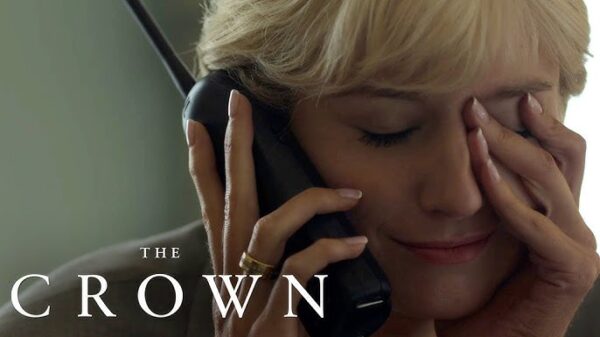
“The Crown” series, which dramatised the strains in the marriage across its five series, was careful to signal its fictional status while drawing on documented biographical material.
Philip’s affairs, his frustrations, his long absences, and his difficult adjustment to the consort role are all depicted in the drama — not as inventions but as dramatisations of what the historical and biographical record supports.
The Newsweek analysis of the drama’s historical accuracy concluded that while specific scenes and dialogue were invented, the broad picture of a marriage under significant strain in its early decades was consistent with what reputable biographers had documented.
Philip’s frustrations with his role were documented in his own public statements, which were characteristically blunt about the difficulty of spending a lifetime in a subordinate position.
He could not vote.
He could not make official decisions.
His role was, constitutionally, to support the monarch.
Whatever he thought, felt, or believed about the major political and constitutional questions of the era was filtered entirely through his relationship with Elizabeth and expressed, if at all, in private.
This constraint, applied to a man of his energy and capability, was not without consequence.
Those who knew Philip well from his middle years describe a man who managed the constraint through the breadth of his extra-curricular interests — his patronage of scientific research through the Duke of Edinburgh’s Award, his involvement in environmental causes, his polo, his carriage driving, his extensive international programme as the Queen’s companion on overseas visits.
These activities gave him genuine satisfaction and genuine impact.
But they were also, in part, displacement activities for the authority and independence that his role precluded.
The marriage settled, according to most accounts, into a different and more stable equilibrium by the late 1960s and 1970s.
Philip’s absences became less frequent.
The period of most acute tension appears to have passed.
Those who observed the couple in their later decades describe a genuine partnership — not the romantic partnership of popular mythology, but something possibly more durable: a relationship between two intelligent, disciplined people who had found a way to coexist, to rely on each other, and to face the institutional demands of their extraordinary shared life without breaking what was between them.
Whether the Queen forgave Philip, in the specific sense of having identified something that required forgiveness, is not something any source can confirm.
The word “forgave” implies an explicit acknowledgement that something had been done and that it was being set aside.
The Queen’s mode of operation was generally not to make the implicit explicit.
She managed.
She continued.
She endured.
Whether that constitutes forgiveness or simply the exercise of extraordinary will is a distinction that belongs to the private record she took with her when she died.
What the historical record offers is this: a marriage that lasted seventy-three years between two people who were, in the first decades, significantly mismatched in what their roles required of them; a period of strain that was managed privately and never publicly acknowledged; and an eventual equilibrium that those who observed it describe as genuine.
The “one thing” that Philip did — or the multiple things, depending on which biographers you read — was absorbed, as everything in that extraordinary marriage was absorbed, into the larger project of keeping the institution functioning and the partnership intact.
Whatever it cost the Queen to do that, she paid it.
Completely, privately, and without complaint.