










At the centre of the Prince Andrew crisis — the legal proceedings, the institutional decisions, the press coverage — was a family dynamic that public accounts rarely examined with the same intensity as the scandal itself.
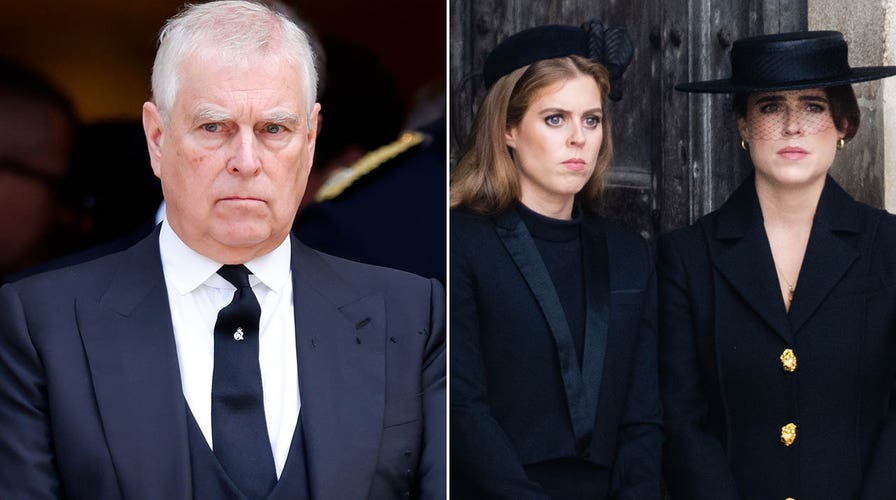
Andrew had two daughters: Beatrice and Eugenie, both adults, both with their own public profiles and their own relationships within the Royal Family.
Both of them, throughout the years of the Epstein scandal and its aftermath, maintained their relationship with their father and continued, in private, to argue for his innocence.
The SheKnows reporting on their position captures the specific phrase used by those familiar with their thinking: they “want to believe” him.
The phrase “want to believe” carries more weight than it might initially appear to.
It is not the same as “believe.” It acknowledges the complexity of the situation — the evidence, the settlement, the public record — while also articulating the emotional position of daughters who love their father and who find it genuinely painful to conclude that the man who raised them is capable of what he has been accused of.
The Scottish Daily Express account of Beatrice and Eugenie’s position uses this framing to describe a genuinely difficult emotional reality: two women navigating their private relationship with their father against the background of a public crisis that has defined his legacy.
The Yahoo Entertainment account of Andrew’s relationship with his daughters in the wake of the scandal documents the specific ways in which that relationship was maintained.
Beatrice and Eugenie continued to visit their father at Royal Lodge, the Windsor estate home where Andrew continued to reside after the stripping of his titles.
They appeared with him at private family occasions.
They included him in the celebrations of their own families — Beatrice married Edoardo Mapelli Mozzi in 2020 and has a daughter; Eugenie married Jack Brooksbank in 2018 and has two sons.
Andrew’s role as grandfather was one that those close to the family describe as important to him and as one of the things that continued to give his life structure in the post-scandal years.
The specific position that Beatrice and Eugenie took in relation to Charles’s eventual decision to strip Andrew of his titles is documented in the accounts of their approach to the Palace in the period before that decision was finalised.
They were not simply advocating for their father in a general sense; they were making a specific argument that the family unity, and their father’s mental health and wellbeing, should be factors in the institutional calculation.
This argument — that the personal cost of the institutional decision was real and should be weighted — was not one that prevailed, but it was made, and it was made by people who had standing in the family to make it.
The thenews.com.pk account of the approach Beatrice and Eugenie made to Charles places it in the context of the broader family politics of 2022 and early 2023.
Charles had just acceded to the throne in September 2022.
He was managing multiple institutional priorities simultaneously: the mourning period for the Queen, the establishment of his own household and public profile, the ongoing Harry and Meghan situation, and the Andrew question.
The daughters’ intervention was one voice among several in a decision-making process that Charles was conducting with a deliberateness that those around him recognised as characteristic.
The Scottish Daily Express account notes a specific dimension of Beatrice and Eugenie’s position that is sometimes overlooked: they were advocating not just for their father’s rehabilitation within the family but for a broader institutional reconsideration of how the evidence against him had been assessed.
Their view — consistent with Andrew’s own position — was that the Giuffre allegations were false, that the lawsuit settlement was not an admission of guilt, and that the institutional treatment of Andrew was based on a public narrative that was not accurately supported by the available evidence.
This was not a position that found many sympathisers outside Andrew’s immediate family, but it was the position they held.
The emotional dimension of the daughters’ position is the part that public accounts tend to underweight.
Beatrice and Eugenie were not simply royal women making a political argument about an institutional decision.
They were daughters who had grown up believing their father was a good man, who had watched that belief become publicly contested in the most damaging possible way, and who were processing that experience in real time while also managing their own public profiles, their own families, and their own relationships within an institution that had formally moved against their father.
The resilience required to maintain all of that simultaneously is not nothing.
The outcome of their advocacy was not what they had hoped for.
Charles made the decision he made, on the terms he made it, and the institutional separation was formalised.
Andrew remained at Royal Lodge; the question of his continued residence there became a source of ongoing tension with the Palace.
The daughters continued to visit him.
They continued to appear at family occasions where their father was also present.
They continued, in the specific way that families manage impossible situations, to be both their own people and their father’s daughters — holding the complexity without resolving it, because the complexity was the reality and there was no resolution available that would have made it otherwise.
The “want to believe him” formulation is, in its way, one of the most honest descriptions of the daughters’ position that could be offered.
It does not claim certainty they do not have.
It acknowledges the difficulty of the situation they are in.
It preserves their relationship with their father while implicitly acknowledging that the public record is not straightforward.
And it places them, accurately, in the position that many people find themselves in when someone they love has been accused of something serious: unable to conclude certainty in either direction, choosing to maintain the relationship in the absence of a definitive private truth, and living with the weight of that choice every day.