


The Daily Beast’s reporting on the origins of the Prince Andrew crisis contains a thread that has not received as much attention as the immediate scandal: the argument, made by sources close to King Charles, that the root of the problem was not Andrew’s conduct or Andrew’s Newsnight interview or Andrew’s relationship with Jeffrey Epstein.
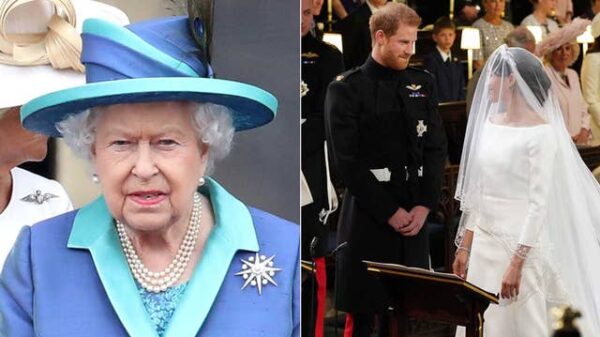
The root of the problem, in this account, was the Queen.
Elizabeth’s “unwavering” protection of Andrew throughout the years of the crisis was the factor that prevented the institutional response from being managed cleanly and that created the conditions in which the damage accumulated instead of being contained.
The Daily Beast’s characterisation of Elizabeth as Andrew’s “unwavering shield” reflects a specific set of documented behaviours.
The Queen knew what her courtiers were telling her.
She understood the institutional argument for distance.
She had spent seventy years making exactly this kind of institutional calculation on behalf of other members of the family and other situations.
On the Andrew question, she made a different calculation — one grounded in maternal loyalty rather than institutional logic — and she made it consistently, across multiple years, in the face of consistent advice that she was making the wrong choice.
The Daily Beast’s account of Charles’s camp blaming the Queen for the crisis documents the specific argument that those around Charles were making: that Elizabeth’s protection of Andrew had created a situation that was, by the time Charles became King, substantially harder to manage than it would have been if the institutional response had been faster and more complete.
The four-year gap between the Newsnight interview in November 2019 and the formal stripping of titles in January 2023 was, in this account, largely Elizabeth’s doing — her continued defence of Andrew had prevented the more immediate and complete institutional response that the situation warranted.
The attribution of blame to Elizabeth is made by people who are Charles’s allies, and it should be read in that context.
It serves the specific purpose of explaining why the Andrew problem took so long to resolve and of placing the responsibility for that delay outside Charles himself, who was heir to the throne throughout the period and who had his own complex relationship with the management of the crisis.
Whether Charles pressed his mother harder to take more decisive action during the 2019-2022 period, or whether he deferred to her judgment in the way that heirs typically deferred to reigning monarchs, is a question that the available accounts do not fully resolve.
What is documented is that Elizabeth remained close to Andrew throughout the crisis in ways that were publicly visible.
The Daily Beast’s account of the Queen’s continued association with Andrew in the period after the Newsnight interview documents specific events: the church attendance, the Balmoral photographs, the continued management of Andrew’s situation as a family matter rather than an institutional one.
Each of these events was a communications decision — a decision about what the public image of the Queen’s position on Andrew should be — and each of them sent the same message: the Queen had not abandoned her son.
The Daily Beast also documents the specific institutional consequence of Elizabeth’s position: the courtiers who gave her advice she rejected found their influence reduced.
This is a meaningful observation about how royal households work.
The Queen’s private secretary and communications staff were not simply advisers; they were people whose institutional authority derived from their access to the Queen and from her demonstrated willingness to act on their recommendations.
When she consistently rejected their recommendations on Andrew, she was not simply making a different decision on one matter.
She was signalling that her judgment on this specific topic was not going to be shaped by professional advice, regardless of how experienced or how well-grounded that advice was.
The broader picture that emerges from the Daily Beast’s reporting is of an institution under stress from two directions simultaneously.
Andrew’s situation was generating reputational damage that needed managing.
The Queen’s refusal to manage it in the way her advisers recommended was itself generating internal institutional stress — a household in which the principal and the professional staff were in sustained disagreement about a major strategic question, with the principal consistently prevailing.
This is not a comfortable situation for any organisation.
For one as dependent on careful communications management as the British Royal Family, it was particularly difficult.
The specific question of what Elizabeth actually believed about Andrew’s guilt or innocence is one that cannot be answered from the available record.
Those close to her describe a woman who was presented with her son’s account of the relevant events and who found it credible — who believed, genuinely, that the allegations against him were false and that the institutional pressure to distance herself from him was unjust.
Whether this belief was sustained by the objective evidence or by the specific psychological difficulty of concluding that one’s child is capable of serious wrongdoing is a question that the available accounts do not answer.
Both possibilities are consistent with the behaviour that was observed.
Elizabeth died on September 8, 2022.
Andrew was at her bedside at Balmoral, along with the other members of the immediate family.
The image of the son she had protected for his entire life, present at the end, was entirely consistent with the relationship that the Daily Beast and other sources had documented across the years of the crisis.
She had protected him.
He had remained close.
The institution had been damaged by the protection, in the assessment of those around Charles.
And the specific costs of that damage — the years of managed crisis, the delayed institutional response, the eventual formal stripping of titles — were settled by her successor in the months that followed her death, on terms that reflected what her courtiers had been recommending since 2019.